

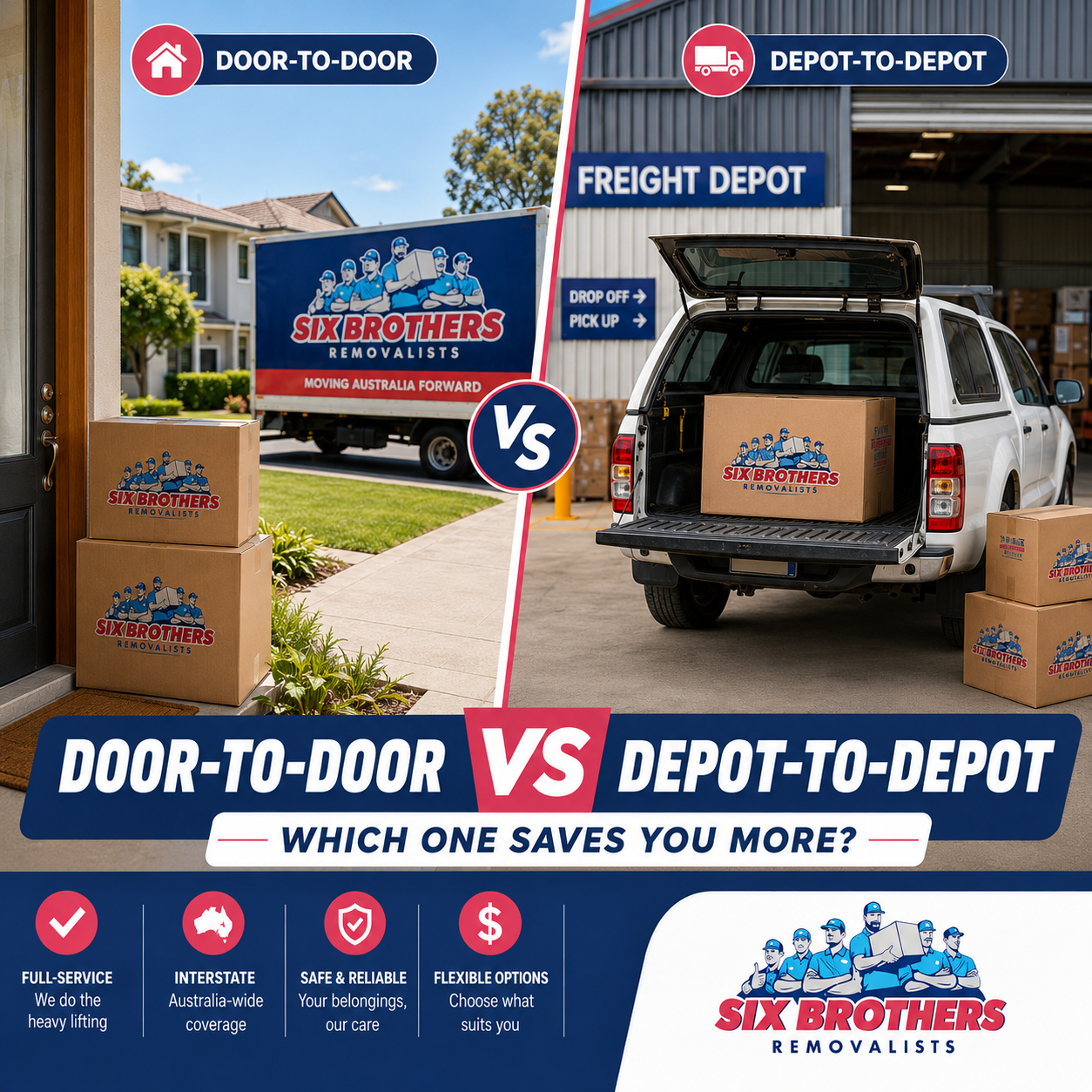
Picture this. Your whole life sits in boxes by the front door. A truck pulls up at your new place. The movers carry it all inside. Done. That is door-to-door interstate moving.
Now picture a different day. You drive across town to a freight depot. You load your own gear. Weeks later, you collect it from another depot. That is depot-to-depot moving.
Same goal. Two very different days. And the gap between them can be huge. Most people moving from Sydney never hear these terms until quote time. Then it gets confusing fast.
So which one fits your move, your back, and your budget? Let us break it down like a mate would over coffee. By the end, you will know exactly which path saves you money. And which one saves your sanity.
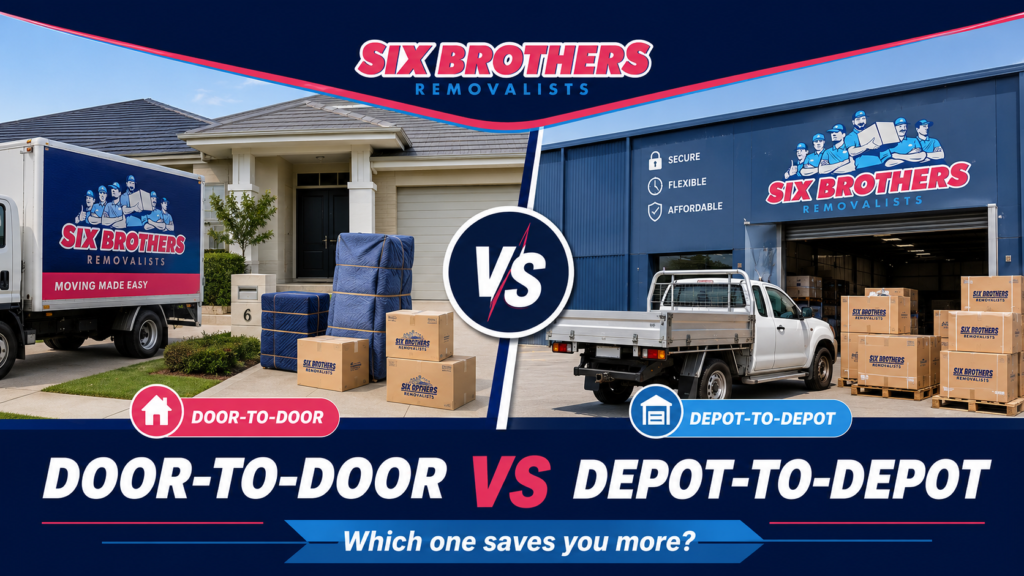
Door-to-Door vs Depot-to-Depot: The Quick Version
Both options move your stuff between states. The difference is who does the heavy lifting. Door-to-door means the removalists collect from your home and deliver to your new one. You barely lift a finger.
Depot-to-depot means you drop your goods at a freight terminal. Then you pick them up at the other end. Cheaper, but more sweat. Think of it like food. Door-to-door is a sit-down meal brought to your table. Depot-to-depot is takeaway you collect yourself.
One costs more for the comfort. The other saves cash if you do not mind the legwork. That is the heart of it. Now let us dig into how each one really plays out on the day.
Both have fans. Both have horror stories. The trick is matching the service to your real situation. Get that match right, and your move feels easy. Get it wrong, and you pay for it in cash or stress.
What Door-to-Door Interstate Moving Actually Looks Like
This is the full-service path. Good interstate removalists turn up at your door on moving day. They wrap your furniture. They load the truck. They drive it across the country. Then they unload at your new home.
You stay home. You point. You make the tea. That is about it. No depot runs. No van hire. No begging your cousin to help carry the fridge. The whole job rests on the movers. Most full service removalists offer a pickup window and a clear delivery date. You know roughly when your goods land.
How a door-to-door move usually runs
First, the team arrives with blankets, straps, and a clean truck. They protect your floors and doorways. Next, they wrap each piece. Sofas get blankets. Mirrors get padding. Drawers get taped shut.
Then they load with a plan. Heavy items go first. Fragile boxes ride on top. Nothing gets crushed. After the long drive, they unload room by room. You tell them where each box goes. Simple as that.
Who door-to-door suits best
• Families with a full house of furniture and zero spare time
• Anyone moving heavy or awkward items like a piano or a fridge
• People who hate the idea of hiring a truck and driving it
• Older movers or anyone with a dodgy back
• Busy professionals who cannot take days off for depot trips
Ever tried lugging a sofa up two flights on a 35-degree day? Door-to-door means you never have to. This is the route most people pick when they want zero stress. Our team handles it daily across Sydney and right around the country.
The upside of going door-to-door
You save your energy for the new place. No aching shoulders. No bruised shins from a stubborn wardrobe.
You also save time. The hours you would spend at depots go back into your week. And you get one team responsible for the whole job. If something goes wrong, you know who to call.
The trade-off to keep in mind
You pay more for all that comfort. The price reflects real people doing real heavy work.
For a small load, that cost can feel high. That is where backloading or depot might suit better. But for a full home, door-to-door usually earns every dollar. The maths often favours the easy road.
What Depot-to-Depot Moving Actually Looks Like
Depot-to-depot is the budget-friendly cousin. You do the bookend work yourself.
You pack everything tight. You drive it to a freight depot. Staff load it onto a shared truck or container.
It travels with other people’s goods. At the far end, you rock up to a second depot and grab it all. The freight company handles the long drive. You handle both ends. That trade saves you money.
How a depot-to-depot move usually runs
You box and wrap everything at home. Strong boxes matter here, since shared freight gets bumped around. You load a van or ute and drive to the depot. Staff weigh your goods and book them onto a truck.
Your items wait for a full load. Then they travel interstate with other customers’ freight. At the new city, you drive to the second depot. You sign, load up again, and take it all home.
Who depot-to-depot suits best
• Students or singles with a small load
• Tight budgets where every dollar counts
• People who own a ute or can borrow a van for the drop-off
• Flexible movers who do not need their stuff on an exact date
• Anyone moving just a few boxes and one or two small items
There is an old saying. Many hands make light work. Depot-to-depot flips that. Your hands do the work, so your wallet stays heavier. It can be a smart play for the right move. But it is not for everyone, as the next part shows.
The upside of going depot-to-depot
The biggest win is the price. You cut out labour at both ends and pay mainly for the drive.
For a small, simple load, that saving can be real. A few boxes and a desk do not need a full crew. You also control the pack and the timing of your own runs. Some people like that hands-on feel.
The trade-off to keep in mind
You do all the heavy work yourself. That means lifting, driving, and waiting at depots.
Your stuff also gets handled more, which lifts the damage risk. Pack well or pay later. And the timing is loose. Your goods leave when the truck fills, not when you want them gone.
The Real Cost Difference: Door-to-Door vs Depot-to-Depot
Money is the big one. So let us talk numbers in plain terms.
Depot-to-depot is almost always cheaper on paper. You save on labour at both ends. You pay mostly for the line haul, the long drive between states. Door-to-door costs more upfront. But that price covers packing, lifting, loading, and delivery. You are paying for hands and time, not just transport.
Here is the catch most people miss. Depot fees, fuel for your own trips, and a hired van can quietly close the gap. Add a sore back and a lost weekend, and the cheap option is not always so cheap.
So compare the full cost, not just the headline price. Want the real picture? Our guide on interstate moving prices lays out what shapes the final bill.
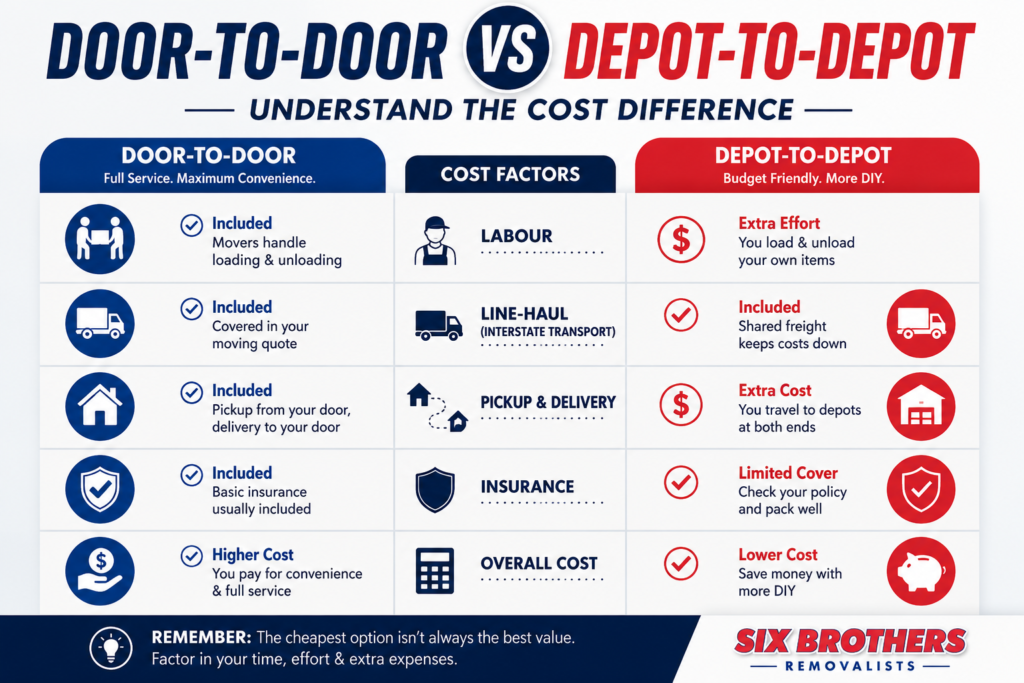
Hidden costs to watch with depot-to-depot
• Depot handling and storage fees if you collect late
• Van or trailer hire for the drop-off and pick-up legs
• Fuel for two round trips, sometimes in different cities
• Extra packing materials since shared freight gets knocked around
• Time off work for two depot runs
None of these show up in the first quote. They sneak in later. Smart movers add them in early.
What you actually pay for with door-to-door
The bigger price tag is not just markup. It buys you real labour and real care.
• Trained movers who lift and load so you do not have to
• Quality wrapping and padding for your furniture
• A set delivery date you can plan your life around
• Less risk of damage from fewer handling steps
When you weigh it all up, door-to-door often costs less stress per dollar. That counts for a lot.
A quick real-world example
Say you are moving a one-bedroom unit from Parramatta to Melbourne. Small load, tight budget. Depot-to-depot looks cheap at first. But add van hire, fuel for two cities, and a day off work.
Suddenly the saving shrinks. And you still did all the lifting yourself. Now compare a backload quote. Door pickup, door delivery, shared truck space, no van hire. For many small moves, that middle option wins on both price and effort. Always run the full sums.
Speed and Timing: Which Gets Your Stuff There Faster?
Time matters when you are sleeping on a borrowed mattress.
Door-to-door is usually faster and more set. You get a pickup window and a delivery date. The truck comes straight to you. Depot-to-depot runs on freight schedules. Your goods wait for a full load before the truck leaves. That can add days.
Is your sofa really on holiday at a depot somewhere? Sometimes it feels that way.
Freight depots batch their loads. Your stuff sits until the truck fills. You cannot rush that part. If you need your bed on night one, door-to-door wins. If you can camp light for a week, depot-to-depot is fine.
Think about your first week in the new place. Will you have a bed, a kettle, and a few plates? Plan around that.With door-to-door, you can match delivery to your move-in day. Your bed arrives when you do. With depot freight, there may be a gap. You might live out of a suitcase for a few nights.
Neither is wrong. It just depends on whether you value speed or savings more for this move.
Safety and Damage Risk: Who Protects Your Stuff Better?
Your belongings are not just things. They hold memories, money, and a lot of trust.
With door-to-door, trained movers wrap and load every item. Fewer hands touch your goods. Fewer chances for dents. With depot-to-depot, your boxes share space with strangers’ freight. They get loaded and shifted more than once. More handling means more risk. A weak box or a loose wrap shows up as a chip or a crack.
Picture your goods passed between two depots, a forklift, and a shared truck. That is a lot of touch points. Good packing is your shield here. If you go the depot route, read up on how to protect furniture during an interstate move before you load a thing.
Simple ways to cut damage risk
• Use strong, double-walled boxes for anything fragile
• Wrap furniture corners and edges with thick padding
• Label fragile boxes clearly on every side
• Fill empty gaps so nothing shifts in transit
One more thing on trust. Always check insurance with either option. Ask what is covered and what is not, in writing. A solid removalist will explain cover without you chasing them. If they dodge the question, that is a red flag.
Ask about transit insurance and what the limit is. Ask if your own packing voids any cover. With shared depot freight, claims can get messy if no one knows whose box was where. Clear records help.
With door-to-door, one team packs and carries everything. That makes any claim simpler to sort.
The Smart Middle Ground: Interstate Backloading
What if you want door-to-door comfort at a depot-to-depot price? Good news. There is a third path.
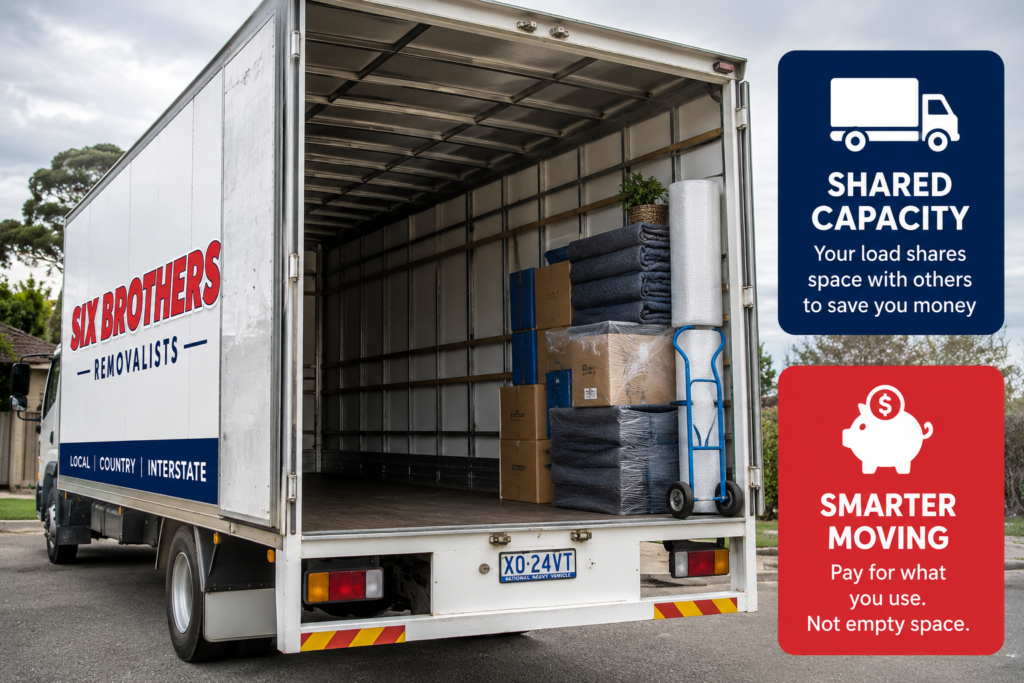
Backloading uses spare space on a truck already heading your way. The truck is going there anyway, so you split the cost. You still get pickup and delivery at your door. You just wait for a truck with a matching route and gap.
It is the best of both worlds for many movers. You skip the depot runs and still save real money. Think of it like carpooling for furniture. Empty truck space is wasted space. Backloading puts it to work.
This works brilliantly for smaller loads. Curious if it fits your move? Our interstate backloading service matches your goods to trucks already on the road.
When backloading makes the most sense
• You have a part-load, not a full house
• You can flex your dates by a few days
• You want door delivery without the full door-to-door price
• Your route is a common one, like Sydney to Melbourne or Brisbane
It will not suit every move. But for the right load, it hits a sweet spot on price and comfort.
Popular Interstate Routes From Sydney and What Suits Them
Your route shapes your choice more than you might think. Some lanes are busy. Some are quiet. Busy routes have more trucks, more backload space, and more flexible pricing. Quiet routes have fewer options.
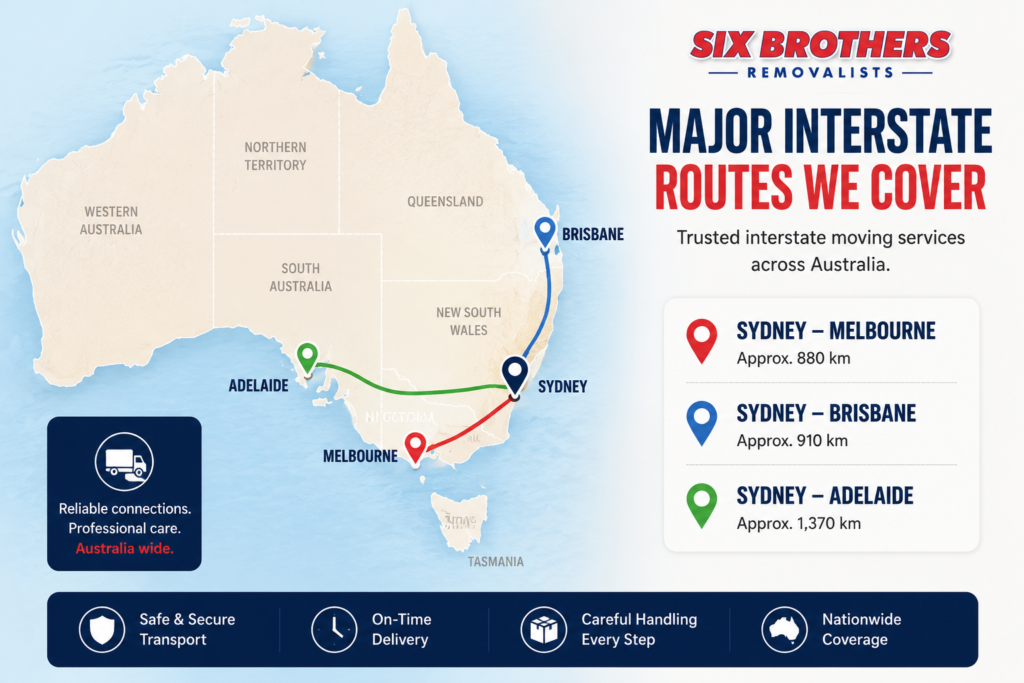
Sydney to Melbourne
This is one of the busiest lanes in the country. Trucks run it almost daily.
That means backloading is easy and door-to-door dates are flexible. Our Sydney to Melbourne removalist service moves loads of all sizes on this route. Depot-to-depot also works well here, since freight runs are frequent. You have real choice on price.
Sydney to Brisbane
Another high-traffic route up the east coast. Plenty of trucks, plenty of backload chances. If you want a no-fuss door delivery, this lane handles it smoothly. Smaller loads suit backloading nicely.
Sydney to Adelaide and beyond
Longer routes mean higher line-haul costs. The drive is the biggest part of the bill. On these lanes, door-to-door saves you from two long depot drives. That convenience really earns its price.
Whatever your destination, the right service depends on distance, load, and timing. We cover hundreds of routes across Australia.
Busy lanes give you the most choice and the best prices. Quieter lanes need a bit more planning. Either way, a local team that knows these routes saves you guesswork. We move people on them every week.
Common Mistakes People Make With Interstate Moves
A move is a big job. Small slip-ups cost money and stress. Here are the traps to dodge.
Chasing the cheapest quote alone
The lowest number is tempting. But a rock-bottom quote can hide weak insurance or surprise fees. Cheap movers who quote low then pile on charges are a real risk. Pick honest pricing over the smallest figure.
Forgetting the hidden depot costs
People compare a depot price to a door price and call depot the winner. That misses van hire and fuel. Always add the full cost of doing both ends yourself. Then the gap looks very different.
Booking too late
Good removalists fill up fast, especially in summer. Leave it late and your choices shrink. Book early to lock in your date and your best price. Last-minute moves cost more, almost every time.
Skimping on packing
Weak boxes and rushed wrapping lead to damage. That is true for any service, but worse for shared freight. Spend a little on good materials. It is cheaper than replacing a smashed TV.
Not asking the right questions
Before you book, ask what the quote includes and what it does not. Get it in writing. Ask about extra fees for stairs, long carries, or heavy items. Surprises on the day are no fun.
A good mover answers clearly and never rushes you. That openness is worth more than a small discount.
How to Choose Between Door-to-Door and Depot-to-Depot
No single answer fits everyone. Your best pick depends on four simple things.
1. Your budget
Tight on cash? Depot-to-depot or backloading saves the most. Got room in the budget? Door-to-door buys you peace.Just remember to count the hidden costs before you call depot the winner.
2. Your load size
A studio’s worth of gear suits depot or backload. A full four-bedroom home leans hard toward door-to-door. The more you own, the more those depot trips add up in time and fuel.
3. Your time and body
Can you spare a weekend and lift heavy? Depot works. Short on both? Let the pros carry it. Be honest about your back and your schedule. A cheap move that wrecks your week is not a real saving.
4. Your timeline
Need it there by Friday? Book door-to-door. Flexible on dates? Depot or backloading will do. Match the service to your deadline, not the other way round.
Still unsure? A quick chat sorts it fast. We help Sydney movers weigh these options every single week.
Run through these four questions honestly. Your answer will point you to the right path. And if two options feel close, get a quote for each. Real numbers beat guesswork every time.
Door-to-Door vs Depot-to-Depot: Side by Side
Let us line them up so the choice feels clear.
Cost: Depot-to-depot wins on the sticker price. Door-to-door wins on value once you count your time.
Effort: Door-to-door asks almost nothing of you. Depot-to-depot asks for sweat at both ends.
Speed: Door-to-door delivers on a set date. Depot-to-depot waits for a full freight load.
Safety: Door-to-door means fewer hands and less risk. Depot-to-depot means more handling.
Best for: Door-to-door suits full homes. Depot-to-depot suits small, flexible, budget moves.
And backloading? It borrows the best bits of both for part-loads. Keep it on your shortlist. There is no trophy for picking the priciest or the cheapest. The prize is the move that fits your life.
So weigh these five points against your own move. The right answer will feel obvious once you do.
Getting Your Move Ready, Whichever Path You Pick
The service you choose is only half the job. Good prep makes any move smoother. Start early. Sort your stuff into keep, sell, and toss. Less to move means less to pay for. Declutter is your friend. Why pay to haul a broken lamp across the country? Let it go.
Pack smart from day one
Use sturdy boxes and fill them fully. Half-empty boxes crush. Overpacked boxes split. Label every box with the room and a note on what is inside. Future you will say thanks. Keep a small bag of essentials with you. Chargers, meds, a kettle, and a change of clothes.
Talk to your removalist early
Tell them about stairs, tight driveways, or a piano. Surprises on the day cause delays and fees. A clear chat upfront means a clean quote and no shocks. Honest movers want the full picture. Whether you go door-to-door, depot, or backload, prep is the great equaliser. It saves time and money every time.
Get a Clear Quote Before You Decide
The smartest move is to compare real numbers, not guesses. A free quote shows you both paths side by side. Get your free quote from Six Brothers Removalists today. No pressure, no hidden fees, just honest pricing for your interstate move.
Call us on 1300 764 372 or email info@sixbrothersremovalist.com.au. We will help you pick the option that saves you the most.
Frequently Asked Questions
How much do interstate removalists cost?
Interstate removalist costs depend on distance, load size, and the service type you choose. Depot-to-depot moves sit at the lower end since you handle pickup and delivery. Door-to-door costs more because the team packs, loads, drives, and unloads for you. Backloading often lands in the middle, since you share truck space on a route already booked. The honest way to know your real price is a free quote based on your exact home size and route. That stops nasty surprises on the day.
How long do removalists take for an interstate move?
It varies with the route and the service. Door-to-door usually comes with a set pickup and delivery window, so it moves fast. Depot-to-depot runs on freight schedules and waits for a full truck, which can add a few days. Backloading depends on when a truck with a matching route has space. If timing is tight, door-to-door gives you the most certainty. If you can flex your dates, the slower options can save you real money.
The Bottom Line
Door-to-door buys you comfort, speed, and fewer worries. Depot-to-depot buys you savings if you bring the muscle. Backloading sits neatly in between for smaller loads. There is no wrong choice, only the right one for your move.
You should not have to gamble with everything you own. Pick the path that fits your budget, your timeline, and your peace of mind. Weigh the price against your time. Count the hidden costs. Then choose with clear eyes.
Door-to-door, depot-to-depot, or backloading, each one moves your life from A to B. The best fit is personal. Trust your gut, check the numbers, and pick the path that lets you sleep easy the night before the move.
Ready to move with no surprises? Get your free quote from Six Brothers Removalists now. Call 1300 764 372 or visit us at Suite 1 Level 5/58-60 Macquarie St, Parramatta NSW 2150.