


Table of Contents
Moving a mirror interstate needs rigid protection, soft cushioning, and upright transport. Large mirrors flex, chip, and crack when pressure reaches their edges. Why risk a favourite mirror with a carton that almost fits? This guide shows how to move mirrors interstate with fewer nasty surprises.
The method works for framed mirrors, full-length mirrors, and many wall mirrors. It also explains access, insurance, storage, delivery choices, and damage checks. As Aussies say, a little planning keeps things sweet as.

Steps for how to pack a mirror for moving
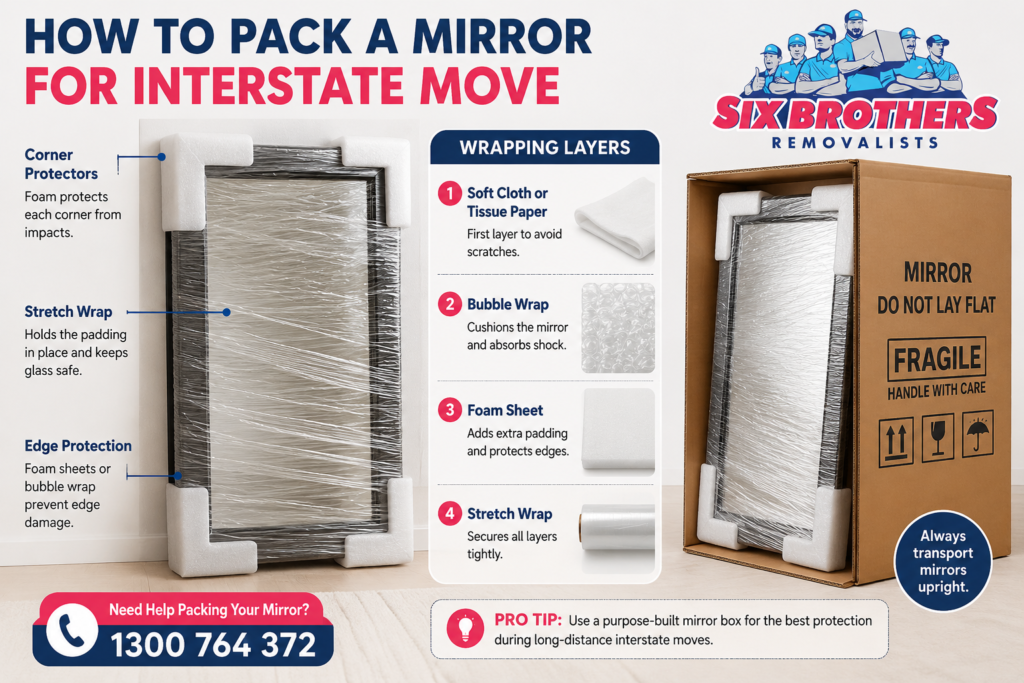
Pack a mirror by protecting its face, corners, edges, and empty carton space. Think of the pack like a sandwich with rigid faces and soft layers. Each layer should stop movement without squeezing the glass. Better safe than sorry applies here.
Gather a mirror carton, picture mirror box, corner protectors, packing paper, and bubble wrap. Add sturdy cardboard sheets, tape, labels, and moving blankets. Professional packing and removals can be worthwhile for large or sentimental mirrors.
Prepare and Wrap the Mirror
Clean the mirror gently, then remove detachable feet, brackets, or loose hardware. Bag small parts and label them for the same mirror. Do not place strong packing tape directly on delicate reflective surfaces. That can leave residue or damage finishes.
Cover the face with clean paper or a smooth protective sheet. Add cardboard across the front and back for rigidity. Fit corner protectors before wrapping the whole mirror with bubble wrap. Our guide to how to pack fragile items covers broader breakable household goods.
Use extra layers around ornate frames and vulnerable corners. Keep bubble wrap bubbles facing away from delicate painted finishes. If a frame is antique, ask a specialist about suitable materials. Do not chuck a wobbly wrap job together.
Box and Label
Use a fitted mirror carton that leaves room for controlled cushioning. A picture mirror box can suit smaller framed pieces and standard wall mirrors. Larger mirrors may need telescoping cartons or a custom crate. Horses for courses is the rule.
Place a padded board against each mirror face before closing the carton. Fill gaps with paper, foam, or soft packing material. The mirror should not slide when the carton moves gently. Avoid crushing pressure against the glass or frame.
Label every side with “FRAGILE”, “MIRROR”, and “KEEP UPRIGHT”. Add the destination room and mirror number. Clear labels help removalists separate fragile pieces during loading. Good as gold starts with labels nobody can miss.
Load and Transport
Carry mirrors upright with two people when size or weight demands it. Support the lower edge while keeping hands away from decorative weak points. Never drag a mirror across concrete or stairs. That is asking for strife.
Load the carton upright against a flat, padded truck surface. Use gentle restraints that stop sideways movement without bowing the carton. Keep heavy furniture, toolboxes, and loose cartons away from the mirror. Never stack heavy items above it.
Place the mirror where unloading crews can reach it without shifting heavy loads. A stable load matters more than squeezing one extra carton aboard. Experienced interstate removalists plan load order before the truck leaves.
Types of Mirrors and What They Mean for Packing
Mirror type changes the packing method because frames, glass thickness, and supports vary. A frameless mirror needs edge protection and rigid boards. A timber-framed mirror needs corner protection and frame cushioning. One size rarely fits all.
A full-length mirror is tall and easy to flex. Learning how to move a full-length mirror starts with full-height rigid support. A vanity mirror may have detachable stands or lighting. A heavy ornate mirror may need a crate.
Antique mirrors can have fragile silvering, plaster details, or aged backing. Avoid adhesives, damp materials, and rough bubble wrap against delicate finishes. When in doubt, give a specialist a bell before packing. That can save heartache.
- Frameless mirror: protect every edge and use rigid front-and-back boards.
- Full-length mirror: support its entire height and move it upright.
- Ornate mirror: pad raised decoration and avoid pressure on carved details.
- LED mirror: protect wiring, controls, transformers, and manufacturer-specific fittings.
Understanding the Unique Challenges of Shipping Mirrors
Mirrors combine brittle glass with large surface areas and vulnerable edges. A small corner impact can send stress through the whole pane. Long interstate vibration adds repeated shocks that local moves may not create. It is hard yakka for weak packing.
Large mirrors also flex like a thin glass sail when handled badly. Flat transport can let road movement load the centre. Upright support spreads stress more safely across the packed frame. Secure cushioning reduces rattling and edge knocks.
Temperature changes and humidity can also affect some frames and backings. Storage transfers add extra handling points. Each transfer creates another chance for drops or pressure. Fewer, controlled handovers usually make the move easier.
Measure Your Mirror and Moving Route Before Moving Day
Measure the mirror and every tight access point before packing starts. This avoids discovering a blocked staircase while holding fragile glass. Your route plan is cheap insurance before the truck arrives. A fair go starts with accurate measurements.
Measure doors, hallways, stairs, lifts, loading docks, and truck access. Include protective wrapping in your final mirror dimensions. Use an interstate moving checklist to coordinate access, labels, timing, and essential boxes.
Measure Mirror Dimensions and Weight
Measure height, width, depth, and frame projections before buying packing materials. Then estimate the packed size after boards, corners, and cushioning. If the mirror is very heavy, confirm safe lifting equipment early. Measure twice and move once.
Write the figures on your inventory and quote request. Photos beside a tape measure can help show scale. For how to move a large mirror, size details help crews plan people and equipment. They also help choose the right truck space.

Check Doorways and Hallways
Measure the narrowest door opening, not just the door frame width. Handles, security doors, turns, and skirting boards can steal clearance. Check hallway corners with the packed mirror dimensions. Do not get caught on the hop.
Remove safe obstacles before movers arrive. Roll rugs, secure pets, clear shoes, and protect sharp wall corners. Keep one clean staging area near the exit. That gives the carrying team space to reposition carefully.
Check Stairs and Lifts
Stairs need enough turning room for the packed mirror and the people carrying it. Measure landings, ceiling clearance, handrails, and tight turns. Large mirrors often fail at corners, not doorways. A quick squiz can reveal trouble early.
For lifts, check door height, cabin depth, weight limits, and booking rules. Reserve the lift when building management requires it. Protect lift walls if the building asks. Confirm loading dock access and approved moving times.
Plan the Carrying Route
Walk the whole route from the mirror location to the truck. Remove clutter and identify safe rest points before lifting. Mark tight corners that need slow rotation. No dramas is the goal, not the starting assumption.
Plan the destination route too. A mirror that exits easily may not enter the new home. Share access photos with your interstate removalist before moving day. Mention stairs, lifts, long carries, and difficult parking.
Document Your Mirror Before the Interstate Move
Document the mirror before packing so its condition and value are clear. Take photos in good light from several angles. Record the frame, glass, backing, fittings, and existing marks. Keep the records with your moving inventory.
This step helps with handover checks and possible claims later. It also prevents arguments about older scratches or chips. As the saying goes, get your ducks in a row before the truck arrives.
Photograph Existing Condition
Take one full front photo and one full rear photo. Add close-ups of corners, edges, fittings, and hanging points. Photograph serial numbers or maker labels when present. Make sure timestamps or file dates remain available.
Use natural light and avoid heavy reflections where possible. A short video can also show overall condition. Keep the images in cloud storage and your phone. Being full bottle on condition makes later checks easier.
Record Chips and Scratches
List every visible chip, scratch, loose joint, and damaged decorative detail. Match each note to a close-up image. Do not hide existing damage under wrap without recording it. That can create a dog’s breakfast later.
Mark the location using simple terms, such as lower-left frame or top-right edge. Avoid vague notes like “small mark”. Clear records help you compare arrival condition quickly. They also help movers choose safer handling points.
Keep Purchase Records
Keep receipts, invoices, certificates, or appraisals for valuable mirrors. Digital copies are easier to access during an interstate move. Save records in the same folder as photos and inventory notes. Keep everything within cooee.
If no receipt exists, keep any valuation or maker information you have. Do not invent a replacement figure. Ask your insurer what evidence they accept. Requirements can differ between policies and claims.
Record Replacement Value
Record a realistic replacement value before choosing cover or declaring valuable items. Replacement value can differ from the original purchase price. Custom, antique, or designer mirrors may need specialist valuation. Do not pull numbers from thin air.
Update old valuations if the mirror’s market value changed materially. Keep evidence with your move records. That makes discussions about declared value more precise. It is better to be on the money beforehand.
Check Interstate Removal Insurance for Mirrors
Check insurance and liability terms before the mirror enters the truck. Do not assume every breakage is automatically covered. Policy wording, packing responsibility, exclusions, and declared values can change outcomes. Read the fine print, mate.
AFRA also recommends checking moving insurance before the move starts. Ask what policy documents apply and who can legally offer insurance. Keep written answers with your quote and inventory.
Did you know?
AFRA says not every damage event becomes a removalist liability claim. Moving insurance can provide broader protection, depending on policy terms.
Check Goods-in-Transit Cover
Ask whether goods-in-transit cover applies to your mirror and route. Confirm the insured events, excess, limits, and claim process. Ask whether storage periods are included. Do not assume a policy covers every handling stage.
If a removalist offers insurance, ask for the relevant disclosure documents. Keep written confirmation of the chosen cover. Different removalist companies may offer different arrangements. The devil is in the detail.
Check Self-Packed Exclusions
Self-packing can affect claims when damage links to inadequate packing. Ask how self-packed fragile items are treated. Confirm whether professional packing changes available cover. Do not leave this question until after a breakage.
AFRA’s guidance on packing your own items also stresses insurance checks and clear labelling. If the mirror matters, get the rules in writing. That avoids being left high and dry.
Declare High-Value Mirrors
Tell the removalist and insurer when a mirror has high financial value. Provide photos, dimensions, and valuation records when requested. Ask whether special packing or declarations are required. Do not keep valuable details under your hat.
Sentimental value can exceed market value, but policies usually use defined financial terms. Understand how settlement values are calculated. For irreplaceable pieces, consider specialist advice. That can guide packing and transport choices.
Confirm Fragile-Item Limits
Ask whether fragile items have special limits, exclusions, or packing conditions. Confirm whether glass, mirrors, and antique frames are treated differently. Get important answers in writing. A verbal promise can go walkabout later.
Check the claim notification period and required evidence. Keep packing photos if the mirror is self-packed. Record the carton condition at delivery. Fast documentation makes a damage discussion much cleaner.
When Does a Mirror Need Custom Crating?
Custom crating suits mirrors that are oversized, valuable, antique, frameless, or unusually delicate. It also helps when the route involves multiple transfers or storage. A crate creates a rigid shell around controlled cushioning. That can be a lifesaver.
Consider crating when standard cartons cannot protect the full frame. Very heavy mirrors may also need engineered lifting points. Ask about crate materials and internal supports before approving the design. She’ll be right is not a crate specification.
Do not let timber or fasteners press directly against glass or delicate decoration. The mirror should be immobilised without crushing pressure. Reusable crates may make sense for businesses or repeated moves. Office removalists sometimes use similar custom protection for fragile displays.
Best Delivery Options for Shipping Mirrors
The best delivery option depends on size, value, route, timing, and handling risk. Dedicated interstate transport offers more control for high-value mirrors. Backloading can lower costs when timing is flexible. Specialist freight may suit custom-crated pieces.
Is the cheapest delivery option still cheap if the mirror breaks? Compare handling stages, storage transfers, and load security. Ask whether the mirror stays upright throughout. Going cheap as chips can cost more after damage.
Australian households may compare removalists, removalist services, interstate removalists, and furniture removalists. Others look for house removalists, office removalists, piano removalists, or international removalists. Choose proven mirror handling, not a broad label alone.
A furniture removalist may suit household mirrors better than basic removalist truck hire. Interstate furniture removalists can also suit large framed mirrors with proper fragile handling. Search terms like removalists near me and removalist near me only show proximity.
They do not prove fragile-item systems, insurance options, or interstate experience. A removalist furniture inventory may list mirrors beside other fragile household goods. Ask how glass items are separated and secured.
Route availability also varies. Common options include removalists Sydney, removalists Melbourne, and removalists Brisbane. You may compare interstate removalist Sydney, interstate removalists Melbourne, or interstate removalists Brisbane for long routes.
For Sydney departures, options can include removalist Sydney to Melbourne and removalist Sydney to Brisbane. Other routes include removalists Sydney to Adelaide and removalists Sydney to Canberra. Some providers also handle Sydney to Gold Coast or Newcastle moves.
Other market terms include sydney removalists, melbourne removalists, brisbane removalists, perth removalists, and adelaide removalists. Regional searches may include removalists central coast, removalists port macquarie, or removalists wollongong. Availability still depends on the actual route.
How to Ship Mirrors Safely and Cost-Effectively
Reduce cost by matching protection to the mirror’s risk, not by cutting essential materials. Measure first so you do not buy the wrong carton. Compare full-service transport against backloading when timing allows. Penny wise can become pound foolish quickly.
Bundle professional packing with transport when the mirror is difficult or valuable. For simple mirrors, careful self-packing can reduce labour. Keep receipts for cartons, boards, corners, and wrap. Compare the total cost, not one headline rate.
Cheap removalists can be suitable when service quality and terms remain strong. Affordable does not mean careless. Compare written quotes, access charges, packing responsibility, and claim processes. A cheap removalist Sydney quote still needs clear inclusions.
Compare affordable removalists Sydney and recommended removalists Sydney using the same checklist. Even best removalists Sydney claims still need evidence about mirror handling. Keep the comparison fair and practical.
For long routes, compare interstate removalists Sydney to Melbourne against flexible backloading dates. Do the same for removalists Sydney to Brisbane or Adelaide. Fewer handling stages may justify a higher price. Time is money, but breakage costs money too.
Six Brothers Removalists can help plan the handling before moving day. Share measurements, access details, photos, and delivery timing early. That gives the team better information for an accurate moving plan. No worries works better after the details are clear.
What to Tell Your Interstate Removalist About the Mirror ?
Tell your removalist the mirror’s size, weight, value, frame type, and packed condition. Mention stairs, lifts, long carries, parking limits, and tight corners. Share photos before quote confirmation. Do not keep the tricky bits up your sleeve.
Explain whether the mirror is frameless, antique, illuminated, or custom-made. State whether you will self-pack or want professional packing. Ask how the team plans upright transport. Confirm any special crate or equipment requirements.
If comparing a removalist from Sydney with other providers, send identical information to each company. That improves quote comparisons. The same rule helps with removalists Parramatta, removalists Western Sydney, or removalists North Sydney. Compare apples with apples.
Furniture removalists Sydney and house removalists Sydney may have different service scopes. Full service removalists Sydney can include packing and unpacking options. Office removalist Sydney teams may focus on commercial schedules. Choose the scope matching your mirror and move.
How to Store Mirrors During an Interstate Move ?
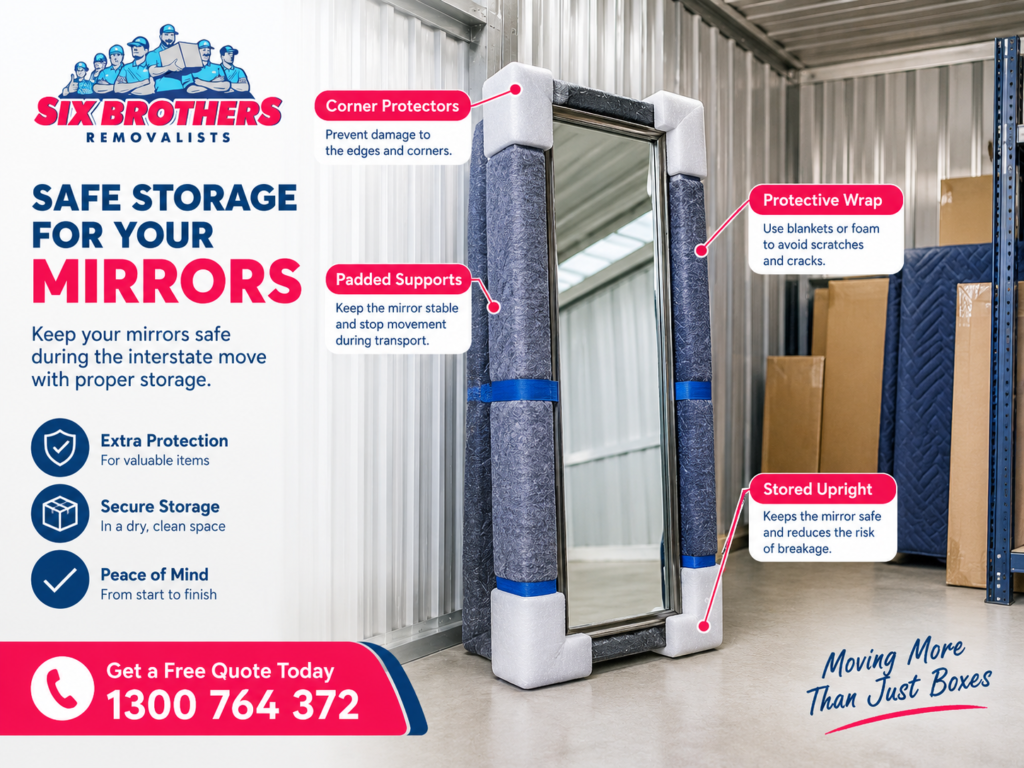
Store mirrors upright in a dry, stable area with protected edges. Keep them away from busy walkways and falling objects. Never lean an unpacked mirror at a steep angle. Out of sight should not mean out of mind.
Use padded separators between individually packed mirrors. Keep cartons off damp concrete using clean pallets or shelving. Avoid extreme heat, leaks, and high humidity. Ask storage providers how fragile items are positioned and accessed.
Do not stack mirrors together without separate rigid protection. Keep each carton labelled and inventory numbered. If storage follows transport, confirm insurance terms for that period. Chock-a-block storage needs even better organisation.
Common Mistakes When Moving Mirrors Interstate
Most mirror damage comes from movement, edge impacts, pressure, or poor handling. The biggest mistakes look harmless until the truck hits rough roads. Fix them before loading. An ounce of prevention beats a truckload of regret.
Laying Mirrors Flat
Laying a mirror flat can load the centre during vibration and road movement. Keep packed mirrors upright unless a specialist directs otherwise. Support the full lower edge and stop side movement. Flat as a tack is not the goal here.
If a manufacturer gives specific transport instructions, follow them. Some specialised mirror products may need different handling. Keep those instructions with the carton. Do not rely on memory on a busy moving day.
Leaving Packing Gaps
Empty carton space lets the mirror accelerate before hitting the carton wall. Fill gaps with controlled cushioning that does not compress the glass. Test for movement gently before sealing. If it rattles, you are not done.
Avoid loose scraps that settle during a long trip. Use consistent padding along edges and faces. The mirror should remain centred in the carton. A half-baked gap fill can fail after hours of vibration.
Packing Mirrors Together
Packing multiple mirrors together can transfer pressure from one frame into another. Pack valuable mirrors separately whenever possible. Use rigid dividers if a specialist system groups them. Do not let glass faces touch.
Number each carton and match it to your inventory. Separate antique, frameless, and LED mirrors from standard pieces. That improves handling decisions. Too many cooks can spoil the broth, and too many mirrors can crush each other.
Ignoring Corner Protection
Mirror corners often take the first impact during carrying and loading. Use fitted corner protectors before the main wrap. Add extra padding around ornate or projecting corners. Do not let tape become the only corner support.
Check corner protection again after the carton closes. Padding can shift during packing. A firm corner should not create pressure on the glass. Cover your bases before the mirror leaves the room.
Over-Tightening Straps
Straps should stop movement without bending the carton or frame. Tighten gradually and check the mirror remains vertical. Use padded contact points where straps touch the package. Do not crank tension like there is no tomorrow.
Truck movement may tighten some restraint systems further. Ask the crew how fragile cartons are secured. Keep rigid heavy items from pressing against the mirror. Snug is useful, crushed is not.
How to Unpack a Mirror After an Interstate Move?
Unpack the mirror upright in a clear, well-lit area. Photograph the carton before opening if you see dents or tears. Remove tape, boards, wrap, and corners slowly. Do not rip everything off in one go.
Have a second person support large mirrors during unpacking. Check the glass, frame, backing, and fittings before mounting. Compare condition against your pre-move photos. Slow and steady wins the race here.
Keep packaging until the inspection is complete. If the mirror needs acclimatisation after cold storage, follow manufacturer advice. Do not hang a damaged or unstable frame. Give it a once-over before celebrating.
What to Do If Your Mirror Arrives Damaged ?
Stop unpacking if you find serious damage or loose broken glass. Keep people and pets away from the area. Photograph the carton, labels, packing, and damage before moving pieces. Safety comes first, no ifs or buts.
Notify the removalist promptly and follow the written claim process. Keep receipts, condition photos, valuations, and delivery records together. If you have items damaged during an interstate move, photograph them before changing the packing.
Do not dispose of packaging until the claim process allows it. Avoid repairs before required inspections or approvals. Keep broken glass safely contained. Get written guidance when you are unsure about the next step.
FAQs
How do you move a mirror without breaking it?
Use rigid face protection, padded edges, a fitted carton, and upright transport. Prevent movement inside the carton and truck.
What is the best box for a large mirror?
Use a telescoping mirror carton or purpose-built crate. The right choice depends on size, weight, value, and frame design.
Can you lay a mirror flat in a moving truck?
Upright transport is generally safer for packed household mirrors. Follow any manufacturer or specialist instructions for unusual mirror products.
Do removalists have insurance?
Insurance arrangements vary between businesses and policies. Ask what cover applies, who provides it, and what exclusions affect mirrors.
Do removalists pack for you?
Many removalists offer packing services, but inclusions vary. Ask whether fragile mirrors need professional packing under the chosen cover.
Can two mirrors share one carton?
Separate cartons are safer for valuable mirrors. Specialist divider systems can work when designed for multiple pieces.
Should I use tape on mirror glass?
Avoid strong packing tape directly on delicate surfaces. Use protective film or rigid facing suited to the mirror.
The safest interstate mirror move is planned before anyone lifts the glass. Measure, document, pack, insure, load, and inspect in that order. Six Brothers can be reached on 1300 764 372 for a free quote. That keeps the whole job fair dinkum from start to finish.