


Table of Contents
Moving artwork interstate needs more planning than moving ordinary household items. Frames crack, canvases flex, and surfaces mark easily. Long road trips also add vibration, heat, moisture, and handling risk.
The safest method is simple in principle. Document each piece, use suitable materials, control movement, load vertically, and choose transport carefully. Valuable or fragile works may need custom crating and specialist handling.
This guide explains how to move artwork interstate across Australia. It covers packing, access, truck loading, climate, security, insurance, costs, and professional help. Better safe than sorry applies here.
Step-by-Step Packing Guide
The best way to transport paintings starts with protection against contact, movement, and impact. Each layer has one job. The first protects the surface. The next cushions the frame. The outer box protects against knocks.
Avoid wrapping every artwork the same way. A glazed print and an unframed canvas have different weak points. One careless shortcut can undo an hour of careful packing. Slow and steady wins the race.
For Framed Art & Glazed Pictures
Framed art with glass needs protection against both breakage and surface damage. Start by cleaning the frame gently. Never spray cleaner directly onto the artwork or glazing.
Place low-tack painter’s tape across glass only when appropriate. Avoid strong adhesive tapes on valuable or historic glazing. A conservation professional should advise on museum-grade pieces.
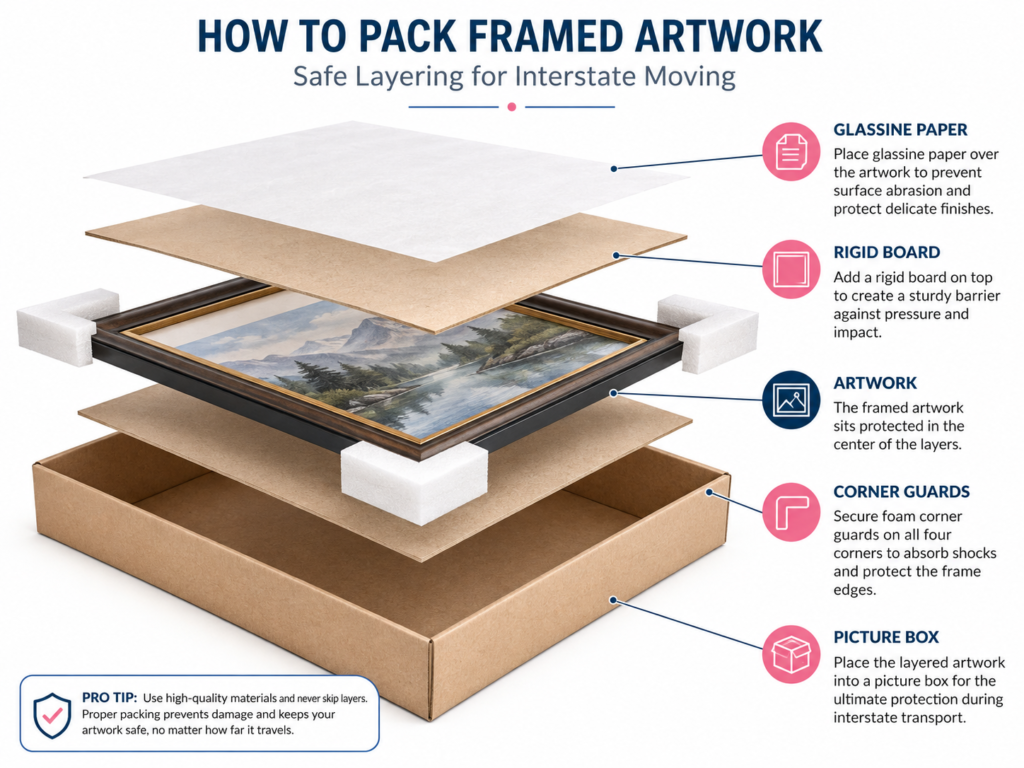
Cover the front with glassine or a clean protective sheet. Add rigid cardboard over the face. Then protect every corner with purpose-made corner guards.
Wrap the whole piece in several layers of cushioning. Fit it into picture boxes for moving. Fill empty space so the artwork cannot slide inside.
For very valuable glazed work, ask about artwork crating. A rigid crate can provide stronger impact protection. Measure twice, move once.
For Unframed Canvas Paintings
Unframed canvas needs protection without pressure on the painted surface. Never place bubble wrap directly against paint. Plastic can trap moisture and may imprint textured surfaces.
Use glassine or another suitable archival barrier first. Add a clean board on both sides. The boards should extend beyond the canvas edges.
Wrap the protected canvas with soft padding. Keep tape away from painted and fabric surfaces. Then place the work inside artwork moving boxes or a fitted carton.
Stretched canvas is vulnerable to vibration and flexing. The Australian Institute for Conservation of Cultural Material notes this physical risk. That makes firm support essential during long travel.
Do not stack heavy cartons on a canvas. Keep pressure away from the centre. A stitch in time saves nine.
Protect Glass
Protecting glass means reducing shatter risk and stopping fragments reaching the artwork. Start with a rigid face layer. It helps spread pressure from small knocks.
Corner protectors matter because frames often hit edges first. Use snug padding around every side. The box should not rattle when moved gently.
If the glazing is acrylic, scratching becomes the bigger concern. Use clean, non-abrasive layers. Avoid newspaper touching acrylic because ink and grit can mark surfaces.
For antique glass, museum glass, or irreplaceable work, get specialist advice. Don’t leave it to chance.
Use Archival Paper
Archival paper creates a safer first layer around sensitive artwork. Glassine is common for dry, stable surfaces. Acid-free tissue may suit some frames and paper-based works.
Do not assume every archival product suits every medium. Charcoal, pastel, gold leaf, fresh paint, and mixed media can behave differently. A conservator can recommend the right contact layer.
Keep the wrapping clean and dry. Store sheets flat before use. Dirt trapped under paper can scratch delicate surfaces during vibration.
The rule is simple. Soft does not always mean safe. Look before you leap.
Cushion and Edge Protect
Cushioning protects artwork from shock, while edge protection guards the most exposed parts. Use foam corners, cardboard protectors, soft blankets, or suitable bubble cushioning.
Build enough thickness to absorb knocks without crushing decorative frames. Ornate mouldings need more space around raised details. Do not pull wrapping tight over fragile ornamentation.
Use sturdy tape on the outer wrapping only. Label the package clearly with its orientation. Add “FRAGILE” and “THIS SIDE UP” where useful.
Good edge protection acts like a helmet around the artwork. It takes the first hit. Better late than never does not work after damage.
Box Vertically
Most framed paintings travel more safely upright rather than lying under other items. Vertical transport reduces pressure across the face. It also makes secure bracing easier.
Place picture boxes between stable, padded surfaces. Keep them away from loose tools and hard furniture corners. Use straps or load bars without crushing frames.
Never let heavy furniture lean against artwork moving boxes. Leave enough room to remove each piece without dragging it sideways.
For professional fine art transport, crate orientation may follow the artwork’s design. Gallery packing can be very specific. Keep your ducks in a row before loading.
Pre-Move Preparation
Good art removals start before the first sheet of wrapping comes out. Make an artwork list. Record dimensions, weight, condition, value, materials, glazing, and frame type.
Take clear photos from the front, back, sides, and corners. Photograph existing chips, scratches, frame gaps, and surface issues. Use consistent file names for easy checking later.
Check the destination too. Know where each piece will go. That avoids unnecessary unpacking and rehandling after a long interstate trip.
Preparation is your safety net. When the moving day gets busy, your records keep decisions clear. Forewarned is forearmed.
Prep and Record
Create one inventory entry for every artwork package. Give each piece a number, such as ART-001. Put that number on the outer packaging only.
Record the title, artist, medium, dimensions, frame details, and current condition. Add purchase records, valuations, or provenance documents where relevant.
Keep sensitive documents separate from the truck. Store digital copies securely. If you have a collection, use a spreadsheet or inventory app.
A condition report becomes especially useful for fine art removals. It creates a clear before-and-after record. Dot your i’s and cross your t’s.
Materials Needed for Packing Paintings
Use materials that protect surfaces, corners, voids, and outer walls. Cheap materials can work for low-value prints. Valuable pieces deserve stronger, cleaner protection. Our how to pack fragile items guide covers other breakable household items too.
Useful materials include glassine, acid-free tissue, rigid cardboard, foam board, bubble cushioning, corner protectors, painter’s tape, packing tape, moving blankets, picture cartons, telescopic boxes, and custom crates.
Shipping crates for paintings should match the item’s size and weight. The crate should not allow uncontrolled movement. Interior supports must avoid fragile decorative areas.
For a DIY pack, buy more corner protection than expected. Corners get used quickly across multiple frames. If you want the packing handled for you, our packing and removals service can help. Don’t put all your eggs in one basket.
When Does Artwork Need Custom Crating?
Artwork needs custom crating when ordinary cartons cannot control impact, flex, or movement safely. Large dimensions, high value, fragile frames, glazing, sculptural features, and long routes raise the case for crating.
Fine art crating is also useful when works need multiple handling stages. Examples include apartment loading, depot transfers, storage, backloading, or delivery through complex buildings.
A good art crate is built around the artwork. It may use rigid walls, internal foam, cleats, travel frames, or suspended supports. The exact design depends on the object.
Ask for art crating when the consequence of damage is high. Replacement value is not the only measure. Sentimental or culturally significant pieces may be impossible to replace.
If the work is oversized, unusually shaped, or conservation-sensitive, get expert input. Horses for courses is the right idea here.
Planning Access for Oversized Artwork
Oversized artwork can be packed perfectly and still fail at the front door. Plan the route before moving day. Check every doorway, corridor, stair turn, lift, loading bay, and building rule.
Measure the packed size, not only the bare artwork. Crates add width, depth, and weight. A few extra centimetres can change the whole plan.
Sydney apartments often add lift bookings, loading zones, concierge rules, and tight basements. Similar issues appear in Melbourne, Brisbane, and other major cities. Measure twice, move once.
Measure Doors and Hallways
Measure door widths and heights along the full route. Include security doors, screen doors, garage entries, and internal hallways.
Check whether doors can be removed safely if needed. Do not assume a diagonal angle will solve everything. Deep frames and crates need turning room.
Mark narrow points on a simple route sketch. Share it with the removalist before arrival. A problem shared is a problem halved.
Check Stairs and Lifts
Stairs create both clearance and manual-handling risks. Measure stair width, ceiling height, landings, and turns. Check handrails and low light fittings.
For lifts, confirm door size, cabin depth, weight limits, and booking times. Ask building management about padding requirements or lift keys.
An oversized crate may fit inside the lift but not turn through the lobby. Walk the full path first. Look before you leap.
Plan Loading Access
The truck should stop as close as legally practical to the pickup point. Long carries increase handling time and exposure. Rain and strong sun can also become risks.
Check loading zones, parking permits, height limits, driveway slopes, and loading dock times. Keep the artwork covered until the loading path is ready.
A clean loading route reduces bumps and rushed decisions. Clear the decks before the crew starts.
Specialist Lifting Equipment
Large artwork may need panel trolleys, dollies, lifting straps, stair equipment, or mechanical assistance. The right equipment depends on size, weight, access, and fragility.
Do not improvise with a heavy crate on narrow stairs. Manual handling injuries can happen quickly. Damage often follows when people lose control.
Discuss unusual items with interstate removalists before quoting. Photos and measurements help them plan. Many hands make light work only when the plan is sound.
How to Load Artwork Safely in a Moving Truck
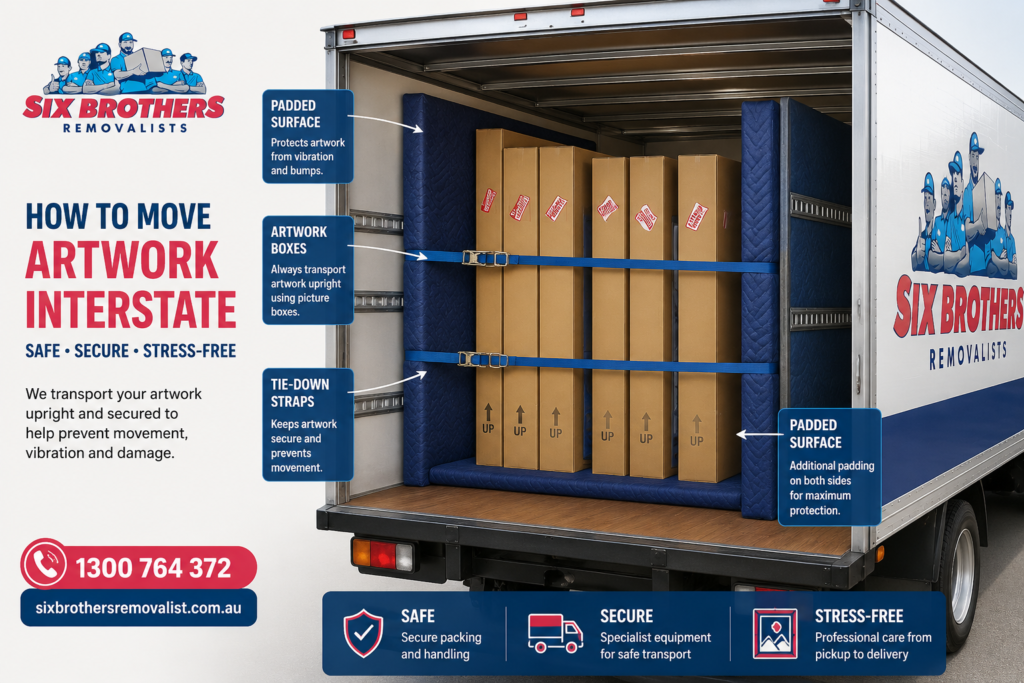
Load artwork upright, padded, restrained, and separated from hard or shifting cargo. The goal is to stop impact, vibration, pressure, and uncontrolled movement.
Create a protected zone inside the removalist truck. Place art against a flat, stable wall where possible. Use moving blankets as buffers between packaged pieces.
Secure packages with straps, rails, or load bars. Apply restraint to the package structure, not fragile frame details. Never over-tighten straps across canvas faces.
Keep artwork away from liquids, plants, tools, metal furniture, and sharp corners. Do not put boxes above pieces that could fall during braking.
The National Gallery has described specialised painting transport using vertical crate slots. It also considers travel direction to reduce shock and vibration. Household moves differ, but the principle remains useful.
A removalist experienced with fragile freight should plan the loading order. The artwork should not become an afterthought behind the sofa. Get your house in order before the doors close.

Protecting Artwork from Heat and Humidity
Protect artwork from rapid environmental changes, direct heat, moisture, and condensation. Temperature matters, but sudden humidity changes can be especially harmful to some materials.
The National Gallery’s preventive conservation work controls environmental conditions during storage and transport. AICCM also warns that humidity changes can move painting supports and crack paint layers.
That does not mean every family painting needs museum climate control. It means valuable or sensitive works deserve a risk-based plan. Don’t throw caution to the wind.
Temperature-Sensitive Artwork
Some media soften, become brittle, or react when temperatures become extreme. Wax-based work, mixed media, adhesives, and some modern materials need extra care.
Avoid leaving packed artwork inside a parked vehicle for long periods. Direct sun can heat enclosed spaces quickly. Schedule loading so delicate pieces spend less time exposed.
Ask a conservator about unusual materials. The artwork’s composition matters more than guesswork. When in doubt, play it safe.
Moisture and Condensation
Moisture can affect canvas, paper, timber frames, backing boards, adhesives, and metal fittings. Condensation may form when cold items enter warm, humid spaces.
Keep cartons dry during loading and unloading. Do not place artwork directly on wet pavement. Use waterproof outer protection only without trapping moisture against the artwork.
If packaging becomes wet, stop and assess before continuing. A wet outer box can lose strength fast. Nip it in the bud.
Climate-Controlled Transport
Climate-controlled transport may suit high-value, museum-quality, or environmentally sensitive artwork. It can reduce major temperature and humidity swings during long routes.
Ask what “climate controlled” actually means. Check monitoring, target ranges, vehicle practices, and loading procedures. A marketing phrase alone does not protect art.
Fine art transport specialists may also use data loggers. These record conditions during transit. Proof is in the pudding.
Seasonal Moving Conditions
Australian conditions change sharply by route and season. Summer heat can affect a Sydney to Brisbane or Sydney to Adelaide move. Winter cold can matter on southern routes.
Rain creates handling risks even when truck interiors stay dry. Wind can make large flat packages difficult to control. Bushfire smoke and road closures can also disrupt routes.
Plan loading windows around weather when possible. Keep protective covers ready at both addresses. Make hay while the sun shines, but protect the paintings first.
Did you know?
Humidity changes can make painting supports expand and contract. That movement can contribute to cracking in paint layers.
Transit & Logistics
Choose transport based on the artwork’s value, fragility, size, route, and handling needs. There is no single best service for every collection.
Standard interstate removalists can suit robust framed art packed correctly. Fine art removals may suit valuable, fragile, oversized, or conservation-sensitive pieces. Couriers can work for smaller items with suitable packaging.
For a whole household, keeping artwork with the main move can simplify coordination. However, some pieces deserve separate fine art transport. Different strokes for different folks.
Specialist Art Movers
Specialist art movers focus on handling, packing, artwork crating, condition reporting, secure loading, and controlled transport. They may also coordinate gallery access and installation.
Use them when damage would be difficult to repair or value is significant. They can also help with unusual materials and custom cases.
Ask about staff experience, vehicle setup, storage, tracking, and insurance arrangements. Fine art transport should be planned, not improvised. The devil is in the detail.
Standard Removalists or Courier
A standard removalist can be practical for household collections, framed prints, canvases, and decorative art. Good packaging remains essential.
Couriers may suit one small piece. Check handling stages and depot transfers. More transfers usually mean more opportunities for knocks or misrouting.
For multiple large pieces, furniture removalists with interstate experience may provide better load control. Ask how they separate fragile packages from furniture.
Cheap removalists can still be suitable for ordinary pieces. But price alone should not decide valuable artwork transport. You get what you pay for.
Insurance Check
Check removal insurance before the artwork leaves your control. Ask what is covered, excluded, limited, or dependent on professional packing.
Do not assume general household insurance covers interstate transit. Do not assume a removalist’s cover matches the artwork’s full value either. Read the terms and ask questions.
For valuable collections, consider a current valuation. Keep photos, receipts, provenance, and condition records together. Fine art transit insurance may need specific declarations.
If you are unsure, speak with your insurer or broker before moving day. Better safe than sorry.
Security and Tracking for Valuable Artwork
Security starts with knowing who has the artwork, where it is, and when responsibility changes. Valuable pieces need clear labels, records, and controlled handovers.
Do not put artist names or values on outer crates. Use neutral inventory numbers instead. Keep the detailed list with you or in a secure digital system.
Ask the carrier how tracking works. Some services offer GPS vehicle tracking. Others provide consignment updates or direct driver contact. Keep your cards close to your chest.
GPS Vehicle Tracking
GPS vehicle tracking can show the truck’s general movement during interstate transport. It helps with delivery coordination and route visibility.
Ask whether tracking is live, periodic, or internal only. A tracking map does not replace secure handling. It is one layer of oversight.
For valuable art, combine tracking with clear inventory and contact procedures. Two heads are better than one.
Consignment Tracking
Consignment tracking is more common when artwork moves through freight networks. It can show scans at depots, transfers, and delivery stages.
Check how many handling points are involved. Each transfer may increase risk. For fragile pieces, direct transport can be preferable.
Keep the consignment number separate from public social posts. No need to broadcast your collection. Loose lips sink ships.
Secure Art Vehicles
A secure art vehicle should keep packages restrained, dry, protected, and inaccessible during unsupervised stops. Vehicle cleanliness also matters.
Ask how the cargo space is locked and separated. Check whether other freight can shift against your artwork. A tidy truck can reveal good handling discipline.
Secure transport is not about fancy branding. It is about controlled access and careful loading. Actions speak louder than words.
Chain of Custody
Chain of custody records who handled the artwork at each stage. This can include pickup, depot transfer, storage, and final delivery.
For valuable work, use signed inventory checks at handover points. Note package condition before and after transport. Record any damage before opening further.
Clear responsibility helps if a dispute arises later. Keep a paper trail. That’s the long and short of it.
How Much Does It Cost to Move Artwork Interstate?
Artwork transport costs depend on route, size, weight, packing, crating, access, service level, and insurance. A small framed print may travel within a household move. A large valuable painting may need a custom quote.
Custom crating can add material and labour costs. Difficult stairs, lift bookings, long carries, and restricted truck access can add handling time.
Climate-controlled transport and specialist fine art removals usually cost more than standard freight. Direct delivery may also cost more than shared-space options.
For Sydney removals, the quote should describe the artwork requirements clearly. Ask whether packing materials, picture boxes, crating, stairs, travel, and insurance are included.
If you are comparing removalist prices, compare the same scope. A cheaper quote without protection can become expensive after damage. Penny wise, pound foolish.
Choosing Interstate Removalists Across Australia
The right provider depends on your route and the artwork. Someone searching removalists Sydney may have different logistics from removalists Melbourne or removalists Brisbane.
Longer routes can involve more driving, overnight planning, and weather changes. People also compare removalists Perth, removalists Adelaide, removalists Canberra, removalists Gold Coast, and removalists Newcastle for different corridors.
Route-specific searches include removalist Sydney to Melbourne, removalists Sydney to Brisbane, removalists Sydney to Adelaide, and removalists Sydney to Canberra. Each route can bring different timing and access issues.
For household moves, people may compare house removalists, office removalists, furniture removalists, interstate furniture removalists, or an interstate removalist. International removalists are a different service category with customs and freight considerations.
Searches such as removalists near me, removalist near me, cheap removalists Sydney, affordable removalists Sydney, and best removalists Sydney often show strong buying intent. Still, artwork needs should remain part of the quote.
Special items may also involve piano removalists or furniture removalist services. Removalist truck hire is different again because you control loading yourself.
The name on the service matters less than the actual handling plan. Ask how the artwork will be packed, restrained, tracked, and delivered. Horses for courses.
When to Call the Experts
Call experts when the artwork is valuable, fragile, oversized, unusually shaped, heavily glazed, or environmentally sensitive. Also get help when access is difficult or the route involves several handling stages.
Professional help is wise for antiques, original works, large canvases, ornate frames, glass-heavy pieces, sculptures, and collections with documented value. Our guide to safely relocating your art collection adds Sydney-specific planning advice.
Six Brothers Removalists can help plan packing and interstate moving requirements for household artwork. Share photos, measurements, access details, and your destination before quoting.
A professional quote should make responsibilities clear. Ask about packing, transport, access, timing, and insurance before booking. Don’t buy a pig in a poke.
Final Checklist Before Your Artwork Leaves
Before loading, confirm each piece is documented, protected, labelled, and matched to the inventory. Check that the package does not rattle or flex excessively.
Confirm pickup access and delivery access. Keep valuations, photos, insurance records, and contact details with you.
Tell the crew which packages contain fragile artwork. Show them any unusual weight distribution or structural weakness. Keep children and pets away from the loading path.
Once everything is secure, do one final walk-through. Five quiet minutes can prevent a costly mistake. Measure twice, move once.
Conclusion
Moving artwork interstate safely comes down to preparation, suitable packing, controlled handling, and the right transport choice. Treat each artwork according to its materials, frame, value, and route.
Document condition first. Protect surfaces without trapping moisture. Cushion corners. Box or crate firmly. Load upright and prevent movement. Check insurance before pickup.
For valuable or difficult pieces, professional art removals can reduce uncertainty. Our team can help plan an interstate move around your artwork and household needs.
For a tailored moving plan, request a free quote or call 1300 764 372. A careful plan today can save a painful surprise later. All’s well that ends well.
Frequently Asked Questions
Do removalists have insurance for artwork?
Some removalists offer or arrange forms of transit protection, but terms vary. Check exclusions, limits, packing requirements, and declared values before booking. Valuable artwork may need separate fine art transit insurance.
How much do interstate removalists cost for artwork?
Costs vary with route, size, weight, packing, access, crating, service level, and insurance. Ask for a detailed quote covering the artwork’s exact needs.
What is the best way to transport paintings interstate?
Pack paintings with a clean surface barrier, rigid protection, corner cushioning, and a fitted box. Load them upright and restrained. Valuable pieces may need custom crating or fine art transport.
Can I use bubble wrap directly on a painting?
Avoid placing bubble wrap directly against painted surfaces. Use a suitable barrier layer first. Sensitive, textured, or valuable works should receive conservation-aware packing advice.
Should paintings be transported flat or upright?
Most framed paintings are commonly transported upright and well restrained. Some artworks need different orientations. Follow specialist advice for unusual media, frames, or conservation needs.
How do I pack canvas paintings for an interstate move?
Cover the surface with a suitable clean barrier. Add rigid boards, corner protection, soft cushioning, and a fitted carton. Keep pressure away from the canvas centre.
Is custom crating worth it for valuable artwork?
Custom crating is often worthwhile when the piece is high-value, oversized, fragile, or difficult to replace. It can improve impact protection and load control.
How early should I organise artwork transport?
Start early enough to measure access, source picture boxes, arrange crating, and confirm insurance. Complex or valuable collections need more planning than ordinary household items.