
Table of Contents
Tracking valuable items during an interstate move needs more than labels and hope. Build a private inventory, photograph condition, log handovers, and carry irreplaceable items yourself. Use electronic trackers as a backup, not your only proof. Then check moving insurance Australia terms before the truck leaves. That layered system gives you a clear record from pickup to delivery. It also reduces arguments if something arrives damaged or goes missing. Think of your inventory as the map for the whole move. No worries, a simple system beats a fancy one you never update.

Quick Checklist for Tracking Valuables During an Interstate Move
The fastest way to track valuables is to create one record before packing. Keep that record with you during the move. Every high-value box should have a private number, condition photos, and a handover status. Better safe than sorry, especially when the trip crosses several states.
Before the Move
Start by listing valuables, serial numbers, replacement values, and photos. Decide which items stay with you. Separate items needing specialist packing from normal household goods. Build a moving inventory list that matches each numbered box. A fair go starts with clear records for everyone.
Check batteries in trackers before packing. Test each device from another room. Confirm your cloud backup works on mobile data. Save your removalist booking, quote, and contact details beside the inventory. That keeps the paperwork in one place.
Loading Day
Photograph every valuable box after sealing and before loading. Make sure the private number appears in each photo. Record seal numbers when you use tamper-evident tape or security labels. Keep your eyes peeled while boxes change hands.
Ask the crew to confirm high-value handling notes before loading. Note the truck number or job reference where available. Do not climb inside the truck to manage placement yourself. Let trained removalists handle loading and securing.
During Transit
Check tracker updates at sensible intervals, not every five minutes. Bluetooth trackers may show delayed or approximate locations. A cellular GPS tracker can offer more active updates. Coverage, battery life, and subscriptions still matter. She’ll be right is not a tracking plan.
Keep written delivery estimates and any change notices. If the load enters storage, note the facility and entry date. If it changes trucks, request a fresh confirmation. Your record should follow the load like a relay baton.
Unloading Day
Match box numbers as items leave the truck. Check tamper seals before opening valuable cartons. Photograph damage before moving the item again. Do not throw away wrapping until the condition check finishes. Good on ya if every number matches.
Write missing items on the delivery record before sign-off. Keep the wording factual and short. Note damaged corners, broken seals, or missing numbered boxes. Save copies before the crew leaves.
Decide Which Valuable Items Need Extra Tracking Before Packing
Not every item needs the same tracking level. Give extra control to expensive, unique, fragile, or hard-to-replace belongings. That approach keeps the system practical. You do not need an AirTag inside every box. Horses for courses works well here.
Replacement Value Cut-Off
Choose a replacement value that triggers extra tracking. A household might use $500, $1,000, or another sensible figure. The exact number depends on your budget and risk tolerance. The rule matters more than the dollar figure. Keep it simple, mate.
Items above that cut-off get serial numbers, photos, and private labels. They may also get tamper seals or electronic trackers. Examples include cameras, computers, artwork, watches, and premium appliances. The same rule can cover costly removalist furniture pieces.
Sentimental Value Items
Sentimental value can matter more than replacement cost. Family photos, medals, letters, and heirlooms may be impossible to replace. Put those items into your highest tracking category. Money cannot rebuild a family story. That’s the rub.
Photograph each sentimental item before packing. Write a short identifying note. Keep small irreplaceable pieces with you where practical. Use a hard case or document wallet for extra protection.
Owner-Handled Items
Owner-handled items should include things you cannot comfortably hand over. Passports, jewellery, medication, backup drives, and legal papers usually belong with you. Keep them in one locked bag. Do not leave that bag unattended. No drama, you stay in control.
Tell the removalist which items are excluded from the truck inventory. That prevents confusion at delivery. Your owner-handled list should be separate from truck-handled boxes. The two lists must never overlap.
Removalist-Handled Items
Large valuables may need professional handling. Examples include antique furniture, pianos, framed art, televisions, and designer tables. Discuss them during quoting, not after the truck arrives. A stitch in time saves nine.
Specialist furniture removalists can plan padding, lifting, and truck placement. Ask how high-value items will be wrapped and secured. Confirm any dismantling or crating before moving day. Add the plan to your inventory notes.
Keep Documents, Luxury Items, and Daily Electronics Off the Moving Truck
The safest place for small irreplaceable valuables is usually with you. Trucks can face delays, route changes, and depot transfers. Your personal bag stays within reach. That is the simplest risk control. Keep your powder dry.
Important Documents
Carry passports, licences, certificates, contracts, and financial records yourself. Put originals inside a waterproof document wallet. Store encrypted digital copies in the cloud. Keep one emergency contact list offline. No worries if your phone battery dies.
Keep a guide to documents needed when moving interstate beside your move file. It helps separate travel documents from truck paperwork. Keep both groups easy to reach.
Documents can also support a claim or dispute later. Keep the booking confirmation and inventory beside your identity papers. Add photos of signed delivery notes after completion. That gives you a complete move file.
High-End Luxury
Small luxury items should not disappear inside general moving boxes. Carry jewellery, premium watches, collectible coins, and small designer pieces yourself. Use a discreet bag without obvious branding. Keep the bag close during rest stops. Don’t advertise the good oil.
Larger luxury items may need custom packing and documented handover. Ask the removalist how they secure art, sculptures, or specialist furniture. Photograph vulnerable surfaces first. Include measurements when custom crates are involved.
Daily Electronics
Keep phones, laptops, tablets, chargers, and backup drives with you. These devices support navigation, banking, communication, and your tracking apps. Losing them can break your whole tracking system. Murphy’s law loves moving day.
Charge devices fully the night before. Pack one power bank and spare cables. Keep tracker apps signed in and updated. Save essential files offline in case mobile coverage drops.
Use the “Carry With You” Rule for Irreplaceable Valuables
The carry-with-you rule is simple. If money cannot replace it, do not put it on the truck. That includes tiny sentimental items and critical documents. It can also include one essential work laptop. Easy does it.
Use one small bag for documents and one locked case for valuables. Keep both inside your vehicle or personal luggage. Do not mix them with general moving boxes. Tell family members who controls each bag.
This rule also helps during backloading or depot transfers. Your irreplaceable items never enter the shared logistics chain. That removes several handover points immediately. Less handling means fewer chances for confusion.
Build a Visual Digital Inventory Before the Interstate Move
A visual digital inventory gives you proof of identity, quantity, and condition. It should match box numbers and item notes. Keep it searchable from your phone. Back it up before loading starts. As Aussies say, make hay while the sun shines.
Use Dedicated Apps
A spreadsheet works, but inventory apps can be faster. Use fields for item name, room, box number, value, and photo. Add a status such as packed, loaded, delivered, or missing. Keep the structure consistent. Bob’s your uncle once the template is ready.
Do not choose a complicated app just because it looks impressive. You need something fast under moving-day pressure. Test it with five boxes first. Export a backup before the move.
Generate QR Codes
QR codes can connect box labels to private digital records. The visible code should reveal nothing useful without access. Link it to a protected sheet, folder, or inventory record. Avoid public documents containing values. Keep your cards close to your chest.
Use QR codes as a convenience layer, not your only identifier. Print a plain number beside each code. A smudged code should never make the box unidentifiable. Keep one printed master list as backup.
Log the Serial Numbers
Serial numbers help distinguish one device from another. Record them for laptops, cameras, televisions, consoles, and other electronics. Photograph the serial plate where practical. Match each number to the box record. Fair dinkum, details matter after a problem.
Do not put full serial numbers on the outside label. Keep them inside your private record. If an item goes missing, the serial number strengthens identification. It may also help with insurer or police records.
Back Up to the Cloud
Back up your inventory before the truck leaves. Use a reputable cloud service with strong account security. Keep an offline copy on your phone or laptop too. Two copies beat one. Don’t put all your eggs in one basket.
Your backup should include photos, serial numbers, values, and signed records. Name folders by move date and category. Avoid vague filenames like image1234. Clear names save time under pressure.

Use Private Numbered Labels Instead of Writing Valuables on Boxes
Private numbered labels help organise valuables without advertising their contents. Use plain codes that only your master list can decode. Avoid words like jewellery, camera, or collectibles. Keep the outside boring. Loose lips sink ships.
Do Not Write Valuables on the Box
Never write expensive item names on the outside carton. Labels like “Rolex”, “camera gear”, or “rare coins” create unnecessary attention. Use room and private number only. Fragile markings are fine when needed. Keep it under your hat.
A box can say “Study 041” instead of “MacBook and camera”. Your private record explains the contents. The crew still knows the destination room. You keep the sensitive details private.
Use a Master Number System
Choose one numbering system before packing. A simple format could use room letters and sequential numbers. Examples include ST-041, LR-018, and BR-023. Do not change formats halfway. Straight as a die works best.
Put the number on two sides and the top. Photograph the label after sealing. Match the number inside your inventory app. The number becomes your shared reference during delivery.
Cross-Reference in Private
Your private master record should connect box number, contents, value, and photos. Keep access limited to trusted household members. Share only what the removalist needs. That protects sensitive details. Keep your nose clean and your records tidy.
What good is a tracker if you cannot match it to a box? The private number creates that link. It turns location data into useful evidence. Without the number, a dot on a map proves very little.
Use Electronic Trackers for Valuable Boxes in Interstate Transit
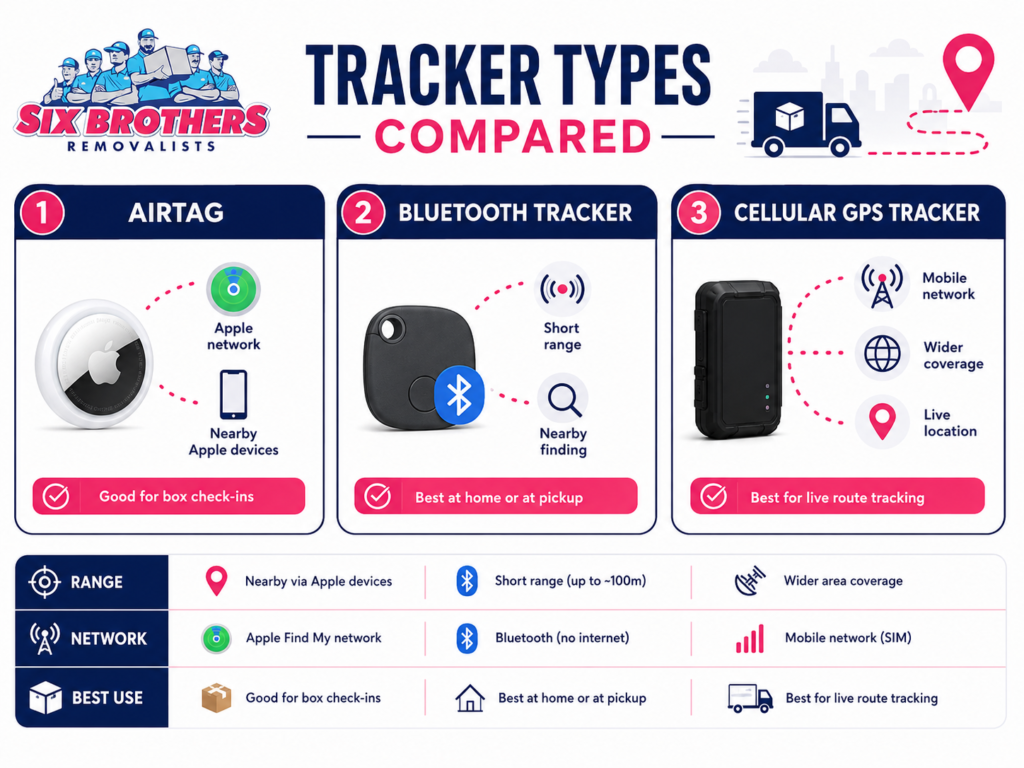
Electronic trackers can add useful location signals during an interstate move. They do not replace inventory records or insurance. Use them as another layer. A tracker is a smoke alarm, not a bodyguard. Don’t bet the farm on one device.
Apple AirTags
Apple AirTags use Bluetooth and Apple’s Find My network. Nearby network devices can help update an AirTag’s approximate location. Precision Finding works when compatible devices are nearby. AirTags are not cellular GPS trackers. Keep that in your back pocket.
Apple explains that the Find My network uses Bluetooth from nearby Apple devices. That makes AirTags useful for item finding. Updates can still depend on nearby devices and network conditions. Use one inside a valuable box, not on the outside.
Tile Trackers
Tile trackers also use Bluetooth rather than built-in GPS. The app can show the last known location after a connection. Network members can help update a lost Tile. Updates may not be immediate. That’s the long and short of it.
Tile can suit households using different phone platforms. Test your chosen model before moving day. Keep location permissions and Bluetooth enabled where required. Do not assume continuous highway tracking.
Cellular GPS Trackers
A cellular GPS tracker can provide more active location reporting. It normally uses satellite positioning plus a mobile data connection. Some models require a subscription or SIM plan. Battery life changes with update frequency. You get what you pay for.
Check network coverage on the planned route. Test the device inside a packed box. Metal, truck bodies, buildings, and poor coverage can affect results. Keep the device charged before loading.
The Hiding Rule
Hide trackers inside the package, but keep them serviceable. Do not place them where heavy objects can crush them. Avoid obvious exterior pockets. Record which tracker belongs to which box. Keep it on the quiet.
Your removalist should still receive accurate handling information. Hiding a tracker does not mean hiding dangerous items. Never use trackers to monitor people without consent. Use them only for your own belongings.
Did you know?
Bluetooth item trackers can show useful location updates, but they are not the same as dedicated cellular GPS tracking.
Add Tamper-Evident Seals to Valuable Moving Boxes
Tamper-evident seals show whether a valuable carton was opened after sealing. They do not stop theft or damage. They simply create another condition record. Use numbered seals for better proof. Better the devil you know.
Seal Number List
Record each seal number beside the matching box number. A simple table works well. Write the seal number before loading. Photograph it clearly. Keep the master list private. No mucking around with unreadable handwriting.
If you replace a broken seal before pickup, record the change. Never overwrite the first entry. Add a dated note explaining why the seal changed. That keeps the audit trail clean.
Photo Before Loading
Take one wide photo and one close photo of each sealed valuable box. The wide photo shows overall condition. The close photo shows the seal and box number. Keep both in the same folder. A picture tells the tale.
For bulky items, photograph straps, wrap, corners, and exposed surfaces. Include scale when damage size could matter. A ruler beside an existing scratch can help later. Keep photos clear, not artistic.
Check at Delivery
Check seals before removing them. Photograph any broken, missing, or changed seal first. Note the issue on the delivery record. Then open the box and inspect contents. Don’t close the gate after the horse bolts.
If the seal looks normal, still inspect fragile valuables promptly. A perfect seal does not prove the contents escaped impact. Condition checks remain important. Save packaging until you finish.
Record Box Condition Before the Removalist Handover
Condition photos establish what the box looked like at pickup. They also record pre-existing dents, tears, and scratches. This protects both customer and removalist. Clear evidence can prevent pointless arguments. Play a straight bat.
Seal Condition
Photograph tape edges, tamper seals, and closures. Note any repaired areas. Make sure labels stay readable. Avoid covering seal numbers with extra tape. Keep the record consistent. Nice and easy wins the race.
For reusable crates, photograph locks and hinges. For artwork crates, photograph screws and corner protectors. For hard cases, show latches closed. The photos should prove the starting state.
Corner Damage
Corners often show handling damage first. Photograph all four corners on high-value cartons. Record any crushed or soft areas before handover. Do the same for furniture edges and framed pieces. That’s where the rubber hits the road.
If damage already exists, write it clearly. Do not hide pre-existing marks. Honest records improve trust. They also make new damage easier to identify later.
Time-Stamped Photos
Your phone usually stores capture date and time. Keep original files whenever possible. Avoid editing important condition images. Save copies into your move folder. Time waits for no one.
You can also photograph the item beside its box number. That creates a direct visual link. For expensive electronics, include the serial plate in another photo. Keep personal information out of unnecessary images.
Loading Notes
Write short notes about unusual handling requirements. Examples include “keep upright”, “do not stack”, and “two-person lift”. Confirm these notes with the crew. Keep them beside the item record. Call a spade a spade.
If the crew adds extra padding or crating, note that too. Photograph the final packed state. The record should show what changed after professional preparation. That can matter during a later claim.
Create a Chain-of-Custody Handover Log With Your Interstate Removalist
A chain-of-custody log records who had responsibility at each stage. It matters most during storage, depot handling, or truck transfers. Keep entries simple and factual. The goal is traceability. Many hands make light work, but records keep hands accountable.
Pickup Sign-Off
Record the pickup date, job number, and valuable box count. Ask for acknowledgement of special handling notes. Keep a copy of the signed document. Photograph it if the original stays with the crew. Dot your i’s and cross your t’s.
Do not create a dramatic legal document. A simple handover list is enough for many moves. The removalist’s own paperwork may already cover key details. Add your private inventory references separately.
Driver Details
Keep the main driver or coordinator contact supplied by the company. Record the official truck or job reference. Do not collect unnecessary personal information. Use company channels where possible. Keep it above board.
For interstate removalists, the driver may not control every depot step. That is normal on some services. Your log should record company handovers rather than guessing. Ask how updates will be communicated.
Load Confirmation
Confirm how many valuable boxes entered the truck. Record any item held back at the last minute. Note items repacked by the crew. Save the final count before departure. Count twice, load once.
Would you remember box 47 after a three-day move? A written count removes that pressure. It also helps during unloading. The crew and customer can compare one shared number.
Delivery Sign-Off
Do not sign a clean delivery note before checking valuable items. Match box numbers and obvious condition first. Write shortages or visible damage on the record. Take a photo of the completed note. No use crying over spilt milk later.
Keep language neutral. Write “box ST-041 missing” instead of blaming a person. Facts help the issue move faster. Save emails and call notes in the same folder.
Choose an Interstate Removalist Service That Supports High-Value Items
Choose a service based on handling control, not price alone. Ask how the load travels, where it may stop, and who handles it. High-value items need clear answers before booking. You want a fair go, not surprises.
Dedicated Truck Option
A dedicated truck can reduce shared-load handovers. It may suit large moves with many valuable items. Ask whether the same truck travels door to door. Confirm any planned driver or vehicle changes. Keep your ear to the ground.
People comparing a removalist from Sydney may see many service types. Removalists Sydney teams can offer local, interstate, or dedicated options. A removalist Sydney quote should explain the actual transport method. Sydney removalists should also explain how high-value notes follow the job.
Backloading Risk Check
Backloading can reduce cost by using available truck space. It can also involve shared loads and flexible timing. Ask how boxes stay separated and identified. Confirm depot or transfer steps before booking. Look before you leap.
Interstate removalists Sydney customers should ask about load separation. An interstate removalist Sydney service should explain every expected handover. Sydney interstate removalists may use different route models. Compare the model, not just the headline rate.
Premium Packing Add-On
Professional packing can improve protection for fragile and expensive goods. Ask about cartons, wrapping, crates, and specialist materials. Confirm who packs the item and how it gets labelled. Measure twice, cut once.
Furniture removalists Sydney teams may use blankets, wraps, and straps. A furniture removalist Sydney provider should explain fragile-item preparation. House removalists Sydney may also offer full packing. Office removalists and office removalist Sydney teams need similar controls for computers and equipment.
High-Value Handling Request
Tell the company about high-value items before accepting the quote. Ask for written handling notes. Confirm how those notes reach the moving crew. Do not assume the booking agent told everyone. That’s where the penny drops.
Cheap removalists Sydney searches can surface very different service levels. Best removalists Sydney and good removalists Sydney searches can also be subjective. Full service removalists Sydney options may include more packing help. Compare written inclusions, exclusions, and handling steps.
Route terms also vary. You may see removalist Sydney to Melbourne or removalists Sydney to Melbourne. Some use interstate removalists Sydney to Melbourne. Others advertise removalists Sydney to Brisbane or interstate removalists Sydney to Brisbane. The tracking questions stay the same.
The same applies to removalists Sydney to Canberra and removalist Sydney to Newcastle. You may also see removalists Sydney to Newcastle in search results. Removalists Sydney CBD and removalists western Sydney face different access challenges. Removalists Parramatta also deal with busy pickup streets and apartments.
Removalist services Sydney buyers should compare more than slogans. A removalist in Sydney should explain handovers before accepting a booking. Removalists in Sydney should confirm how high-value notes reach the crew. Search phrases like removalists near me or removalist near me show local intent. Removalist companies should still provide clear written handling information. Cheap removalists can be suitable when service details stay transparent.
These rules also apply beyond Sydney. Removalists Melbourne and removalists Brisbane may use different routes and depots. Interstate furniture removalists need the same item records. International removalists may add ports, customs, and longer custody chains.
Piano removalists need specialist lifting and securing plans. A piano removalist Sydney booking needs clear access notes. Piano removalists should also confirm protection before loading. Removalist truck hire alone gives you less professional handling support.
Check Insurance Cover and Removalist Credentials Before Moving Valuables
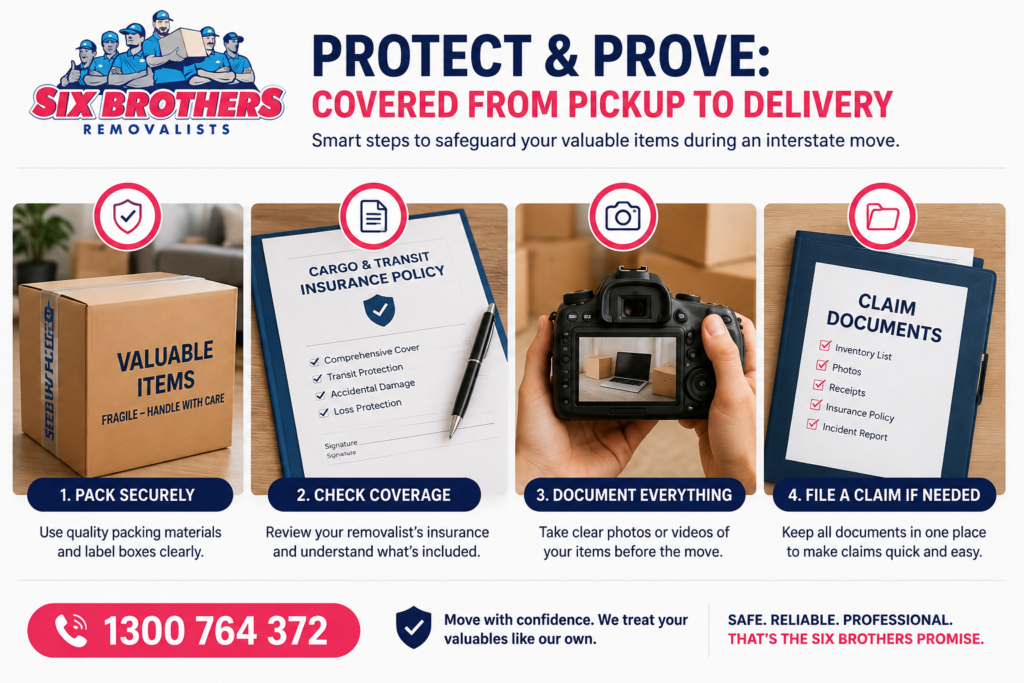
Moving insurance Australia questions should be answered before pickup, not after damage. Ask what cover applies during loading, transit, storage, and unloading. Read exclusions and claim steps. Do not assume every policy covers every type of damage. Forewarned is forearmed.
AFRA says moving insurance can cover household goods between homes and during storage. It also says qualified sellers should provide a Product Disclosure Statement and Financial Services Guide. Read the AFRA moving insurance guidance before buying cover. Check who provides the financial product.
Ask whether owner-packed boxes face different exclusions. Confirm declared values for expensive items. Check excess amounts and claim time limits. Keep receipts, valuations, and condition photos. Those records support moving insurance Australia discussions later.
Do removalists have insurance? Many removalist businesses carry business insurance, but that does not automatically cover your goods. Ask what customer cover applies to your specific move. Request written documents rather than relying on a phone promise. A bird in the hand is worth two in the bush.
Are removalists liable for damage? Liability depends on the circumstances, contract, law, and any insurance arrangement. Do not treat liability and transit insurance as the same thing. Get advice from the appropriate provider when needed. Keep records factual and complete.
Plan Sydney Pickup Access for Safe High-Value Item Loading
Good access reduces carrying distance, rushed handling, and unnecessary touches. Sydney apartments can add lifts, loading docks, strata rules, and street limits. Plan these before moving day. A smooth sea never made a skilled sailor.
Lift Booking Window
Book the lift early when your building requires it. Confirm start time, finish time, and protection rules. Ask whether the lift needs padding. Share the booking window with the removalist. Early bird gets the worm.
A delayed lift can leave valuable items waiting in hallways. That increases handling and crowding. Keep the building manager’s contact number ready. Confirm access again the day before.
Loading Zone Distance
Measure the practical walking distance from door to truck. A legal parking spot can still be far away. Tell the removalist about long carries, ramps, stairs, and tight corners. Don’t make a mountain out of a molehill later.
Movers Sydney and movers Parramatta often work around busy streets. Packers and movers Parramatta may also need loading dock bookings. Removalist Parramatta jobs can involve Macquarie Street access limits. Parramatta removalists benefit from accurate notes before arrival.
Strata Access Rules
Read your strata moving rules before booking. Some buildings require lift protection, deposits, insurance evidence, or fixed windows. Follow the building’s written process. Do not rely on what a neighbour remembers. Rules are rules, mate.
If the building restricts certain entrances, tell the crew. Photograph any pre-existing common-area damage when required. Keep the building contact available. That can prevent delays and disputes.
Building Contact Ready
Save the concierge, strata manager, or building manager number. Confirm who can open loading areas and lifts. Share only necessary contact details with the coordinator. Keep everyone on the same page. Many a slip ‘twixt cup and lip.
House movers Sydney may face fewer strata rules, but parking still matters. Home movers should know driveway limits and steep access. Furniture removalists Parramatta may need extra trolley distance. Good access notes protect both time and belongings.
Track Valuable Items Through Storage, Depots, or Truck Transfers
Storage and transfers create extra custody points. Update your tracking record every time the load changes location or control. Do not assume the original pickup record covers everything. Keep the chain alive. Too many cooks can spoil the broth.
Storage Entry Record
Record the storage facility name, entry date, and box count. Ask how valuable items are identified inside storage. Keep a copy of any warehouse receipt. Note whether seals remain intact. Lock it in, mate.
If storage forms part of moving insurance Australia cover, check the exact conditions. Some cover may depend on approved facilities or time limits. Keep all storage documents with your move file. Do not separate them.
Depot Transfer Notes
If the load enters a depot, note the date and company update. Ask whether items remain on the same pallet, container, or truck. Record any new job reference. Keep explanations in writing where practical. Put it in black and white.
Do not panic because a service uses depots. The key issue is traceability. Clear transfer records can work well. Vague answers create the real problem.
Second-Truck Check
If items move onto another truck, request a refreshed count. Ask whether numbered boxes were scanned or manually checked. Confirm any new delivery estimate. Save the message. Keep your finger on the pulse.
A tracker location may also change at that point. Compare the update with the written transfer note. Do not treat a map pin as proof of custody. Use both records together.
Delivery ETA Updates
Keep delivery estimates in one message thread. Note major changes rather than every small adjustment. Ask for an updated window when plans shift. That helps you prepare safe access at destination. Keep calm and carry on.
You can also prepare your broader interstate relocation checklist around that delivery window. Keep utilities, keys, and building access ready. A coordinated arrival reduces rushed unloading.
Prepare a Missing Item Escalation Plan Before Delivery
Prepare your escalation plan before anything goes missing. Know who to contact, what evidence to send, and how to record delivery issues. That saves time during a stressful moment. Hope for the best, plan for the worst.
Move Coordinator Contact
Save the official coordinator number and email before pickup. Use company channels for missing-item reports. Avoid sending important evidence only through social messages. Keep one written thread. Stay on the straight and narrow.
If Six Brothers Removalists is handling your move, keep the booking reference beside their contact details. Their office phone is 1300 764 372. Their email is info@sixbrothersremovalist.com.au. Keep your job details ready before calling.
Item Number Reference
Report the private box number first. Add the item description only where needed. Include the last confirmed handover point. That makes searching faster. Short and sweet wins here.
Your number should match photos, seal records, and inventory entries. Do not rename the missing item halfway through the process. Consistent references reduce confusion.
Photo Evidence Folder
Create one folder for evidence before moving day. Include packing photos, seal photos, serial numbers, and delivery images. Add receipts or valuations for expensive goods. Back it up. Keep your ducks in a row.
Photograph your belongings before an interstate move using one consistent routine. Photograph full items and vulnerable details. Clear evidence saves explanations later.
Written Delivery Notes
Write missing or damaged items onto delivery paperwork before final sign-off. Use neutral wording and exact box numbers. Photograph the completed page. Email a copy to yourself immediately. Get it while the getting’s good.
If an item is missing, ask what the company’s search process is. Keep dates and names of official contacts. Follow any claim instructions within required timeframes. Do not discard damaged packaging too early.
If items are damaged during an interstate move, record the issue before final sign-off. Keep the damaged item and packaging until the claim process is clear.
Final Check Before Your Valuable Items Leave
A good tracking system uses several small controls together. Number boxes privately, photograph condition, log handovers, and keep backups. Add trackers where they make sense. Then confirm moving insurance Australia details before pickup. Slow and steady wins the race.
Do not chase perfect technology. Chase clear records that you can actually maintain. A simple paper trail often solves problems faster than screenshots alone. Your goal is confidence from door to door.
Six Brothers Removalists can help plan packing, access, and interstate handling for your move. Get a free quote before moving day. Call 1300 764 372 or email info@sixbrothersremovalist.com.au. You can also visit Six Brothers Removalists to plan your move. No worries, good preparation does the heavy lifting early.
Frequently Asked Questions
Do Removalists Have Insurance?
Many removalists carry business insurance, but customer goods cover can differ. Ask what protection applies to your exact move. Request policy documents when insurance is offered. Moving insurance Australia options may include specific exclusions. Better safe than sorry.
Are Removalists Liable for Damage?
Liability depends on the facts, contract, consumer law, and insurance arrangements. Do not assume every breakage creates automatic liability. Record condition and delivery issues immediately. Keep written evidence. Facts are stubborn things.
Should I Put an AirTag in a Moving Box?
An AirTag can add a useful location signal for your own belongings. It is not a cellular GPS device. Put it inside the box and record its matching box number. Test it before loading. Give it a burl first.
Is a GPS Tracker Better Than an AirTag for Interstate Moving?
A cellular GPS tracker can provide more active location updates. It may need mobile coverage, charging, and a subscription. An AirTag depends on the Find My network. Choose based on the risk and route. Horses for courses.
What Valuable Items Should I Carry Myself?
Carry documents, jewellery, medication, backup drives, and irreplaceable sentimental items. Keep them in a locked or controlled bag. Do not load them with general cartons. Hold your horses before sealing everything.
How Do I Prove an Item Was Damaged During the Move?
Use before-and-after photos, inventory notes, serial numbers, seals, and delivery records. Keep original images and timestamps. Report visible issues before final sign-off where possible. Proof is in the pudding.
Should I Tell the Removalist Which Boxes Are Valuable?
Tell the company which items need special handling. Do not advertise expensive contents on exterior labels. Use private numbers and written handling notes. Share only information needed for safe work. Keep your cards close.
What Should I Do If a Valuable Box Is Missing at Delivery?
Record the missing box number on the delivery paperwork. Contact the move coordinator immediately. Send the inventory record, photos, and last handover details. Follow claim instructions quickly. Strike while the iron is hot.