

Table of Contents
A moving inventory list records what you own, where it is packed, and where it goes. It also records condition, value, handling needs, and delivery status. For an interstate move, that simple record can prevent a lot of headaches.
You do not need fancy software or hours of admin. A clear system works better than a clever system nobody updates. Think of your inventory as the control panel for the whole move.
Sydney moves often include lifts, loading zones, long carries, and tight street access. Interstate delivery adds another layer because your belongings travel much further. A useful list keeps every box and furniture item connected to the plan.

How to Make a Moving Inventory for an Interstate Move?
Start room by room and give every box or large item a unique number. Record its room, contents, condition, value, and transport method. Then take photos and update the record during loading and delivery.
Do not try to catalogue the whole home in one sitting. Work through the kitchen, bedrooms, lounge, garage, and storage areas. Slow and steady wins the race when hundreds of items are involved.
A basic moving inventory template can use seven columns. Add item number, room, description, box number, condition, value, and destination. You can add access notes or special handling details when needed.
At minimum, record these details:
- Unique item or box ID
- Room code and destination room
- Contents or furniture description
- Condition and estimated value
- Transport type and handling needs
- Loaded and delivered status
For example, a lounge entry may read, “L-04, television, good condition, $1,200, personal car.”
Another may read, “K-12, glassware, Box K07, fragile, $350, removalist truck.”
That detail makes handovers much easier.
Ever tried finding one missing charger after 80 boxes arrive? A simple record makes that search far less painful. It also helps your removalist understand what needs special care.

What Is a Moving Inventory List for an Interstate Move?
A moving inventory list is a written or digital record of belongings being relocated. It connects each item with packing, transport, delivery, and condition details. In plain terms, it tells you what is moving and where it should finish.
The list can cover boxes, furniture, appliances, artwork, electronics, and garage items. It can also separate valuables, essentials, storage goods, and items staying behind. No worries, it does not need to become a museum catalogue.
A useful moving box inventory template usually works beside your labels. The box shows a code, such as BED2-08. Your spreadsheet or app explains what BED2-08 contains.
Large furniture should have its own entries. A furniture inventory template can record sofas, beds, tables, cabinets, and outdoor settings. It should note dismantled parts, loose hardware, and current marks.
This detail becomes more important with interstate removalists. The load may travel hundreds or thousands of kilometres. Clear records reduce confusion between pickup, depot handling, storage, and delivery.
Why Create a Moving Inventory List Before Moving Interstate?
Create the list because interstate moves involve more distance, handling, and handover points. A good inventory supports quoting, packing, loading, claims, and final checks. It also gives you one reliable record when the house feels chaotic.
Without a list, moving day can feel like a jigsaw spread across three vehicles. You know the pieces exist, but not where each one went. Better safe than sorry is the right mindset here.
An inventory also helps you catch forgotten items before the truck leaves. It can reveal boxes still sitting in cupboards or storage cages. It also flags items that should travel in your car.
For a Sydney household, this matters around apartments and busy streets. A delayed lift booking can change loading order. Tight parking in Parramatta, the CBD, or the Inner West can also affect access.
A detailed list gives removalist companies a better picture of your move. It can support a more accurate estimate before the team arrives. That matters when you compare affordable movers Sydney options or cheap removalists.
Choose the Best Inventory Method for Your Interstate Move
Choose the method you will actually maintain during packing and delivery. Digital tools suit most households, while paper still works for simple moves. Horses for courses applies here because every move has different needs.
Digital & Mobile
Digital lists work well when several people update the same move. You can add photos, notes, values, and room codes from your phone. Cloud storage also reduces the risk of losing the only copy.
A phone-based moving inventory list suits people packing over several weeks. You can update an item immediately after sealing a box. That keeps the record close to real time.
Digital tools also suit office removalists and office managers. Teams can split work by rooms, departments, or equipment groups. A shared list can track monitors, chairs, files, and specialist equipment.
Spreadsheets
A moving inventory spreadsheet gives you the most control over columns and filters. Google Sheets and Excel both work well for this purpose. You can sort by room, box number, value, or delivery status.
Use simple columns and avoid complicated formulas. Add dropdowns for status fields, such as packed, loaded, delivered, and checked. Freeze the top row so headings stay visible on mobile.
Spreadsheets also work well for quote preparation. You can send a clean furniture list and box count. A removalist from Sydney can review the scope before confirming vehicle space.
Pen & Paper
Paper works when the move is small and one person controls the packing. Use a clipboard and number each page. Keep photos separately on your phone with matching item codes.
The risk is duplication or lost sheets. Keep one master copy and photograph each completed page. That backup takes seconds and can save a fair bit of grief.
Paper may suit older family members or simple storage moves. It also works as a loading-day checklist beside your digital record. Keep it simple, and it can still do the job.
Use a Free Home Inventory App for Interstate Moving
A free home inventory app can speed up photos, item entries, and room grouping. Choose one that exports data or stores a backup. Avoid an app that locks everything inside one account.
Many general inventory apps can handle moving tasks. Look for photo attachments, custom fields, categories, and notes. A CSV export is especially handy for a moving inventory spreadsheet backup.
Your phone camera may be enough for a smaller home. Create albums for each room and photograph item codes. Then match those codes inside your moving inventory template.
Do not depend on an app without testing it first. Add five sample items and export the data. If the export looks messy, change tools before packing starts.
A free tool should reduce work, not create extra admin. Good on ya if the simplest option is already on your phone. The best system is the one you keep using.
Group and Label Items by Room Before Packing
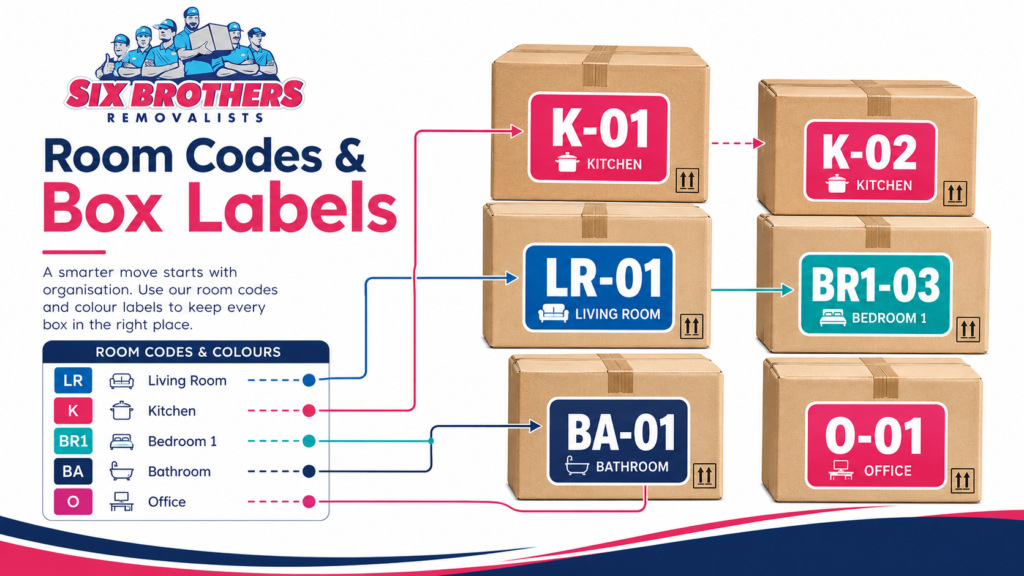
Group items by their destination room before sealing boxes. Then give each room a short code and consistent label colour. Clear grouping helps removalists place items correctly at delivery.
Colour coded moving labels can make the system faster to scan. Use blue for bedrooms, green for kitchen, and yellow for lounge. Keep the written room code because colours can look different in poor light.
If you want a fuller labelling method, see how to label boxes for an interstate move. The same coding system should appear on boxes and your inventory. A stitch in time saves nine when labels are involved.
Assign Room Codes
Assign short room codes that stay obvious at both addresses. Use K for kitchen, L for lounge, and B1 for bedroom one. Avoid codes that only make sense to one person.
For larger homes, add floor numbers or zones. Examples include U-B2 for an upstairs bedroom or G-GAR for garage. Keep the code short enough for quick handwriting.
At the destination, place matching signs on room doors. That gives the crew a visual target. It also reduces constant questions while you are checking deliveries.
Label Every Box
Every box should show its room code and unique number. Write the label on the top and one side. That keeps the code visible when boxes are stacked.
A box marked K-07 should match one line in your inventory. Record broad contents, not every spoon or tea towel. Use “plates, bowls, serving dishes” instead of a 30-item list.
Add handling marks when they change how the box should move. Examples include FRAGILE, THIS WAY UP, and DO NOT STACK. Those notes should also appear in the inventory.
Log Box and Item Details for Interstate Removalists
Log enough detail to identify each box without opening it. Record the box number, contents, value, and handling needs. This gives interstate removalists a practical handover record.
The goal is not perfect paperwork. The goal is a list that answers questions quickly. Fair dinkum, three useful details beat ten vague ones.
Box Number
Use one unique number for every carton. Never reuse a number after a box is removed from the move. Gaps are fine, but duplicate numbers create confusion.
You can number by room or use one master sequence. Room numbering makes unloading easier for larger homes. A master sequence is simpler for smaller moves.
Write box numbers with a thick marker. Avoid placing the number only on packing tape. Tape can tear, fold, or become hidden during loading.
Contents
Describe contents at category level. Record “winter clothes, shoes, spare linen” instead of “bedroom things.”
Useful descriptions help you find essentials after delivery.
Do not write sensitive valuables on the outside of boxes. Keep detailed value notes inside the private inventory instead. A box can simply say “personal items” on the label.
For office moves, list equipment types and departments. Examples include accounts files, desktop accessories, and marketing samples. That helps office removalists unload by work area.
Estimated Value
Estimated value helps prioritise high-value belongings and supports insurance discussions. Use realistic replacement values where possible. Receipts can support expensive items later.
Group low-value items instead of pricing every small object. A kitchen box might have one combined estimate. Record jewellery, artwork, electronics, and antiques separately.
Value does not automatically equal insurance cover. Check policy terms and exclusions before relying on the figure. Treat the inventory as evidence, not a policy promise.
Did you know?
An inventory becomes far more useful when item numbers match photos, labels, and delivery checks. One shared code connects the whole record.
Record Item Condition Before Interstate Packing
Record visible condition before packing, especially for furniture, appliances, artwork, and electronics. Short notes and clear photos work better than long descriptions. This gives you a useful baseline before transport.
Do the check in good light. Photograph front, back, sides, corners, and existing damage. The saying “she’ll be right” is not enough when condition matters.
Existing Damage
Record dents, chips, stains, tears, and cracked surfaces before moving. Be specific about the location. “Small chip on front-right table corner” is useful and easy to verify.
Existing damage notes protect everyone from confusion later. They help you distinguish old marks from new damage. They also reduce arguments based on memory.
For removalist furniture, include condition notes before wrapping starts. Ask the crew about any major concerns you notice. Keep the discussion calm and factual.
Scratches and Marks
Photograph scratches close up and from a wider angle. The wider photo shows where the mark sits. The close photo shows its shape and size.
Use natural light when possible. Avoid filters or image editing. You want a simple, honest record of the item.
For polished furniture, angle the camera so reflections do not hide marks. Record deep scratches separately from light surface wear. That makes later comparison easier.
Missing Parts
List missing shelves, knobs, screws, cables, and remote controls. This prevents you blaming transport for something already missing. It also helps with reassembly after delivery.
Bag loose hardware and label the bag with the furniture code. Keep important bolts with you when practical. A bed without its bolts is no use on arrival night.
If a furniture removalist dismantles items, update the record. Note how many pieces were created. Then record where the hardware bag was stored.
Working Condition
Test appliances and electronics before packing where practical. Record whether televisions, monitors, lamps, and small appliances switch on. Do not create risky tests for heavy equipment.
Take a short video for valuable electronics. Show the device working and its item code. Keep the original timestamped file.
For appliances, disconnect them according to manufacturer guidance. Your inventory should record condition, not replace safe preparation. Leave specialist work to qualified trades when required.
Photograph Everything Before the Interstate Move
Photograph boxes, furniture, high-value items, and visible condition before the move. Match each photo to an inventory code. This turns your list into a much stronger record.
Start with wide photos of each room before packing. Then take closer photos of major belongings and packed boxes. Beauty is in the eye of the beholder, but evidence needs clear angles.
Would you rather explain a scratch from memory or show a dated photo? Photos remove a lot of uncertainty. They also help identify missing items after delivery.
Do not rely on social media uploads as your only backup. Keep original files in cloud storage or another device. Folder names should match your room codes.
For a broader system, track your belongings during an interstate move with the same item numbers. Your inventory and tracking process should support each other. That avoids two competing records.
Track Fragile and Special-Care Items Separately
Create a separate view for fragile, high-value, oversized, and do-not-stack items. These belongings need extra attention during quoting and loading. A separate list stops them disappearing inside general box counts.
Special-care items can affect wrapping, lifting, truck space, and loading order. Tell your interstate removalist before moving day. The early bird catches the worm when special handling is involved.
Glassware
List valuable glassware by set or group. Record box numbers and note whether dividers are used. Keep especially sentimental pieces separate when practical.
Use sturdy cartons and enough cushioning. Do not leave empty space inside fragile boxes. Movement inside the box can cause damage during long-distance transport.
Professional packers can help with large glassware collections. The packing and removals service is relevant when you need packing support. Your inventory still remains useful after professional packing.
Artwork and Mirrors
Record dimensions, frame type, glass, and current condition. Photograph corners and hanging hardware. Large pieces may require dedicated wrapping or crates.
Keep artwork codes separate from ordinary cartons. Mark orientation and do-not-stack instructions. Tell the team if any piece has unusual value or sentimental importance.
For framed mirrors, record existing edge chips or backing damage. Confirm whether wall brackets stay with the item. Keep small fittings in labelled bags.
Electronics
Record serial numbers for expensive electronics when useful. Photograph screens and outer cases before packing. Note existing dead pixels, cracks, or casing damage.
Keep cables and remotes with matching codes. Use small zip bags and label them. Do not throw every cable into one mystery box.
For computers, back up important data before moving. The inventory tracks hardware, not your files. Keep sensitive drives with you where appropriate.
Antique Furniture
Antique furniture deserves individual entries and detailed condition photos. Record loose joints, veneer marks, handles, and existing repairs. Share concerns before anyone starts lifting.
Interstate furniture removalists may need extra wrapping or handling time. That should appear in the quote scope. It also helps the crew plan loading order.
If you compare furniture removalists Sydney providers, show the same inventory to each. That makes quotes easier to compare. You are giving every company the same job description.
Do-Not-Stack Items
Mark items that cannot take weight on top. Examples include monitors, framed art, lampshades, and delicate equipment. Put the instruction on both the item and inventory.
Use a simple “DNS” status inside your spreadsheet. Filter that column before loading starts. This creates a fast special-care checklist for the crew.
Do-not-stack notes are road signs for your boxes. They tell handlers what matters at a glance. Clear signs work better than assumptions.
Keep Valuables and Essentials Away From the Removalist Truck
Keep personal documents, medication, keys, jewellery, and essential devices with you. These items should sit outside the removalist truck inventory. Create a separate “personal car” or “carry with me” category.
Include passports, licences, contracts, bank documents, and important certificates. Add chargers, daily medication, and one change of clothes. Keep kids’ essentials and pet supplies close too.
AFRA’s moving insurance guidance also highlights the importance of understanding cover terms. Your personal essentials should not depend on assumptions about transit cover. Know where they are throughout the move.
For a Sydney to Melbourne or Sydney to Brisbane move, pack for delays. Keep enough medication and clothing for an extra day. Murphy’s law can show up when you least need it.
A labelled essentials bag should never enter the loading zone. Place it in your locked car first. Tell everyone helping that those items do not move with the truck.
Separate Items by Interstate Transport Type
Separate belongings by truck, personal car, storage, and items not moving. This prevents mixed instructions during loading. Your inventory should show one transport status for every item.
Use a colour or dropdown for transport type. Keep the wording consistent across the list. Different strokes for different folks, but one move needs one shared system.
Removalist Truck Items
Truck items include most furniture, packed boxes, and suitable household goods. Confirm restricted items with your provider before moving day. Do not assume every substance or item can travel.
Use your inventory to estimate truck space and box count. This helps interstate removalists Sydney teams understand the load. It also supports route planning and handling needs.
If you compare removalists Sydney to Melbourne or removalists Sydney to Brisbane, send matching inventories. The same scope produces a fairer quote comparison. Otherwise, each company may price a different job.
Personal Car Items
Personal car items usually include valuables, documents, essentials, and sensitive electronics. Keep them on a separate list. Do not let these items drift into the truck pile.
Mark each item “CAR” before packing day. Store them in one secure room. Move them to the vehicle before the removalist team starts loading.
For longer routes, include water, snacks, chargers, and emergency supplies. Keep overnight basics accessible. A little preparation goes a long way.
Storage Items
Storage items should have their own status and destination details. Record the storage facility, unit number, and access contact. Keep storage labels different from delivery labels.
If storage will split the shipment, tell the crew early. Mixed destinations can affect loading order. Items needed first should not sit behind long-term storage goods.
Photograph storage items before handover. Keep a copy of the storage inventory separately. That makes later collection much easier.
Items Not Moving
Create categories for sell, donate, recycle, dispose, and leave behind. Remove these items from quote totals once decisions are final. That keeps the inventory accurate.
Do not delete the entry immediately. Change its status instead. You may need to remember why an item disappeared from the moving list.
This matters when several family members are packing. One person may think an item is missing. The status shows it was intentionally removed.
Add Sydney Pickup and Interstate Delivery Access Notes
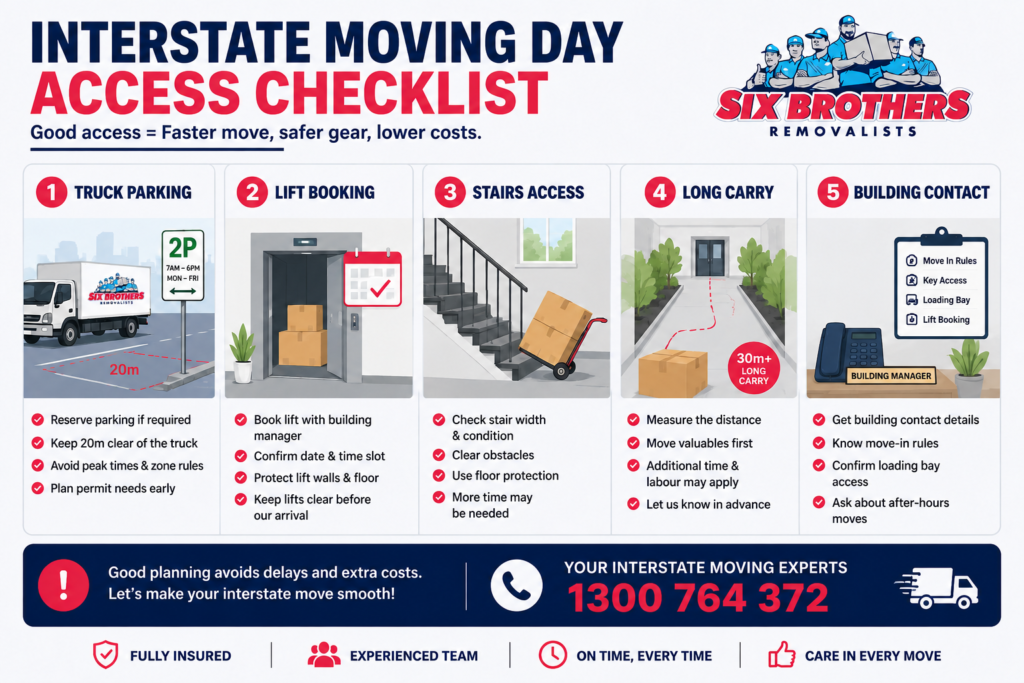
Add access notes because the inventory should describe more than belongings. Parking, lifts, stairs, and long carries can affect time and labour. These details can also affect quote accuracy.
Sydney access can change block by block. Parramatta towers, CBD loading docks, and suburban driveways all work differently. When in Rome, follow the building and council rules.
Parking Access
Record where the truck can legally stop at pickup and delivery. Note loading zones, driveway width, height limits, and permit needs. Include any restricted times.
Measure tight gates or driveways when access looks uncertain. Photos can help the estimator understand the site. Never promise a truck can fit when you have not checked.
Parking distance also affects carrying time. A 10-metre walk is different from 80 metres. Add that distance when it may matter.
Lift Booking
Record lift booking times and building rules for apartments. Include loading dock access, key collection, and protective padding requirements. Add the building manager’s contact details.
Some buildings allow short move windows. Your removalist needs that timing before arrival. A missed lift slot can delay the whole day.
Put the booking confirmation in your moving folder. Also record it inside the inventory notes. That keeps access information close to the shipment details.
Stairs and Long Carries
Record floor numbers, stair flights, narrow turns, and long paths. Note if items must move through side gates or courtyards. Large furniture can behave very differently in tight access.
Tell furniture removalists about difficult stairs before the quote is final. Heavy items may need extra staff or equipment. Surprises at the door are rarely helpful.
Photos of the route can support planning. Include the front entry, stairs, corridor, and parking point. Keep them with your access notes.
Building Contact
Add one contact for pickup and one for delivery. Include the name, phone number, and role. This helps when a loading dock or lift needs unlocking.
Do not rely on one person being available all day. Add a backup contact for larger buildings. Keep both details in the moving-day copy.
For office removals Sydney jobs, building contacts are especially important. Security, loading docks, and access cards can stop work quickly. Confirm them before the crew arrives.
Delivery Address Notes
Record exact delivery instructions before leaving Sydney. Include gate numbers, unit levels, parking details, and access windows. Add any new-home restrictions you already know.
For removalists Melbourne, removalists Brisbane, or removalists Adelaide destinations, access rules still vary locally. The same applies to removalists Perth and removalists Canberra routes. Give the delivery team practical notes, not guesses.
If the new address changes, update every working copy. Do not rely on a message buried in a group chat. One source of truth keeps everyone aligned.
Use Your Inventory to Get a Better Interstate Moving Quote
Use the inventory as a clear scope document when requesting quotes. It shows furniture, boxes, heavy items, and special handling needs. Better information usually means fewer pricing surprises later.
A quote cannot see what you forgot to mention. Give removalist companies the same complete list. You then compare service, price, timing, and conditions on a fair basis.
This is useful with cheap removalists Sydney or budget removalists Sydney searches. A low price means little if the scope is incomplete. You want an estimate based on the real load.
The same principle applies to house removalists Sydney and home removalists Sydney. It also applies to office removalist Sydney services. Measure twice, cut once is a good rule for quote preparation.
Furniture List
List major furniture with approximate dimensions where useful. Include beds, wardrobes, sofas, tables, fridges, and outdoor items. Note anything needing dismantling.
A furniture inventory template can include length, width, and height. It can also record floor location and special handling. This is useful for bulky items.
If you need interstate furniture removalists, include photos of unusual pieces. A clear photo can show shape and access risks. That helps the estimator plan correctly.
Box Count
Give the current box count and an expected final count. Update the estimate as packing progresses. Large differences can affect truck space and labour.
Separate standard cartons from large or unusual containers. Record plastic tubs, archive boxes, and wardrobe cartons separately. Different shapes use space differently.
Do not hide the final box count to protect a cheap quote. That usually creates stress later. Accurate information supports accurate planning.
Heavy Items
Flag pianos, safes, stone tables, gym equipment, and heavy appliances. Add approximate weights when known. Photos and measurements are useful.
Piano removalists may need different equipment from standard crews. The same applies to specialist heavy-item work. Tell the company before booking.
Do not use “very heavy” as the only description. Name the item and add dimensions. Specific information is much easier to plan around.
Special Handling Items
Flag fragile art, antiques, plants, electronics, and do-not-stack boxes. Tell the provider about unusual packing or carrying needs. Add these items to the quote request.
This is also where international removalists use detailed inventories for complex shipments. Your interstate move may be simpler, but the same discipline helps. Clear lists reduce vague assumptions.
If you are comparing a removalist Sydney to Melbourne quote, send one fixed inventory version. Do the same for a removalist Sydney to Brisbane route. Version dates stop confusion when the list changes.
After your main inventory is ready, request a written quote from Six Brothers Removalists. Call 1300 764 372 or email info@sixbrothersremovalist.com.au. A clear inventory helps the team understand your move before pricing it.
Link Your Inventory to Transit Insurance and Damage Claims
Link item codes to receipts, condition photos, and ownership records for valuable belongings. This can support discussions about cover and later claims. Your inventory does not replace the policy wording.
Read the Product Disclosure Statement before assuming an item is covered. Check limits, exclusions, excesses, and claim steps. Moneysmart explains that some contents insurance policies may cover belongings during a move.
Different policies can treat storage, self-packed boxes, valuables, and accidental damage differently. Ask questions before moving day. Do not leave insurance checks until something goes wrong.
Proof beats guesswork every day of the week. Keep original files and receipts where possible. Your inventory should point to that evidence.
Proof of Ownership
Keep receipts, invoices, serial numbers, or prior photos for valuable items. Older items may not have receipts. Clear dated photos can still help show ownership.
Store proof outside the moving boxes. Use secure cloud storage or another safe location. Do not pack the only receipt with the item itself.
Name files with the same item code. For example, TV-01-receipt.pdf matches TV-01 in the inventory. That makes evidence much easier to retrieve.
Pre-Move Condition
Condition evidence should show the item before packing and loading. Use clear photos and short notes. Record existing damage honestly.
For high-value furniture, take several angles. Include feet, corners, doors, and glass. These areas often show marks clearly.
Keep the original images. Editing or heavily compressing them can remove useful detail. A normal phone photo is usually enough for record keeping.
High-Value Items
Create a high-value filter inside the inventory. Include jewellery, artwork, premium electronics, antiques, and specialist equipment. Confirm how each item will travel.
Some valuables may be better kept with you. Others may need extra packing or insurance. Decide before loading day, not at the truck door.
Use realistic values and review policy limits. A high purchase price does not guarantee full replacement cover. Read the policy details carefully.
Claim Evidence
If something arrives damaged, photograph it before repair or disposal. Record the item code, delivery date, and visible issue. Keep packaging when relevant.
Contact the provider and insurer using their required process. Do not delay if the policy has notification timeframes. Keep written records of calls and emails.
Your moving inventory list becomes the index for that evidence. It connects the item to its condition and ownership records. That can make a stressful process clearer.
Use the Inventory on Interstate Moving Day
Use a working copy during loading, not just before the move. Mark each box and large item as it enters the truck. Keep the master list with you.
One person should control the checklist. Too many people editing can create duplicate updates. Too many cooks spoil the broth on a busy loading morning.
Check Items Loaded
Tick items only after they physically enter the truck. Do not pre-tick a room because packing looks finished. Check wardrobes, cupboards, balconies, sheds, and garages.
Use a simple loaded status in your app or spreadsheet. Paper users can initial each line. Keep the process quick enough to continue throughout loading.
For larger moves, work by room. Finish one zone before moving to the next. This reduces missed items and mixed labels.
Confirm Box Numbers
Scan box numbers as the crew loads them. You do not need to read contents aloud. Just confirm that the code exists on your list.
If a number appears twice, fix it immediately. Add a suffix like A and B if needed. Then update the inventory before the boxes leave.
Missing numbers are also useful signals. They may show a box was never packed. Check the room before the truck closes.
Mark Priority Boxes
Priority boxes contain items needed soon after arrival. Examples include bedding, kitchen basics, tools, and children’s essentials. Mark them clearly in the list.
Ask the crew whether loading order can keep these boxes accessible. Do not assume the last box loaded always comes off first. Truck loading depends on safety and weight.
Keep true essentials with you instead. Priority truck boxes are helpful, but they are not guaranteed instant access. Plan for the first night separately.
Note Missing Items
If an item cannot be found, mark it missing before the truck departs. Search the source room and nearby storage areas. Do not wait until interstate delivery.
Record what was checked and who checked it. That sounds fussy, but it prevents repeated searches. It also gives you a clear timeline.
If the item is later found, update the status. Keep the history rather than deleting the entry. That makes the final record more reliable.
Check the Inventory After Interstate Delivery
Check the inventory before the crew leaves the delivery address. Confirm box numbers, furniture items, and visible condition. Then record anything missing or damaged immediately.
Do not rush the final check because everyone feels tired. The last ten minutes can catch important issues. All’s well that ends well only after the list balances.
Check Items Delivered
Mark each item delivered as it enters the home. Work from the same master list used at loading. Avoid starting a fresh checklist unless absolutely necessary.
If several rooms are receiving boxes, assign one person to update the list. Others can direct the crew. This keeps the record consistent.
For larger homes, filter by room. Confirm all B1 items before closing bedroom one. Repeat the process across each zone.
Inspect Damaged Items
Inspect major furniture and fragile boxes before signing final paperwork. Look at corners, glass, screens, and exposed surfaces. Compare them with your pre-move photos when needed.
Do not block the crew for every tiny scuff. Focus on clear new damage or missing items. Record facts calmly and take photos.
If you discover an issue later, follow the company’s claim process. Keep your inventory and photos together. That gives you a clear evidence trail.
Match Rooms and Boxes
Check that boxes reached the correct rooms. Colour codes and room labels make this much easier. Misplaced boxes are easier to fix while the crew is still there.
Use your room filter to count delivered boxes. If the kitchen shows twelve expected boxes, confirm twelve arrived. Then move to the next room.
This also helps when unpacking starts slowly. You can find priority boxes without opening everything. Your inventory keeps working after the truck leaves.
Final Missing Item Check
Filter the list for anything not marked delivered. Check the truck, garage, driveway, lift lobby, and common areas. Then check the personal car and storage list.
If something remains missing, record it immediately. Note the item code, description, and last confirmed status. Keep photos and loading records ready.
Before signing off, compare the final list with your interstate moving checklist for Australians. That helps catch tasks beyond the inventory itself. A final sweep is worth the effort.
A Simple Moving Inventory Template You Can Copy
A simple template should stay easy to update from packing through delivery. Start with columns that answer practical moving questions. Add more only when they improve decisions.
Use these fields: item ID, room, box number, description, condition, value, transport type, handling, loaded, delivered. Add a photo link when your app or spreadsheet allows it. Keep access notes on a separate tab.
For example, BED1-03 may contain linen and pillows. L-02 may identify a sofa with one existing mark. GAR-11 may identify boxed tools going into storage.
Your moving inventory spreadsheet should use consistent status words. Choose packed, loaded, delivered, checked, storage, car, and not moving. Bob’s your uncle once those labels stay consistent.
A moving box inventory template works best when it matches the physical label. The furniture inventory template should use the same room codes. That creates one system across the whole move.
Choosing Removalists With Your Inventory Ready
A finished inventory makes it easier to compare removalists on the same scope. You can show each company the same furniture, boxes, access, and special handling. That keeps quote differences easier to understand.
Search terms like removalists near me or removalist near me can return many choices. Do not choose on price alone. Check the written scope, timing, inclusions, and how clearly questions are answered.
You may also see cheap removalists, furniture removalists, house removalists, and office removalists. Different services can suit different moves. Make sure the provider understands the interstate part of your job.
For Sydney routes, compare experience with long-distance work. Terms like interstate removalists Sydney and interstate removalist Sydney are more specific. A local moving company Sydney result may not offer the same interstate service.
Six Brothers Removalists works from Parramatta and services Sydney moving needs. You can review Six Brothers Removalists before requesting a quote. The address is Suite 1 level 5/58/60 Macquarie St, Parramatta NSW 2150.
People also search for removalists Parramatta, removalist Parramatta, movers Parramatta, and western Sydney removalists. Those local terms matter for pickup access and scheduling. Your destination needs matter just as much.
Interstate route searches can include sydney to melbourne removalists and sydney to brisbane removalists. Other common routes involve Canberra, Adelaide, and the Central Coast. Use the inventory to keep every quote based on the same load.
You may compare interstate removalists Melbourne or interstate removalists Brisbane for return routes. Furniture removalists Melbourne and furniture removalists Perth may appear for destination-side searches. Removalists Gold Coast or removalists Newcastle can also appear for other routes.
Specialists still need clear inventories. Piano removalists, commercial removalists Sydney, and full service removalists Sydney all benefit from accurate item lists. Removalist truck hire is different because you may manage more of the work yourself.
People may search office removalists Sydney or affordable removalists Sydney when comparing local options. Others use removalist in Sydney or removalists in Sydney before widening interstate scope. Searches like cheap removalist Sydney or furniture removalist Sydney reflect price and service intent.
Home movers and house movers Sydney searches often reflect general household moving needs. Interstate removals needs are more specific because distance changes planning. Movers and packers Sydney searches may also include packing support.
Longer phrases include interstate removalists Sydney to Melbourne and interstate removalists Sydney to Adelaide. You may also see recommended removalists Sydney, Sydney home removalists, or Sydney interstate removalists. Location-led searches include removalists western Sydney and Sydney to Canberra removalists.
Price-led searches include cheap movers Sydney, while convenience searches often use movers near me. Some people narrow that further to local movers near me. Moving house Sydney searches can include both local and interstate planning.
Interstate backloading and backload removals can suit flexible long-distance loads. Route searches include removalists Sydney to Newcastle and Sydney to Port Macquarie removalists. Another example is removalist Sydney to Adelaide for a long interstate route.
People in western Sydney may compare Parramatta removalists before checking interstate availability. Your inventory lets every provider price the same belongings. That makes the comparison more useful.
The terms removalists melbourne, removalists brisbane, removalists perth, and removalists adelaide describe different local markets. Your Sydney pickup still needs a provider suited to your route. Same goes for removalist Melbourne, removalist Brisbane, and removalist Perth searches.
International removalists often require even more detailed inventory records. That does not mean your interstate list must be complicated. It means accurate item records scale well across bigger moves.
Do not confuse unrelated services with household moving. An asbestos removalist or rubbish removalist solves a different problem. Your inventory should stay focused on belongings being relocated.
At the end of the day, clarity beats cleverness. Give each removalist the same information. Then compare the full offer, not a headline rate.
Final Checklist Before You Close the Moving Inventory
Your moving inventory list should finish as a complete record of the move. Check every room, every transport group, and every delivery status. Keep photos and receipts linked to important items.
Confirm the final box count and furniture list with your provider. Review parking, lifts, access notes, and special handling. Keep valuables and essentials outside the truck pile.
A strong inventory does not make moving glamorous. It makes the messy parts easier to control. That is exactly what you want on an interstate moving day.
If you are moving from Sydney, Six Brothers Removalists can review your inventory before quoting. Call 1300 764 372 or email info@sixbrothersremovalist.com.au. Get your free quote when the list is ready, without pressure or guesswork.
FAQs About Interstate Moving Inventories
How to Prepare for Removalists?
Prepare by finishing packing, labelling boxes, clearing access, and separating personal essentials. Give the crew clear parking and building instructions. Keep your moving inventory list available during loading.
Confirm special items before arrival. Examples include pianos, antiques, large mirrors, and heavy gym equipment. Keep children and pets away from active carrying paths.
Do Removalists Have Insurance?
Removalist insurance arrangements vary by company, service, and policy. Ask what insurance exists and what it actually covers. Read any Product Disclosure Statement before relying on cover.
Do not assume business insurance protects every belonging. Your own contents policy may also have relevant moving cover. Confirm details directly with qualified providers.
What Should Be Included in a Moving Inventory List?
Include item codes, room names, box numbers, descriptions, condition, and estimated values. Add transport type and special handling where relevant. Photos strengthen the record for important belongings.
You can also record loaded and delivered status. Access notes belong in the same moving file. Keep the system simple enough to update quickly.
Should I List Every Item Inside Every Moving Box?
No, most boxes only need useful category-level descriptions. List “cookware, utensils, tea towels” rather than every individual item. Record valuable or unusual items separately.
The description should help you identify the box. It should also help with claims or searches. More detail is not always more useful.
Can a Moving Inventory Help Me Get a More Accurate Quote?
Yes, a detailed inventory gives providers a clearer picture of the job. Furniture counts, box totals, stairs, and heavy items affect planning. Special handling also matters.
Send the same inventory version to each company. That keeps quote comparisons more consistent. Update providers if the scope changes significantly.
How Should I Photograph Items for an Interstate Move?
Take clear photos before packing and loading. Capture wide views plus close details of valuable items. Photograph existing scratches, chips, and marks.
Use item codes in file names or folders. Keep original files in cloud storage. Avoid heavy editing or filters.
What Is the Best Way to Number Moving Boxes?
Use a room code plus a unique number. Examples include K-01, K-02, and B1-01. Put the code on the top and side.
Never reuse box numbers. Match each number to one inventory entry. Add colour coded moving labels for faster room recognition.
When Should I Update the Inventory During the Move?
Update it while packing, during loading, and again during delivery. Do not wait until the move finishes. Real-time updates catch missing items earlier.
Use one master copy wherever possible. Back it up before moving day. Keep the latest version clearly dated.