
Table of Contents
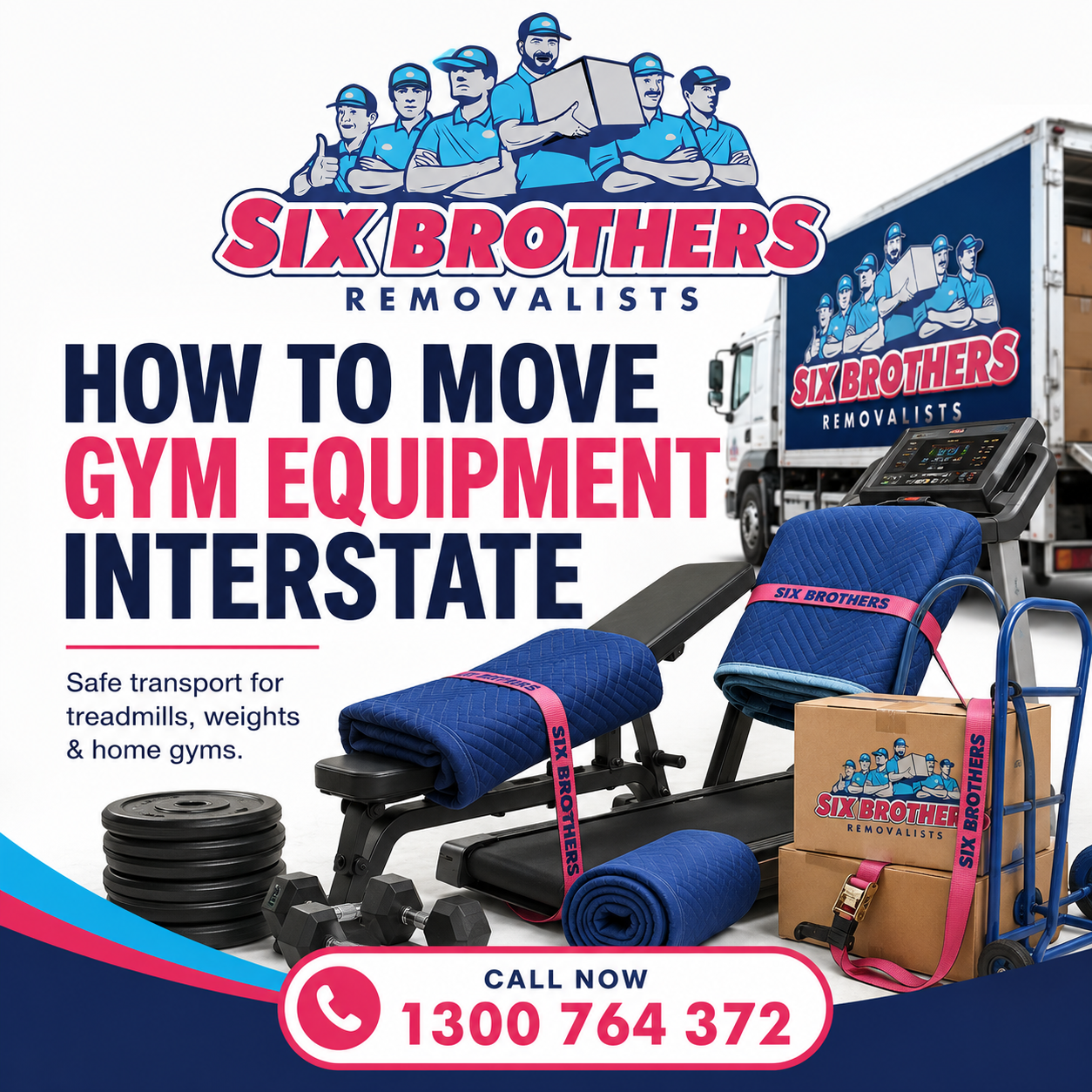
So you have decided to move your gym interstate. Good on you. But here is the honest truth about the job ahead. A treadmill is not a couch. A power rack is not a bookshelf. These machines are heavy, awkward, and worth real money.
Maybe you are shifting one treadmill from Sydney to Brisbane. Maybe it is a full home gym bound for Melbourne. Either way, your gear needs a plan before a single bolt comes loose. One wrong lift can wreck your floor or your back.
Most people underrate the job until moving day arrives. Then a squat rack will not fit through the door. A cable snaps because nobody unthreaded it. The treadmill screen cracks against a wall. Small mistakes turn into big repair bills.
This guide walks you through the whole job, start to finish. You will learn what to tackle yourself, what to leave to the pros, and what it all costs. The goal is simple. Your gear arrives in one piece, and so do you.
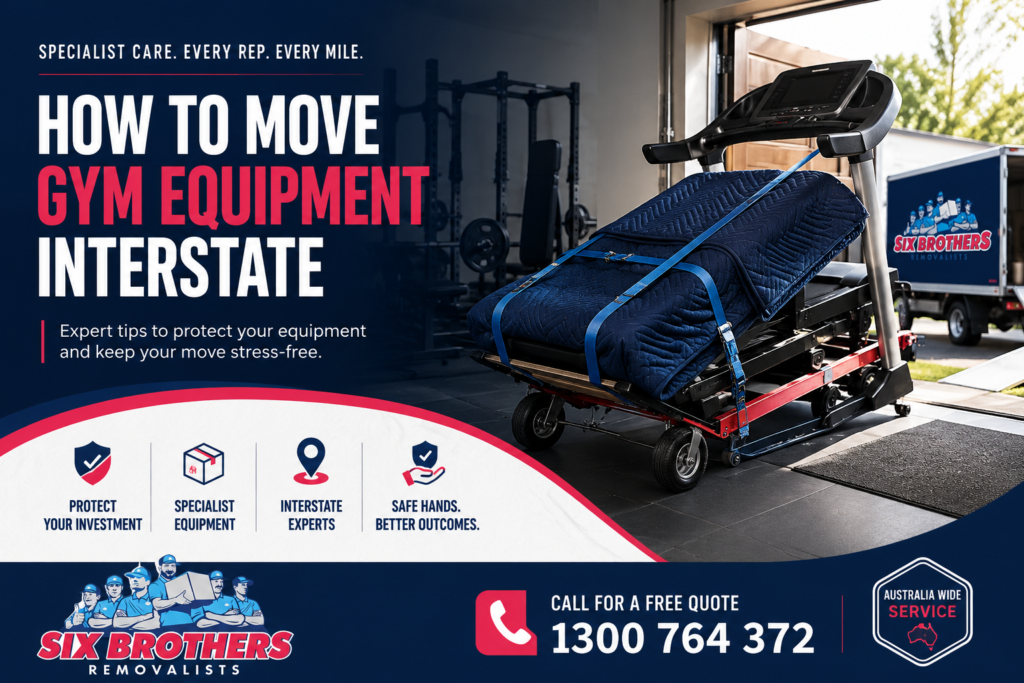
Can you move gym equipment interstate yourself?
Short answer? Sometimes. It depends on what you own and how heavy it is.
For light gear like a bench, a bike, or a few plates, a careful DIY move works fine. You disassemble each piece, protect it, and strap it down. For heavy gear like squat racks and motorised treadmills, hiring specialist gym removalists is the safest and most efficient option. It stops damage to your floors and injuries to you.
Here is the rule of thumb. If one person cannot move a piece safely, do not try to hero it across the country. A specialist crew handles the disassembly, the safe transit, and the reassembly at the other end. That is the difference between a smooth day and a trip to the physio.
Think about the interstate part too. A local move is over in hours. An interstate trip means your gear sits in a truck for a day or more. It gets bounced along highways the whole way. Prep that survives a short hop can fail on a long haul.
Why gym equipment is so tricky to move interstate
Gym gear breaks every rule that normal furniture follows. It is dense, top-heavy, and full of moving parts. A long interstate drive adds hours of vibration on top of that. Loose bolts rattle, cables shift, and screens crack if nobody prepped them properly.
Then there is the weight problem. A power rack is basically a steel wardrobe that was bolted to your floor. The cables on a multi-gym tangle like Christmas lights the second you rush. And a treadmill hides a delicate motor and a glass console under all that steel.
Standard household removalists are trained for sofas and wardrobes. They are often not set up for 200 kg power racks, delicate cables, or heavy weight stacks. That mismatch is where floors get gouged and gear gets bent.
Value is the other reason to slow down. A decent home gym can cost more than a used car. You would not drag a car across the country on bald tyres. Your gym deserves the same respect and the same care.
Did you know?
A commercial treadmill can weigh as much as a grand piano, roughly 120 kg to 250 kg. That single fact is why most standard household removalists are not set up to shift one safely across the country.
Professional interstate gym equipment relocation
Booking a specialist takes the whole headache off your plate. A good crew can handle disassembly, safe transit, reassembly, and sometimes even equipment calibration. You point at the gear, and it turns up ready to use.
Six Brothers Removalists A specialist also spots problems before they happen. We check your lift, your stairs, and your doorways in advance. We plan the exit route before the crew shows up. That planning is what keeps moving day calm instead of chaotic.
What a specialist gym move covers
A full-service interstate gym move goes well beyond loading a truck. Here is what a proper job usually includes.
● A pre-move check of every machine, so nothing is a surprise on the day
● Partial or full disassembly of treadmills, cable machines and multi-station rigs
● Heavy-duty wrapping and padding for frames, screens and weight stacks
● Furniture dollies and straps for safe movement out of the building
● A dedicated interstate vehicle, so big loads are not left waiting
● Reassembly and placement at your new home or studio
how to move heavy furniture interstate……….?
DIY versus a professional crew: a quick honest look
So who really needs a specialist? Not everyone. But the maths changes fast once the weight climbs. Weigh up the trade-offs before you commit your weekend and your spine.
In Australia we say she’ll be right. But she will not be right if a 200 kg rack lands on your foot in a stairwell. For the heavy stuff, a trained crew pays for itself in peace of mind alone.
There is a hidden cost to DIY that people forget. A hire truck, a hired dolly, fuel, straps and a day of your time all add up. Add one damaged machine and the savings

How to move different types of gym equipment interstate
Every machine has its own quirks. Match your prep to the piece in front of you. Here is how to handle each common type of gear.
Treadmills and cardio machines
Treadmills are the most requested gym move in Australia, and the most misjudged. The belt deck warps under uneven load, so keep it flat and supported. Always transport the console upright and wrapped.
Fold the machine if it folds, and lock the frame in place. Unplug it and tie the cord to the frame with a zip tie. If it uses a hydraulic lift, make sure the lock is set before you tilt it.
Rowing machines and air bikes need care too. Drain any water tank before you move a water rower. Fold or split the machine along its seam if the design allows it. Wrap the seat rail so grit cannot scratch it in transit.
Squat racks and power cages
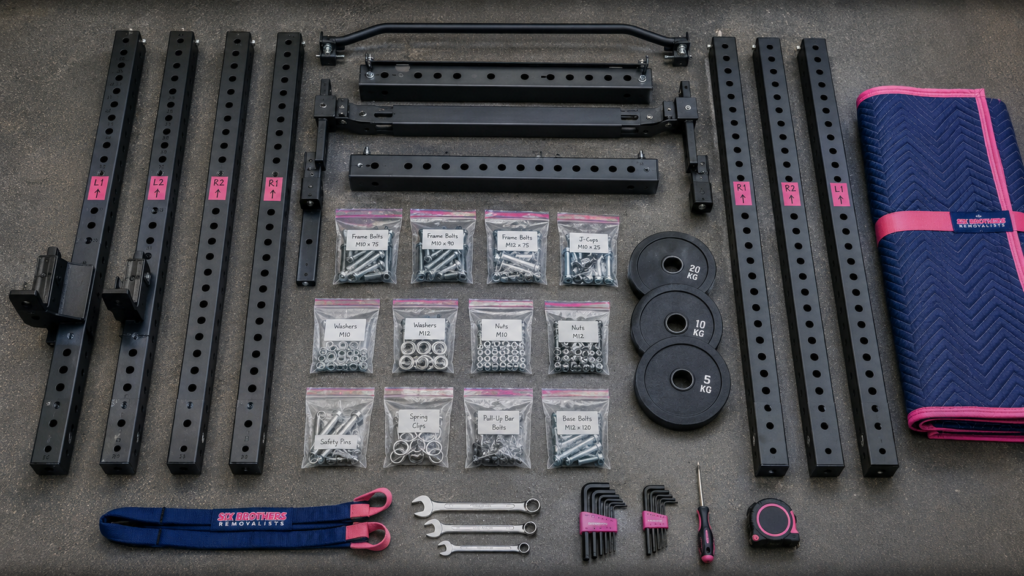
Big racks are the steel skeletons of a home gym. Many are bolted to the floor, so a spanner comes out first. Take the rack apart as far as it will go before it leaves the room.
Strip off every plate, pin and attachment. Wrap the long uprights in moving blankets so they do not scratch. Keep all the hardware in one labelled bag, taped near the frame.
Watch the bolt holes on a bolt-down rack. If your rack was anchored, you may need a hand plugging the old floor holes. Flag that early so it does not hold up the crew on the day.
Multi-gyms, Smith machines and cable machines
Cable machines are the fiddliest gear you own. Weight stacks must come off, and cables must come free of the pulleys. Try to move one fully assembled and you risk frame stress and snapped cables.
Photograph the cable routing before you touch a thing. Those photos are gold when you reassemble at the other end. Bag the pulleys and pins separately so nothing walks off in the truck.
A Smith machine has long guide rods that bend if handled roughly. Support them along their length, not just at the ends. Never let a heavy stack swing free while you carry the frame.
Exercise bikes and ellipticals
Bikes and ellipticals have arms and pedals that stick out and snag. Remove the pedals and any bottle holders first. Zip-tie the moving arms so they cannot swing during the drive.
A screen on a smart bike is the priciest part to replace. Take it off if you can and wrap it on its own. Never let a loose cord dangle where it can catch a doorframe.
Ellipticals are bulky and oddly balanced. They tip if you carry them wrong. Split the machine into its base and upright where you can, and keep the heavy flywheel end low.
Free weights, dumbbells, plates and benches
Weights are small, dense, and brutal on a weak box. Never load them all into one carton, or the bottom drops out. Use small, sturdy boxes and keep each one light enough to lift.
Wrap each plate so the metal does not clang and chip. Pack dumbbells snugly so they cannot roll in transit. For benches, remove the pads and wrap them, then fold the frame if it folds.
Label every weight box clearly with its weight. That warns the crew to lift with care and load it low. Loose plates left on a truck floor slide around and dent everything near them.
How to prep and pack gym gear for an interstate move
Preparation is the single biggest factor in a smooth move. Even the best crew hits delays if the gear is not ready. Work through these three stages and moving day runs like clockwork.
A few extra habits save you a world of pain later. Do them before the truck arrives, not during the chaos.
● Photograph every machine from all sides before you undo a single bolt
● Bag and label all bolts, pins and small hardware for each machine on its own
● Drain any water from rowing machines or water-resistance bikes
● Detach and pad console screens rather than leaving them on the frame
● Check your building lift and doorway width against your biggest piece
Most home doors are only 82 cm wide. Some racks and machines are wider than that. Measure twice and lift once, or you will be taking a door off its hinges on the day.
Find the owner manual for each machine while you are at it. Most makers post a copy online if you lost the paper one. The manual shows the safe way to split the machine down. It saves you guessing and stripping a thread.
Protecting floors, doorways and your back
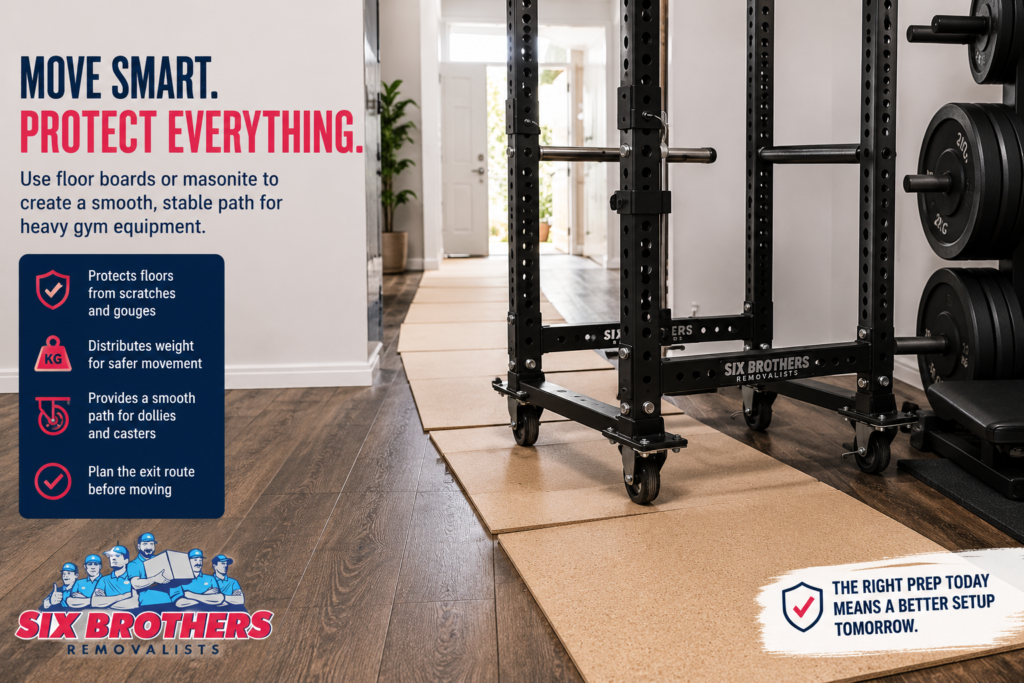
Heavy gear does damage in two directions. It scars your home, and it strains your body. A little prep protects both. Walk the exit path first and clear every rug, shoe and toy.
Protect hard floors with flattened boxes or thin ply as a path. Use padded covers on door frames at tight turns. On stairs, lay thick blankets over the edges to save the timber. These small steps stop the marks you cannot fix.
how to protect furniture during an interstate move…….?
How to load and secure gym gear on the truck
Loading is where a good move can still go wrong. A shifting load is the top cause of damage on a long drive. The trick is balance, low weight, and firm strapping. Take your time here and the highway does the rest.
Start with the heaviest pieces against the front wall of the truck. That keeps the weight near the cab for a smoother ride. Put weight plates and dumbbell boxes on the floor first. Never stack light boxes on top of a steel frame.
Then lock everything down. Even a heavy treadmill slides if the driver brakes hard. Use ratchet straps to tie each machine to the truck rails. Tighten them until the gear will not budge when you push on it.
Anything with moving parts needs a second look. Plastic wrap or small straps stop an elliptical arm from swinging. Pad every point where metal could rub against metal. A quiet load is a load that arrives in one piece.
Reassembling and setting up your gym after the move
Getting your gym back in order is the last hurdle. A good setup means you can train from day one. This is where all that labelling and those photos earn their keep. Slow, careful reassembly beats a rushed job every time.
Find the manual and the labelled hardware bag for each machine. Start every bolt by hand first, so you do not cross-thread it. Then tighten it firmly with the right tool. Check the machine sits level before you load it up.
Give each machine a safety check before you use it. Look for loose bolts, frayed cables, or missing pins. On a treadmill, check the belt runs straight and the stop button works. Test it at a slow speed and listen for odd noises.
Only then should you plug in and push hard. A small fault caught now saves a big repair later. Once it all checks out, your gym is ready. That first session in the new place feels pretty good.
Home gym versus commercial gym: how the move differs
A home gym and a commercial fit-out are two different jobs. The gear may look similar, but the logistics are worlds apart. Knowing which one you have helps you plan and budget the right way.
A home gym is usually one to five machines and some weights. Access is often simple, like a garage or spare room. The move can be planned and finished in a single day. A short, tidy job with the right crew.
A commercial gym is a bigger beast. You may have dozens of machines and a tight window between leases. Downtime costs you members and money. A staged move, done in groups, keeps the doors open longer and the stress lower.
Red flags to watch for when hiring a gym removalist
Not every mover is set up for heavy gym gear. A cheap quote can hide a costly day. Keep your eyes open for the warning signs before you hand over a deposit. A little homework now saves a lot of grief later.
● A quote with no site check or no questions about your heaviest items
● No clear answer on transit cover or how a damage claim would work
● Cash-only pressure, a vague ABN, or no written quote at all
● A price that sits far below every other quote you have received
● No mention of disassembly, dollies, or how they protect your floors
A trustworthy mover asks questions before they name a price. They want to know the weights, the access, and the route. That care is a good sign. Silence and a suspiciously low number are not.
How long does an interstate gym move take?
Transit time depends on the route, the volume, and the loading plan. A single machine on a busy corridor moves fast. A full gym with lots of disassembly takes longer to prep and load. Here is a rough feel for common routes.
● Sydney to Canberra, a short haul, often next-day delivery
● Sydney to Melbourne or Brisbane, usually one to two business days
● Sydney to Adelaide, generally two to three business days
● Longer cross-country runs, often three to six business days
Backloading can shift these windows a little. Your gear travels when a truck is already heading that way. That flexibility saves money, and we will always give you a clear delivery window upfront.
How much does it cost to move gym equipment interstate?
No two gym moves cost the same, because no two setups are the same. Your quote reflects the real scope of the job. Use the guide below as a starting point, not a fixed price.
A handful of factors move the final number up or down. Knowing them helps you compare quotes with clear eyes.
● Distance and route, since a longer haul means more fuel and driver time
● Total weight and volume, which decides crew size and truck space
● Disassembly needed, since cable machines and rigs eat labour
● Stairs and lift access, which add time at both ends
● Reassembly, which some quotes include and others charge extra for interstate backloading
Timing plays a part as well. Weekends and end-of-month slots book out fast and cost more. A midweek move is often cheaper and easier to schedule. Ask us about quieter dates when you get your quote.
Is it worth moving your gym, or should you sell?
Not every piece is worth the trip. Some cheap gear costs more to move than to replace. It pays to do the sums before you load a single plate. A quick sort now can shrink your bill and your stress.
Weigh the cost of moving each item against its value. A worn set of rubber plates may not be worth the freight. A high-end rack or a smart treadmill almost always is. Sell the odds and ends, and put that cash toward the move.
Selling before you go has a bonus. A lighter load is a cheaper load. You free up truck space and save on labour at both ends. Then you rebuild the small stuff at the other end for less than the freight would have cost.
Still, keep the gear you love and use daily. Your favourite rack or bar is part of your routine. That sense of home matters when everything else is new. We will move the pieces that are worth it, safely and without fuss.
A simple timeline for your interstate gym move
A move runs smoother when you spread the work out. Cramming it all into moving week is a recipe for chaos. Here is a loose timeline that keeps you ahead of the game.
Four to six weeks out, book your mover and sort what to sell. Two to three weeks out, gather tools, boxes and blankets. The week before, start disassembly on the gear you can spare. The day before, bag the hardware and label everything.
On the day, clear the paths and let the crew do the heavy lifting. Keep your manuals and hardware bags in one spot you can reach. That way, reassembly at the new place is quick. A calm plan beats a mad rush every single time.
Why Sydney locals choose Six Brothers for interstate gym moves
We are based right here in Parramatta, and we know your suburbs. From the Inner West to the Hills, we have carried heavy gear up tight stairs and out of narrow driveways. Local knowledge is not a bonus. It is half the job.
You have worked hard to build that gym. It should land at your new place looking as good as it did in the old one. We make sure it does, so you can get straight back to training.
Ready to move your gym the easy way?
Moving gym gear interstate is heavy, fiddly work. But it does not have to be stressful. Prep each machine, protect your floors and your back, and know when to hand the heavy stuff to a crew that does this daily.
When you are ready, we are one call away. Get a free, no-obligation quote and we will tailor it to exactly what you own and where it is headed. No hidden fees. No surprises on the day.
Call 1300 764 372, email info@sixbrothersremovalist.com.au, or request your free quote online. Let’s get your gym across the country in one piece.
Frequently asked questions
Do I need to disassemble gym equipment before the removalists arrive?
It depends on the gear. Most treadmills fold but do not fully strip down. Cable machines and multi-station rigs usually need partial disassembly. We confirm exactly what is needed at the quote stage, and we can include disassembly in the job.
Can you move a single treadmill interstate?
Yes, absolutely. A single-item interstate move is a standard service. We price it on the machine weight, the route, and whether stairs or a lift are involved at either end.
Is my gym gear covered during transit?
Reputable removalists carry transit cover for goods in their care. We can walk you through the level of cover before you book. For high-value machines, ask whether they need to be listed separately.
How far in advance should I book a gym move?
For a home gym, two to three weeks notice is usually enough. For a studio or commercial fit-out, aim for four to six weeks. That extra time lets us plan staging and lock in the right truck.
Do you move commercial gym equipment, not just home setups?
Yes. We work with studios, PT spaces and commercial operators on interstate relocations. These jobs run as a project, with a dedicated crew and vehicle to keep your downtime short.
What if a machine gets damaged in transit?
Any solid mover has a clear claim process. Photograph your gear before the move and keep your invoice. Check the condition at delivery and raise anything on the spot. Then follow up in writing so it is on record.
Can you disassemble and reassemble my gym for me?
Yes, we can. Disassembly and reassembly are common add-ons for heavy gear. Let us know your machines when you book. We will bring the tools and the know-how to strip them down and set them up again.