


Table of Contents
Moving house is stressful enough. Now add a car boot stacked with pot plants. Suddenly your leafy mates are the trickiest thing on the whole truck.
Here’s the honest bit. Plants don’t just cross state lines because you want them to. Australia runs strict biosecurity laws at every border. Turn up with the wrong fern, and you could cop a fine on the spot.
So what’s the safe way to do this? To move plants interstate in Australia, you check the destination state’s biosecurity rules first. These rules stop pests and diseases from hitching a ride. Some plants need an inspection. Others need a Plant Health Certificate before they can enter. And a fair few potted plants can’t cross at all because of the soil.
This guide walks you through the lot. The rules, the packing, the transport, and what it really costs. Let’s get your green babies to their new home in one piece.
Did you know?
Soil is the main problem, not the plant. Dirt can carry pests and diseases. So most states won’t let potted plants cross the border unless the roots are washed clean and repotted in sterile mix.
So, Can You Actually Move Plants Interstate?
Short answer? Sometimes yes, sometimes no. It depends on the plant, the soil, and the state you’re heading to.
Every state guards its farms and gardens like a bouncer at the door. Pests like fruit fly, fire ants, and phylloxera can wreck whole industries. So the borders act as checkpoints. Your job is to know the rules before you rock up.
Some plants sail through with no fuss. Some need a certificate or an inspection. And some get knocked back at the line, full stop. A plant that’s fine to move from Sydney to Canberra might be banned heading into Perth.
Here’s the thing most people miss. The rules follow the destination state, not where you started. So a move from Sydney to Adelaide plays by South Australia’s rulebook, not New South Wales’.
Distance matters too. A quick interstate hop is one thing. A three-day drive across the country is another beast entirely for a living plant. So before you fall in love with the idea of taking every plant, be realistic. Some will make the cut. Some are better off as cuttings or gifts to a neighbour.
Check Biosecurity Laws and Regulations
Before you shift a single pot across a state line, you need to know the destination’s quarantine rules. This is the step that saves you from fines and heartbreak. Skip it at your peril.
Start with the Australian Interstate Quarantine website. It’s run jointly by the state authorities. Pick your destination state and it lists what you can and can’t bring.
So why all the fuss? Australia’s farms and gardens are worth billions. One stray pest can wipe out an entire crop. The borders exist to keep those pests boxed in.
A few troublemakers drive most of these rules. Fruit fly is the big one on the east coast. Fire ants hit parts of Queensland. Phylloxera threatens grapevines in patches of New South Wales and Victoria.
There’s also green snail in Western Australia and other localised pests. Your humble pot plant could carry any of them without you knowing. That’s why states check so closely at the line.
Highly Restricted States
Some states are far tougher than others. Western Australia and Tasmania sit at the top of that list. Both run extremely strict rules on plant matter and soil.
Why so hard? They’re islands or near enough, and mostly pest-free. They want to stay that way. So bringing potted plants into WA or Tassie is often a flat no.
South Australia is another tough one. It runs a zero-tolerance line on fresh fruit and veg at the border. Turn up carrying the wrong thing and you’ll be fined, no warnings given.
These states aren’t being difficult for the sake of it. They’re protecting real farms and real jobs. One pest slipping through can cost the local economy millions. So plan for a no. If your heart’s set on a plant heading into WA or Tassie, take a cutting instead. It’s the safer bet by a country mile.
Quarantine Declarations
Certain plants, fruits, and veggies are banned unless they’re treated or inspected first. You may need a Plant Health Certificate from an authorised inspector before you travel.
Think of the certificate as a passport for your plant. It proves the plant was checked and cleared. Without it, your plant can be turned away or destroyed at the checkpoint.
Not sure if your plant needs one? Ring the destination state’s ag department and ask. Two minutes on the phone beats a fine and a binned plant.
State Regulators
Each state’s agriculture department handles its own certification and plant movement rules. There’s no single national rulebook for this. You deal with the state you’re moving into.
Queensland, for example, has its own conditions for plants coming in or going out. Victoria runs its own Plant Quarantine Manual. New South Wales, WA, and the rest each do the same.
The federal Department of Agriculture spells out the big picture for moving house with plants. Then the state department fills in the fine detail. Check both and you’re covered.
Pest Zones Within States
Here’s a curveball most people miss. Rules can change inside a single state, not just at the border. States set up special zones around known pest outbreaks.
You might live in a fruit fly zone or near a fire ant zone. Moving out of one of these areas can trigger extra checks. The plant might be fine, but its origin flags a risk.
So don’t just check the destination. Check where you’re leaving from too. A quick look at the map on the quarantine site shows any zones near you.

State-by-State Plant Rules at a Glance
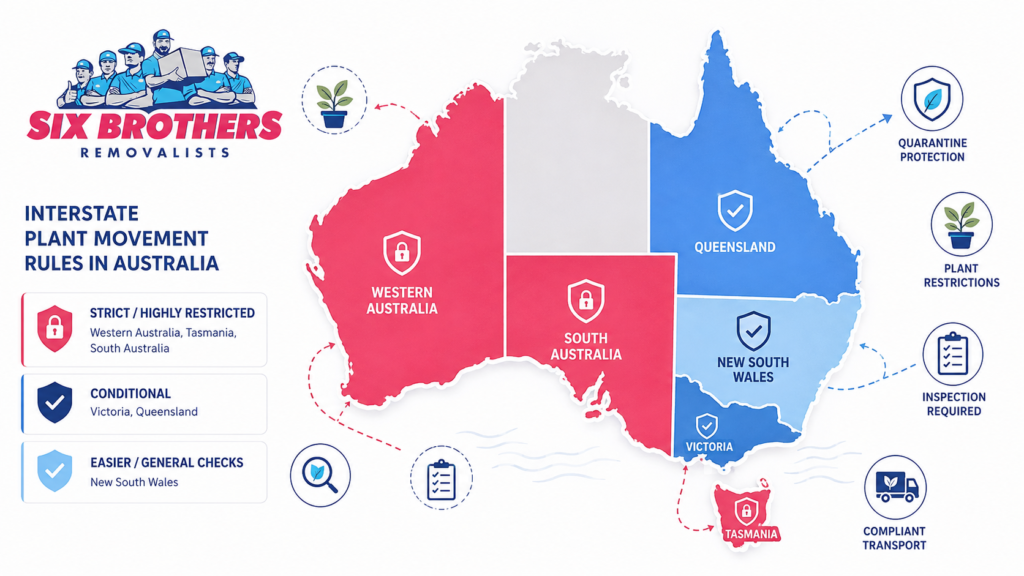
Rules shift often, so always confirm before you pack. Still, this table gives you a quick feel for what you’re up against.
See the pattern? The further west or south you go, the tighter it gets. A short hop like Sydney to Canberra is usually painless. A long haul into WA is a whole different game.
Prepare and Pack Your Plants
Plants hate change. They get stressed, droop, and drop leaves when you move them. So a bit of prep before the big day pays off big time. Ever tried packing a fern like it’s fine china? That’s the mindset here. Gentle hands, smart timing, and the right protection.
Clean and Prune
Start by giving each plant a proper once-over. Check the leaves, stems, and soil for pests or disease. A hidden bug can get your whole load knocked back at the border.
Then prune away dead leaves and long, floppy branches. Smaller plants travel better and take up less room. A tidy plant is a happy traveller. Do this a week or two before the move. That gives the plant time to settle before it hits the road. Don’t prune hard the night before and expect it to cope.
While you’re at it, wipe down the leaves. A clean plant is easier to inspect. It also shows border staff you’ve done the right thing.
Secure the Soil
Soil is the biggest headache in the whole job. Many states want potted plants free of soil-borne pests. That often means washing the roots clean.
Here’s a simple method. Gently lift the plant out of its pot. Rinse the roots free of dirt under the tap. Then repot in fresh sterile potting mix. It sounds harsh, but the plant will bounce back.
Another option is to wrap the root ball in damp paper towel or damp hessian. Then seal it inside a plastic bag around the base. Think of it as tucking the roots into bed for the trip.
Pack for Transit
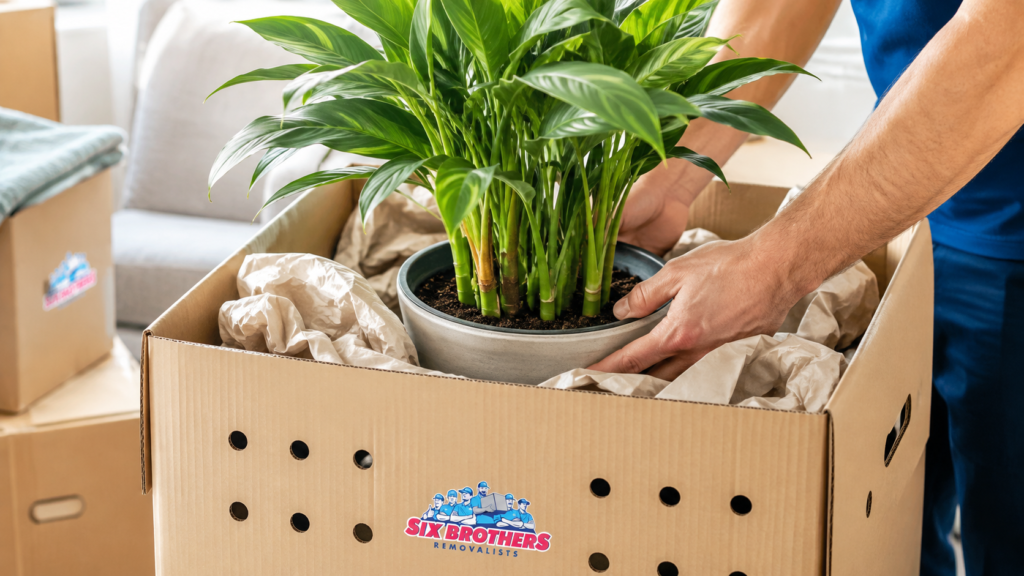
Smaller plants go into sturdy, ventilated boxes. Poke a few holes so they can breathe. A sealed box in a hot truck turns into an oven fast.
Fill the gaps with crumpled newspaper or packing peanuts. This stops pots from tipping and sliding around. Loose pots crack, spill, and make a mess of everything nearby.
And one golden rule. Always keep plants standing upright. A plant packed on its side snaps stems and drops soil everywhere. Label the boxes clearly as live plants. Write which way is up on each side. That way whoever carries them knows to take care.
Load plants last onto the vehicle. They come off first at the other end. The less time they spend boxed up, the better they cope.
Transport Options: DIY or a Carrier?
Now for the big call. Do you drive the plants yourself, or hand them to a carrier? Each path has its own trade-offs.
Self-Move
Driving your own plants gives you the most control. Keep them in the car cabin, not the boot or a hot trailer. The cabin stays cool and steady. Shield them from direct sun and hot, drying wind. Crack a window for airflow on long stretches. And never leave plants baking in a parked car in summer.
This works well for short and medium trips. Sydney to Canberra? Easy. Sydney to Perth over several days? That’s a big ask for both you and the plants. Plan your stops with the plants in mind. Don’t leave them in a hot car during a lunch break. Park in the shade and crack the windows.
And remember, you still hit the same border checks. Driving yourself doesn’t skip the rules. Have your paperwork ready before you reach the line.
Professional Carriers
Here’s a truth that surprises people. Most standard removalists won’t move plants or soil. It’s simply not worth the biosecurity risk for them.
For bigger jobs, you may need a specialist live-plant freight service. These carriers control temperature and humidity for sensitive plants. They’re built for long routes where a normal truck would cook your greenery.
So how does this fit with your house move? Simple. Let the removalist handle the heavy furniture and boxes. You or a plant specialist handle the greenery. That split keeps everyone happy and legal.
Six Brothers Removalists handles the rest of your move. That frees you up to focus on the tricky bits, like the plants. You deal with the greenery. We deal with the furniture.
Moving from Sydney? Our interstate backloading service is a smart, budget-friendly way to go. You share truck space and pay less for the trip. It’s ideal for a full-home interstate move.
And our packing and removals team can box up everything else. That leaves you free to sort the plants in peace. No juggling, no last-minute panic.
Which Plants Are the Trickiest to Move?
Not all plants are equal on moving day. Some travel like champs. Others sulk, wilt, or get flagged the moment they hit the border.
The Easy Movers
Succulents and cacti are the toughest of the bunch. They hold water and cope with a bit of neglect. Small hardy pot plants also handle the trip well. Cuttings and bare-root plants are a smart move too. No soil means fewer border headaches. They pack small and bounce back fast once replanted.
The Hard Cases
Big, mature plants are a real pain. They’re heavy, awkward, and full of soil. Many won’t survive root-washing, and most won’t clear strict states anyway. Fruit trees and edible plants get the toughest scrutiny. They can carry fruit fly and other nasties. Some states ban them outright, no exceptions.
Delicate tropicals also struggle with the trip. Heat, cold, and dry wind stress them fast. If you can’t control the temperature, they may not make it.
How to Help Your Plants Survive the Long Haul
A long interstate trip is hard on any plant. Days in a box with no light take a toll. A few small moves make a big difference. Keep them cool and out of direct sun. A hot car cooks roots and leaves in no time. Aim for a steady, mild temperature the whole way.
Don’t overwater before a long trip. Soggy roots rot in a closed box. Slightly damp soil is the sweet spot for travel. If the drive runs over a few days, unbox them at night. Let them breathe and catch a little light. Then repack them fresh each morning.
And go easy on feeding right before the move. Fertiliser pushes new growth your plant can’t support in a box. Save the feed for after they’ve settled in.
What Does It Cost to Move Plants Interstate?
Cost depends on how you move them and how far they go. A self-drive costs you time and fuel, not much else. A specialist carrier costs more but does the hard work.
Here’s the money question nobody likes to face. Is it cheaper to move the plant or replace it? For common plants, buying new at the other end often wins.
Treatment, inspection, and certificates all add up. A rare or sentimental plant might be worth the spend. Your average $12 pot from the nursery? Probably not. Weigh it up plant by plant. Sentimental value counts too. Nan’s rose cutting is worth more than any price tag, and that’s a fair call to make.
Here’s a quick way to decide. Would you pay to freight it if it wasn’t yours? If not, take a cutting and buy fresh at the other end. Also factor in the risk of loss. A plant can still die in transit, even done right. Spending big on a fragile plant is a gamble, not a sure thing.
What About Fruit, Veg, and Seeds?
Plants aren’t the only thing that gets checked. Your veggie patch and pantry can trip you up too. Many fruits and vegetables are banned across borders. Fruit fly is the main worry here. So home-grown fruit and veg often can’t cross. South Australia is famously strict and fines people at the line.
Seeds are a mixed bag. Some are fine, some need paperwork. Packaged commercial seeds are usually safer than a jar of home-saved ones. The safest move? Eat it, share it, or bin it before you go. Don’t risk a fine over a bag of lemons from the backyard. Buy fresh when you land.
Give your leftovers to the neighbours as a goodbye gift. It saves waste and spreads a bit of good cheer. Far better than a bin at the border.
Common Mistakes People Make
Plenty of good people get this wrong. Not out of laziness, just because nobody told them the rules. Let’s fix that.
The first slip is assuming the plant travels with the furniture. It doesn’t. Most movers leave plants behind, and you can read more on what will movers not pack before your day arrives.
The second is ignoring the soil rule. People wrap the pot, load it, then get stopped at the border. The soil is the trigger, every single time. The third is leaving it all to the last minute. Certificates and inspections take time to sort. Rushed prep means stressed plants and a scramble on moving day.
As the old saying goes, you can’t unscramble an egg. Once your plant’s binned at the border, that’s that. A little planning now saves a lot of grief later.
A Simple Timeline for Moving Plants Interstate
Good timing turns chaos into calm. Here’s a rough run of when to do what. Adjust it to suit your move and your plants.
Want the full picture on the rest of your move? Our guide on how to plan an interstate move covers timing, budgeting, and packing for the whole house.
Bringing It All Together
Moving plants interstate isn’t hard once you know the rules. Check the destination state first. Clean the plant, sort the soil, and pack it upright.
In this game, “she’ll be right” won’t cut it. The borders are strict for good reason, and a quick check saves you the pain. Do the homework, and your green mates make it home safe.
Remember the golden order. Rules first, then prep, then transport. Get those three right and the rest falls into place. Your plants get a fresh start, not a rough ride. While you handle the plants, let us handle the heavy lifting. Six Brothers Removalists makes the rest of your move smooth and careful. We’re upfront on price, with no surprises on the day. Ever.
That’s the whole point of hiring the right team. You get one less thing to stress about. For a deeper walk-through of the process, see our moving house in Australia complete guide.
Ready to get moving? Call Six Brothers Removalists on 1300 764 372, email info@sixbrothersremovalist.com.au, or grab your free quote online. Let’s get you and your leafy passengers to the new place, stress-free.
Frequently Asked Questions
Can removalists move my indoor plants interstate?
Usually no. Most removalists won’t touch plants or soil due to biosecurity risk. A specialist live-plant carrier is your safest bet for a long move.
Do I need a certificate to move plants between states?
Sometimes. Stricter states may ask for a Plant Health Certificate from an authorised inspector. Always check the destination’s rules before you pack.
Can I bring pot plants into Western Australia?
Often not. WA runs very tight rules on soil and plants. Many potted plants get refused, so check well ahead and plan for cuttings instead.
What happens if I don’t declare my plants?
You risk an on-the-spot fine and having the plant destroyed. Border officers do check. It’s never worth the gamble.
Can I move plants in a hire truck or trailer?
You can, but the back of a truck gets hot and dark. Plants cope far better in the cool cabin. For long trips, that heat can kill them.
Do I have to wash the soil off every plant?
Not always, but stricter states often require it. Washed roots in sterile mix pass inspection more easily. Check your destination’s rules to be sure.
Is it easier to just take cuttings?
For many plants, yes. Cuttings carry no soil and pack small. They dodge most border issues and let you regrow a favourite plant at home.
Should I book my removalist before sorting the plants?
Book early either way. Good movers fill up fast, especially in peak months. Locking in your truck first takes the pressure off the rest of the move.