
Table of Contents
Ever tried squeezing a six-tonne removalist truck onto a narrow Fitzroy street on a Tuesday morning? It’s not pretty.
A parking permit is what stops that scene from becoming your moving day. It’s the paperwork that legally reserves kerb space for your truck, right when and where you need it. Think of it as your truck’s golden ticket to the kerb outside your door.
Melbourne’s inner suburbs run on permit zones, clearways and metered bays. Skip the paperwork and you’re playing with fines, tow trucks, or a crew stuck hand-balling boxes from three streets over.
This guide covers every permit type, real council costs, application timelines, and what happens if you get caught without one. Sort this early and your moving day runs like clockwork, not chaos.
Whether you’re shifting a two-bedroom apartment in South Yarra or starting an interstate removalist job out of Melbourne, the parking question comes up every time. Get it right and nobody notices. Get it wrong and it’s the only thing anyone remembers.
Do You Actually Need a Parking Permit for Your Removalist Truck?
Short answer: if you live in a permit zone, a clearway, or a metered area, yes. If you’ve got a driveway or plenty of street frontage, probably not. Melbourne isn’t one city when it comes to parking rules. It’s more like 31 little kingdoms, each running its own council and its own signage.
You’ll almost certainly need a permit if:
• Your street has resident permit signs like 2P Permit Zone or Ticket Zone
• You’re moving in the CBD or an inner suburb such as Carlton, Fitzroy, Richmond or South Yarra
• Your street runs a clearway during peak hours
• Your building shares a driveway or has no direct truck access
You can probably skip it if:
• You’ve got a private driveway big enough for the truck
• You’re on a quiet suburban street with unrestricted parking
• Your removalist confirms there’s already legal space right out front
Did you know?
A standard parking bay in the City of Melbourne runs about 6 metres long. Most removalist trucks need two bays, so your permit isn’t reserving one spot, it’s reserving the whole loading zone.
One more thing worth knowing. A permit doesn’t magically make a bay appear. It gives your truck legal right to park there. Someone still needs to check the space is actually free on the day.
There’s also a middle-ground case people forget about. A driveway that’s too short for a full-size truck still counts as “no access”, even though technically you’ve got a driveway. If the nose or tail of the truck hangs over the footpath or the road, you’re back in permit territory.
Weekend moves add another wrinkle. Some councils process applications slower around public holidays and long weekends, exactly when most people move. If your date lands near Easter, Christmas or a Monday public holiday, build in extra buffer time.
The 3 Types of Melbourne Moving Permits (And Which One You Need)
Most people assume there’s just “a permit”. There isn’t. Depending on your street and your load, you might need one of three different approvals.
Reserved or Temporary Parking Permit
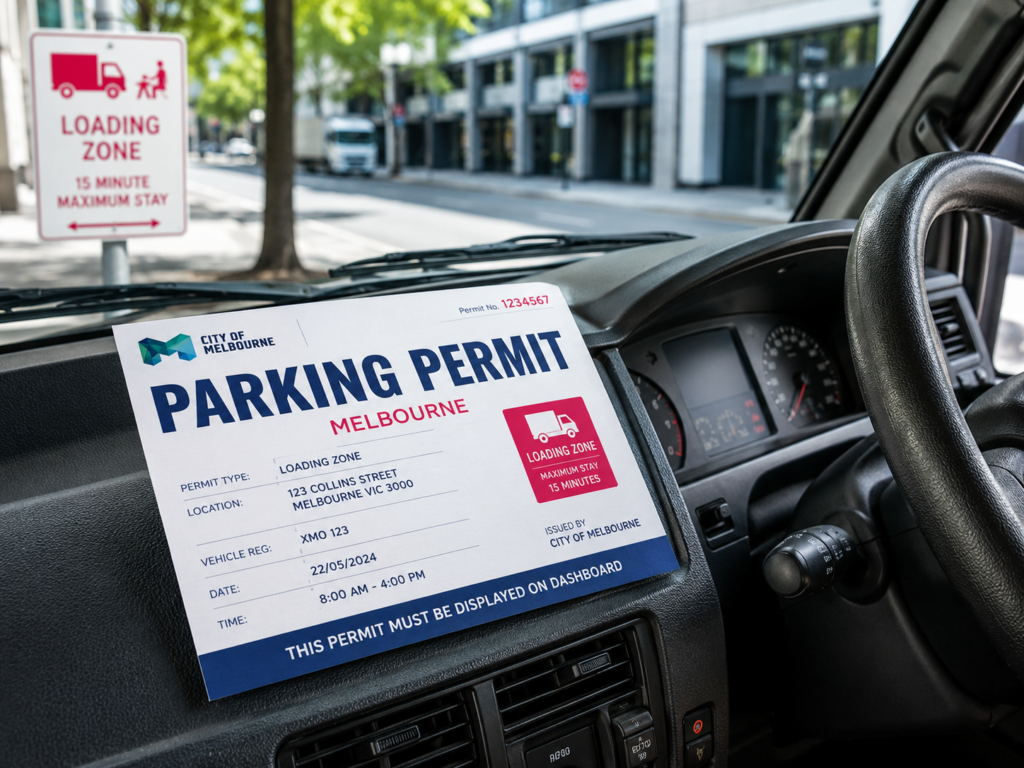
This is the standard option for most house moves. It reserves a specific bay, or a few bays, for your truck on a set date and time. You apply through your local council, hand over the truck details, and pay the fee.
Road or Footpath Occupation Permit
If your truck needs to sit somewhere that blocks a traffic lane, a laneway, or the footpath itself, this is the one you need instead. Think big houses on narrow streets, or moves needing a crane or hoist for upper-floor furniture. Councils treat this as a bigger deal, because it affects everyone on the street, not just you.
Resident, Service or Building Permit
Some inner councils run a separate system for tradespeople and removalists. It isn’t the same as your own resident parking permit, and using the wrong one can still get your removalist’s truck fined, even if you thought you were covered.
Not sure which one applies to you? That’s the honest truth for most people moving house for the first time. Councils don’t exactly make it obvious on their websites, and the terminology shifts from one municipality to the next.
The safest move is simple. Call your council’s parking department directly, describe your street and your truck size, and ask them to confirm the exact permit name. Write it down, because you’ll need it again when you apply.
How Much Do Melbourne Council Parking Permits Actually Cost? (Council-by-Council Breakdown)
Permit fees aren’t set by the state. Every council runs its own pricing, and the range is wider than most people expect.
City of Melbourne is the most transparent about it. A reserved parking permit runs $50 to $200, with a 50% discount if you’re a resident booking parking outside your own address, and they ask for at least five clear business days’ notice through the City of Melbourne reserved parking permit application.
Inner suburban councils like Stonnington, Yarra and Port Phillip run similar systems, though fees and notice periods vary between them. Most sit in the five to ten business day range, so don’t leave it to the last minute.
Outer and middle-ring councils are often more relaxed. If your street has open parking and no clearway, you may not need a permit at all. Always check directly though, don’t just assume.
Here’s the bit nobody tells you upfront. A truck usually needs two bays, not one. A standard Melbourne parking bay runs about six metres, and removalist trucks are longer than a car, so the fee often covers double the space you’d expect.
Not sure what size truck your move actually needs? Run the numbers through our moving home calculator before you book, and you’ll have a much better idea of what to tell the council.
A small tip that saves real money. If you live in the City of Melbourne, apply as a resident rather than letting your removalist apply under their own name. That’s the difference between paying full price and picking up the 50% resident discount, and it takes two minutes longer, tops.
How Long Does the Whole Process Actually Take?
People assume permits are a same-day thing, like ordering a coffee. They’re not. Between working out which permit you need, gathering the truck details, and waiting on council approval, the realistic timeline runs one to two weeks.
Here’s roughly how it breaks down for a standard inner-suburb move. Give yourself two or three days just to identify the right council contact and permit type. Add five to ten business days for the application itself. Then leave a couple of spare days as a buffer, because council queues get backed up more often than you’d think.
If your move date is locked in, work backwards from it. A move on a Saturday in three weeks means your permit application should be in by early the following week, not the Thursday before.
Last-minute moves aren’t hopeless, but they’re harder. Some councils offer priority processing for an extra fee if you’re genuinely stuck. It’s worth asking, though don’t count on it as your main plan.
How to Apply for a Removalist Truck Parking Permit (Step-by-Step)
What Information the Council Needs
Every council application wants roughly the same details. That’s the exact address, the date and time window, your truck’s registration if you have it, and the vehicle length. Some also want your removalist’s business name.
How Far in Advance to Apply
Five business days is the bare minimum most councils will accept. Ten is safer, especially in busy months like December and January when everyone seems to be moving at once.

Displaying the Permit on the Day
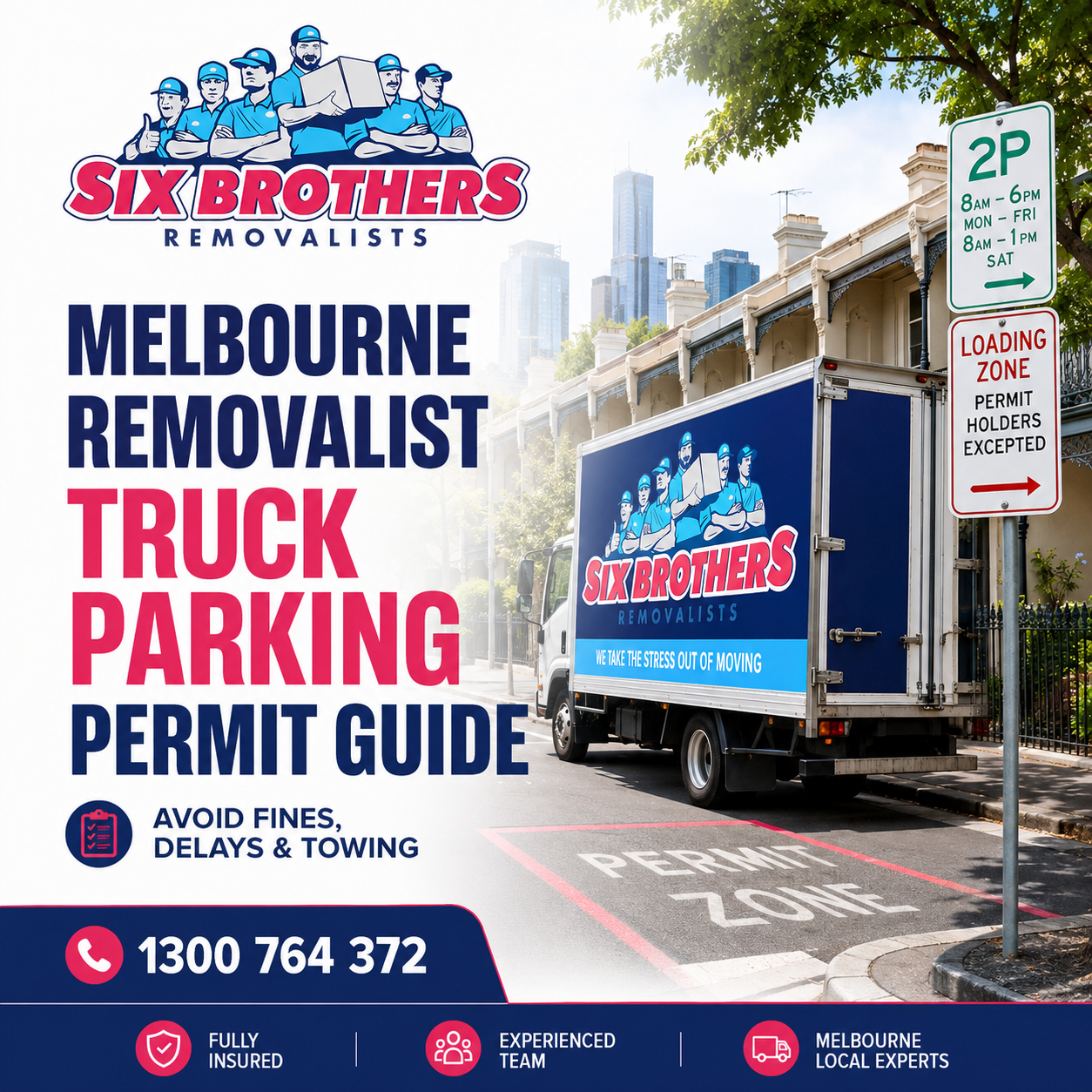
Once approved, print it and hand it straight to your removalist. It usually needs to sit visibly on the dashboard or windscreen. No permit on display means no protection, even if you applied and paid on time.
What Happens If You Don’t Get a Permit? Real Fines and Towing Costs
Skipping the permit doesn’t just risk a slap on the wrist. Parking fines for illegal or obstructive parking in Melbourne can run into hundreds of dollars, before you even factor in the truck.
Clearways are the real trap. Park on a clearway during restricted hours and your truck can be towed, not just fined. Recovery costs often run $500 or more, and that’s a bill nobody budgets for on moving day.
Then there’s the cost you don’t see on a fine notice. If your truck can’t park close, your crew hand-balls every box an extra 50 to 100 metres. On an hourly rate, that adds up fast, and it’s exactly the kind of blowout that turns a reasonable quote into something much bigger.
Would you rather spend fifty dollars on a permit, or five hundred getting your truck out of a tow yard? It’s not really a choice at all.
There’s a knock-on cost too, one that’s easy to miss. A towed truck means a rescheduled move. Your removalist has to source another vehicle, your day gets pushed, and if you’re settling into a new place on a tight timeline, that delay ripples through everything else, from your internet connection date to your first night’s dinner plans.
None of this is scare talk for the sake of it. It’s the exact scenario experienced Melbourne removalists plan around every single week, precisely because it’s avoidable with a bit of lead time.
Moving Into or Out of an Apartment? Lift Bookings and Loading Docks
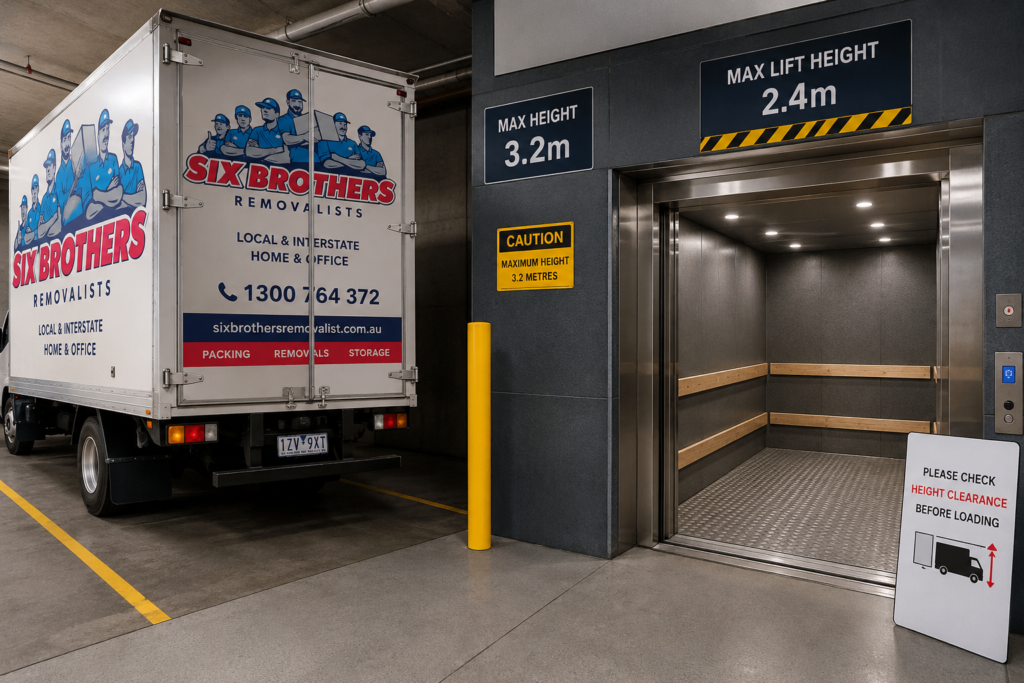
Parking is only half the battle for apartment moves. If there’s a lift involved, you need that booked too, and building managers won’t budge on their own rules.
Most buildings only offer a two-hour window for lift bookings. Miss it, and you might not get another slot that day. Some buildings also charge a bond, often $100 to $300, refunded once the move is done without damage.
Loading docks bring their own headache, and that’s height clearance. Most removalist trucks stand three to four metres tall. A dock with anything under three metres simply won’t fit a standard truck, so you’ll need a smaller vehicle or a longer carry.
Book the lift and confirm the dock height at least a week out. Email the building manager, get it in writing, and pass that confirmation straight to your removalist.
Older apartment blocks in suburbs like St Kilda and Elwood often weren’t built with lifts big enough for modern furniture. A king-size mattress or a large fridge might not fit in the lift at all, which means stairs, and stairs mean extra time on the clock.
If you’re on a higher floor with a small lift, ask your removalist about disassembly options in advance. Taking a bed frame or wardrobe apart before moving day can save an hour of awkward manoeuvring, and it protects the furniture from scuffs and dents along the way.
Who Pays for the Permit, You or the Removalist?
This trips people up constantly. In most cases, the customer applies for the permit and pays the council fee directly. Your removalist can guide you through it, but the paperwork usually sits with you.
Some removalists, including Six Brothers Removalists, will handle the application on your behalf if you ask early enough. It’s one less thing on your plate during an already busy week.
Either way, get clarity before moving day. Nothing sours a move faster than a surprise fee nobody agreed to cover.
It’s a bit like splitting a dinner bill. Everyone assumes someone else has it sorted, and then the awkward moment arrives at the end. A quick conversation up front, in writing if you can, saves that whole scene from playing out on your kerb.
If you’re renting, loop your landlord or agent in too. Some managing agents want a heads-up before a large truck sits outside the property for hours, even with a valid council permit in hand.
Moving Interstate From Melbourne? Why Truck Parking Permits Matter Even More
If you’re not just crossing town but heading interstate, the parking equation changes. Interstate removalist trucks tend to be bigger, since they’re often carrying a full house in one load rather than doing several local runs.
Bigger trucks need more bays, longer loading windows, and sometimes a completely different permit category to a standard local move. A two-hour permit that works fine for a local job won’t cut it when your interstate removalist needs four or five hours to load a whole house.
This is exactly where booking an experienced interstate removalist pays off. A crew that regularly runs Sydney to Melbourne removalist jobs already knows which Melbourne councils are strict, which streets need a road occupation permit instead of a standard one, and how much lead time to build into the schedule.
It’s the difference between a truck that rocks up ready to load, and one that’s still circling the block looking for somewhere legal to stop. If you’re weighing up the full interstate process, it’s worth understanding the hidden costs of moving before the truck even leaves the depot.
Picture a typical scenario. A three-bedroom house in Richmond, packed and ready, with a big interstate truck booked for an 8am start. If the parking permit only covers a two-hour window, the crew’s still loading when the clock runs out, and now they’re exposed to fines on a job that was already running long.
Compare that with a permit scoped for the actual job, four to five hours, two bays, confirmed the week before. Same house, same furniture, same crew, but a completely different moving day. That’s the value a specialist interstate removalist brings to the table before the truck ever shows up.
It also pays to think about the return trip. If your interstate removalist is running Melbourne to Sydney or back again, ask whether backloading is on the table. Sharing a truck’s return leg with another customer’s load can bring the price down, but it also means the loading window at your end needs to be locked in even more precisely.
Melbourne Suburbs Where You’ll Almost Certainly Need a Permit
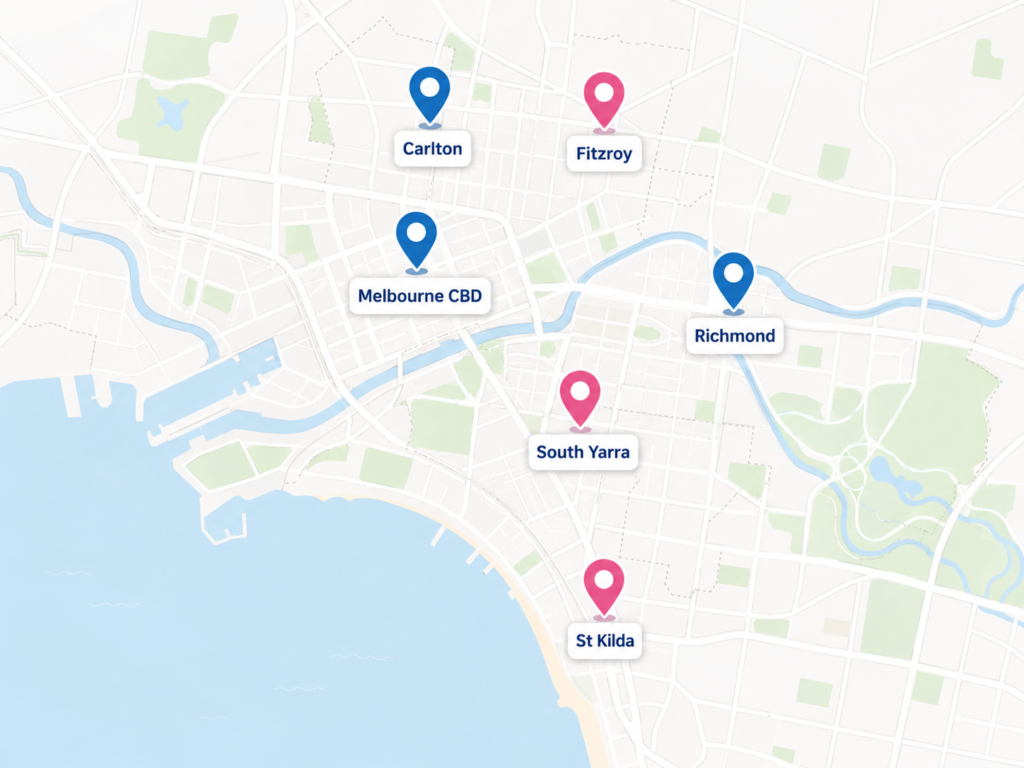
Some pockets of Melbourne are permit territory, full stop. If you’re moving in or out of any of these, plan for it from day one:
• Carlton and Fitzroy : narrow terraced streets, heavy permit zones
• South Yarra and Prahran : high density, limited street frontage
• Richmond and Collingwood : laneways, clearways, tight parking
• St Kilda and Port Melbourne : beachside parking pressure, especially over summer
• The CBD itself : permit-only kerb parking, with rules that apply everywhere in the area
If your move touches any of these suburbs, budget the time and the fee into your plan early. It’s a lot cheaper than finding out the hard way, on the day, with a truck full of furniture and nowhere to put it.
Outer suburbs like Werribee, Cranbourne, Point Cook and Melton are usually a different story. Wider streets, more driveways, fewer clearways. That doesn’t mean zero rules, but the odds of needing a permit drop noticeably once you’re clear of the inner and middle ring.
If your move crosses from an inner suburb to an outer one, or the other way around, check both ends separately. It’s easy to sort the pickup address and forget the destination needs its own look-in too.
Your Pre-Move Parking Checklist
Run through this before moving day and you’ll dodge most of the headaches removalists see on repeat:
• Confirm whether your street needs a permit
• Apply at least 5 to 10 business days ahead
• Get your removalist’s truck length and registration details ready
• Book the lift if you’re in an apartment
• Confirm loading dock height clearance
• Photograph your street signs and send them to your removalist
• Agree on a backup parking spot in case the bay’s taken
• Print and display the permit on the day
Final Word
Sorting your parking permit isn’t the exciting part of moving house. Nobody dreams about council paperwork. But it’s the one thing that decides whether your moving day runs smooth or turns into a scramble.
Get your permit sorted, book your lift if you need one, and give your removalist every detail upfront. That’s the whole game, really.
At Six Brothers Removalists, we deal with permits, tight streets and building managers every single week. Whether you’re moving locally or planning an interstate removalist job out of Melbourne, our team can point you in the right direction before the truck even leaves the depot.
Think of it this way. You’ve already packed the boxes, booked the date, and organised your new place. Don’t let a piece of council paperwork be the thing that trips you up on the last hurdle.
Ready to lock in your move? Call us on 1300 764 372, email info@sixbrothersremovalist.com.au, or head to Six Brothers Removalists to get a free quote. We’ll help you figure out exactly what your street, your building, and your truck actually need.
Frequently Asked Questions
What Is a Removalist?
A removalist is a professional who packs, loads, transports and unloads your belongings during a house or office move. Good ones also handle disassembly, insurance and, as this guide covers, the parking and permit side of things.
How to Prepare for Removalists?
Sort your parking permit, book any lift access, declutter before packing starts, and label boxes by room. The better prepared you are, the faster, and cheaper, your move runs.
Do I Need a Parking Permit for a Removalist Truck in Melbourne?
Usually yes, if you’re in an inner suburb, a permit zone, or a clearway. If you’ve got driveway access, you might not need one at all. Check with your council directly before you book.
How Far in Advance Should I Apply for a Moving Permit?
Most Melbourne councils want five to ten business days notice. Apply the same week you lock in your moving date, don’t leave it until the week of the move.
Can I Reserve Street Parking With Bins or Chairs?
No. It’s not a legal way to hold a spot, and neither your council nor your neighbours will thank you for trying it. Use the proper permit process instead.
What Happens If My Removalist Truck Gets Towed on Moving Day?
You’re looking at a recovery fee, often $500 or more, plus the time lost while your crew waits around. Your move stalls, your hourly rate keeps running, and you’re stuck negotiating with a tow yard instead of unpacking. It’s completely avoidable with a permit sorted in advance.
Does a Resident Parking Permit Cover My Removalist Truck?
Not usually. A resident permit is for your own vehicle, not a commercial removalist truck. You’ll need a separate reserved or temporary parking permit instead.
Is a Parking Permit Different for an Interstate Removalist Truck?
Often, yes. Interstate removalist trucks are bigger and need longer loading windows, so councils may require a different permit category or a longer approval time.