

Table of Contents
A big moving truck rolls up your street. Then it stops. There is nowhere to park. That single problem can wreck a good moving day. The crew waits. The clock ticks. Your careful plan starts to slip.
Interstate moves use large trucks. These are not small vans. They need real room to stop, open up, and load. So parking is not a side detail. For interstate removalists, it is the whole first move. Get it right and the day flows. Get it wrong and everything drags.
This guide walks you through it, step by step. We cover space, permits, city rules, and backup plans. By the end, you will know exactly what to sort before the truck arrives.
Why Parking Access Matters for an Interstate Removalist Truck
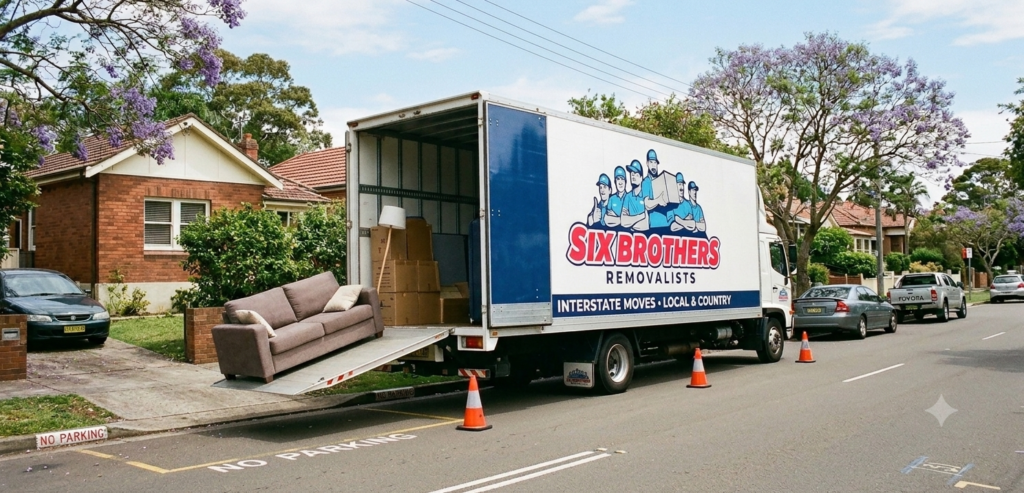
Think of the truck as the heart of the move. If it can park close, everything pumps smoothly. If it parks far, the whole day strains. A long carry costs you money. Many removalists charge for time, not just distance. Every extra metre adds minutes. Those minutes add dollars.
Close parking protects your stuff too. Fewer steps means fewer chances to drop a box. Your fragile things travel a short, safe path. Interstate trucks are heavy and long. They cannot squeeze into any old gap. They need a clear, legal, planned spot.
Here is the honest truth. Good removalists move fast when the road is clear. Bad access slows even the best crew. So the space you set up decides the pace.
Ever watched movers ferry couches half a block in the rain? It is painful. And it is avoidable with a little planning. There is a safety angle too. A truck parked in a bad spot can block traffic. That stresses the driver and slows the load.
A planned spot keeps everyone calm. The crew works in a steady rhythm. Your belongings move in a clean, straight line.
Did you know?
A full-size furniture removalist truck can run 8 to 12.5 metres long. That is why a normal car space rarely fits one. Most trucks need the length of two to three parked cars to load safely.
Decide Who Organises the Parking: You or the Removalist?
This is the first question to settle. Do not leave it fuzzy. A fuzzy plan means nobody books the spot. Some removalist companies arrange parking for you. Others expect the customer to sort it. Many share the job. So ask early.
When you book, put it in plain words. Who applies for the permit? Who pays? Who marks the spot?
Good removalists near me and across the country will guide you. At Six Brothers Removalists, we talk parking through before the day. No guessing, no surprises. Still, the local council rules often need a resident to apply. You know the street. You know the neighbours. That gives you an edge the crew does not have.
So treat it as teamwork. You handle the local side. The removalist handles the truck side. Together you clear the path.

How Much Parking Space Does an Interstate Removalist Truck Need?
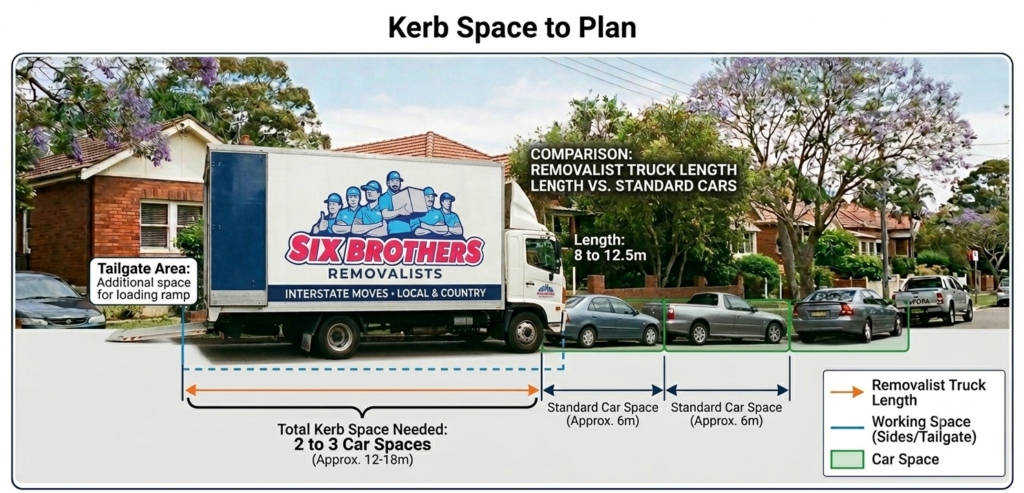
Space is the whole game here. Too little and the truck cannot even stop level. Too much and you annoy the street.
As a rough guide, plan for the length of two to three cars. That gives the truck room to pull in and out. It also leaves room to work the tailgate.The crew needs side space too. They roll trolleys. They carry wardrobes. They need a clear lane, not a squeeze.
Big interstate loads sometimes use a taller truck. That truck needs height clearance above it. Low branches and wires can block it. Ask your removalist for the exact truck size. Do not guess. A quick answer now saves a headache later.
These are guide figures only. Your truck may differ. Always confirm the real size before you plan the spot.
Confirm Truck Dimensions and Property Access
Measure Space
Now get practical. Grab a tape measure and walk the kerb. Measure the gap you plan to use. Check the width of your street. Check the driveway entry. Check any gate the crew must pass through.
Look up as well as along. Are there low branches? Awnings? Power lines that hang low? Write the numbers down. Share them with your removalist. Then everyone knows the truck will fit before it leaves the depot.
This step feels small. It is not. Five minutes with a tape can save an hour on the day.
Secure Local Council Parking Permits Before Moving Day
Here is a big one people forget. In many areas, a big truck cannot just park anywhere. You may need a council permit.
Permits are issued by your local council, not the removalist. Rules change from suburb to suburb. So the spot outside your home may have hidden strings.
Permit Types
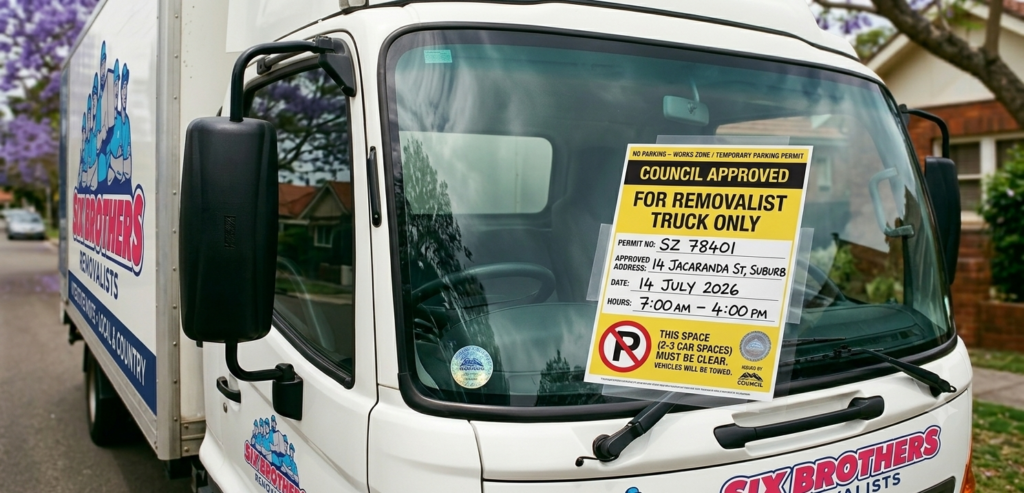
Different councils offer different permits. Some call it a visitor permit. Some call it a temporary parking permit or a works zone.
For a house move, you usually want a short-term or visitor permit. It lets the truck park where a car normally cannot. Ask the council which type fits a removalist truck.
How to Apply
Most councils let you apply online. Some still take paper forms. You give the address, the date, and the vehicle details. You may need proof you live there. Have your lease or rates notice ready. That speeds the whole thing up.
Lead Time
Do not leave this to the last minute. Many councils want several days notice. Some charge extra for late requests. A fair rule of thumb is 10 days out. Apply early and the permit lands in time. Leave it late and you may miss the window.
Ask for Physical Signs
Some councils supply temporary no parking signs. These hold the space for you. Put them up early so cars stay clear. No signs? You can still mark the spot yourself. We cover that further down.
Sydney Removalist Truck Parking Permit Guide
Sydney is where many interstate moves start or end. If you are searching removalists Sydney or removalists Parramatta, parking will matter to you.
In the inner city, the City of Sydney allows a removalist’s truck to use a visitor parking permit. That permit does not cover trailers or boats. It is meant for the move itself.
Outside the City of Sydney zone, other councils apply. Parramatta, Blacktown, and the eastern suburbs each set their own rules. Western Sydney removalists deal with this all the time.
Apply through your council early. Costs and lead times vary by area. When in doubt, call the council and ask for the moving or visitor permit. Local streets can be tight and busy. So plan the exact kerb spot, not just the street. A little homework here pays off fast.
Sydney Removalist Truck Parking Permit Guide…..Read more
Melbourne Removalist Truck Parking Permit Guide
Heading south? Removalists Melbourne face busy inner suburbs and narrow lanes. Parking permits there can save your day.
Melbourne councils charge by space and time. Fees can climb depending on the spot and hours used. Residents often get a discount with proof they live there. Apply at least five days ahead where you can. Late requests can cost more. Some areas let you book from early morning.
Long, heavy vehicles face extra rules in parts of the city. Your mover may be exempt while actively loading. Still, check the local council before the truck arrives.
Melbourne Removalist Truck Parking Permit Guide……Read more
Brisbane Removalist Truck Parking Permit Guide
Removalists Brisbane work across a spread-out city. Many streets have room. Some inner suburbs do not.
Large trucks over a set size face parking limits in some zones. A mover delivering goods may be exempt during the job. But this is a check, not a guess. Ring your Brisbane council for the exact rule at your address. Ask if a permit is needed for a moving truck. Sort it before the day, not on it.
Perth Removalist Truck Parking Permit Guide
In Perth, the city has clear rules for moving vehicles. Some areas only accept removalist bookings on weekends. So timing matters more here.
Fees are charged per bay, per day, with a lower rate for half days. Give a couple of days notice at least. Late forms may not be accepted. Check with the City of Perth or your local council. Confirm the days, the bays, and the cost. Then book with room to spare.
Perth Removalist Truck Parking Permit Guide……Read more
Adelaide Removalist Truck Parking Permit Guide
Removalists Adelaide often use a temporary parking control request. This lets you reserve kerb space for the move. Fees are charged per space, per day.
A small van may need one space. A large interstate truck may need up to three. So the cost rises with the truck size. Lodge the request early with your council. Confirm the exact fee for your street. A short call clears up any doubt.
Other Australian Cities Removalist Truck Parking Rules
Moving to Canberra, Newcastle, the Central Coast, or the Gold Coast? The idea stays the same. Only the paperwork changes. Every council runs its own permit system. Some are strict. Some are relaxed. None like a random truck blocking a busy road.
The golden rule is simple. Ring the council for the destination address. Ask two things. Do I need a permit, and how do I get one? As the old saying goes, measure twice and cut once. One call now beats a fine later. It is the cheapest insurance you will ever buy.
Check Sydney Street Parking Restrictions Before Moving Day
A permit is only half the story. Your street may carry rules that still apply. Miss one and your truck gets moved or fined.
Clearway Hours
Clearways ban parking at set times. They keep traffic flowing on main roads. A truck left there can be towed fast. Check the clearway signs on your street. Note the hours. Plan the move around them.
No Stopping Zones
No stopping means exactly that. Not even a quick pause. These zones are strict, so keep the truck well clear.
Loading Zone Limits
Loading zones seem perfect for a move. But many have short time limits. A big load can blow past the limit fast.
Bus Stops and Driveways
Never block a bus stop or a driveway. Buses need the space. Neighbours need their driveways. Both bring quick complaints.
Timed Parking Rules
Some spots allow only one or two hours. A full house move takes longer. So a timed spot may not work for the whole job. Read every sign near your kerb. Then match your plan to the rules. A clear head here avoids a messy day.
Coordinate Parking Access with Strata or Building Management
Living in a unit or apartment? Then strata or building management joins the picture. You cannot just roll a truck up to the door.
Loading Dock
Many buildings have a loading dock. It is the best spot for a move. But it often needs to be booked in advance.
Elevator Booking
Big buildings let you book the lift. Some have a service lift for moves. Reserve it so you are not sharing with other residents.
Moving Hours
Strata rules often set moving hours. Many ban moves at night or on Sundays. Check the by-laws before you lock in a date.
Verify Clearances
Check the height of the car park entry. Many are too low for a tall truck. If so, the truck parks outside and the crew shuttles in. Sort all this with management early. A booked dock and lift make a unit move smooth. Skip it and the day turns into a scramble.
Plan for Narrow Streets and High-Traffic Sydney Areas
Some Sydney streets were built long before big trucks. They are tight, twisty, and busy. So a large truck needs a smart plan.
One-Way Streets
One-way streets limit how a truck enters and leaves. Map the approach in advance. Tell the driver which way to come in.
Main Road Access
Homes on main roads bring their own trouble. Traffic never stops. A safe, legal pull-in spot becomes vital.
School Zone Timing
School zones get chaotic at drop-off and pick-up. Avoid those windows if you can. Mid-morning is often calmer.
Peak-Hour Traffic
Peak hour clogs everything. A truck stuck in traffic burns your paid time. Start early or aim for the quiet mid-day gap.
Tight Kerbside Parking
On packed streets, every space fills fast. So claim your spot before the crew arrives. An empty kerb is worth its weight in gold on moving day.
Scout the Area for Truck Access Obstacles
Would you set off on a road trip without checking the route? Same idea here. Scout the spot before the day. Walk the street and look for trouble. Low branches. Speed humps. Tight corners. Parked cars that never seem to move.
Can’t get there in person? Use online street view for a quick look. It shows you the lay of the land from your couch. Note anything that could block the truck. Then share it with your removalist. A driver who knows the street drives in with confidence.
This works for both ends of an interstate move. Scout the pick-up and the drop-off. Two clear spots make one smooth day. Take a few photos while you are there. Snap the kerb, the entry, and any tight turns. Send them to your crew so nothing is a shock.
Also note the best time of day to load. Some streets clear out after the morning rush. A quiet window makes the whole job faster.
Physically Mark and Reserve the Removalist Truck Space
You found the spot. Now you have to hold it. An empty kerb never stays empty for long.
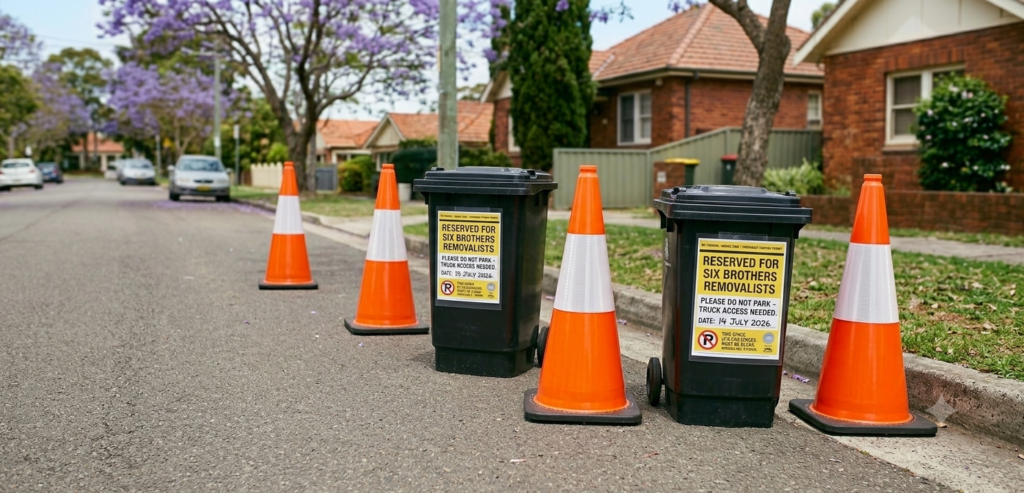
Barricade the Area
Use bins, boxes, or a couple of chairs to block the space. It is a rough fix, but it works. Just remove them the moment the truck arrives.
Early Placement
Get out there early. The night before is even better where it is safe. Claim the kerb before the street wakes up.
Use Traffic Cones
Cheap traffic cones do a great job. They signal the space is taken. People tend to respect a cone.
Talk to Your Neighbours
A friendly heads-up goes a long way. Tell neighbours you have a big truck coming. Most will happily keep the spot clear. Kindness pays off here. Offer a wave and a thank you. A good neighbour is worth more than any cone.
Communicate the Parking Plan with Your Interstate Removalist
A plan in your head helps nobody. The crew needs it too. So share every detail before the day.
Share Details
Send the exact address and the parking spot. Add photos if you can. Point out the entry, the gate, and the load path.
Contingency Plan
Talk through what happens if the spot is taken. Where does the truck go instead? A shared backup keeps calm heads on the day.
Confirm the Truck Size with Your Removalist
Ask again for the truck length and height. Match it to your street. Choosing the right-sized truck can be the difference between a tight fit and an easy park.
Clear talk removes fear. Both sides know the plan. Both sides know the backup. That is how trust is built before a single box moves.
Prepare a Backup Parking Location for the Removalist Truck
Even the best plan can wobble. A car might block your spot. So a backup is not paranoia. It is smart.
Nearby Side Street
Scout a quiet side street close by. It gives the truck a fallback spot. Keep it in your back pocket.
Alternative Loading Spot
Find a second kerb the crew can use. It may add a few steps. But it keeps the move going.
Short Carry Route
Plan the walk from the backup to your door. A short, clear path matters most. Move bins and clutter out of the way.
Second Truck Position
For big interstate loads, the truck may reposition. It loads in one spot, then shifts. Plan both spots ahead.
Delay Plan
Sometimes you just wait for a car to leave. Agree with the crew on how long to hold. A short, calm delay beats a panic.
Communicate the Parking Plan Twice Before the Day
Now bring it all together for the crew. A move runs on the pick-up spot and the drop-off spot. Both need a clear plan.
For an interstate job, the two ends may be cities apart. That is where good interstate backloading and route planning save you money. One truck, one smart run, less wasted space.
Six Brothers handles house moves, office moves, and even a tricky piano. Our furniture removalists plan parking as part of every quote. So the truck lands where it should.
Complete Final Parking Checks Before the Truck Arrives
The last day is here. A few small checks now keep the whole move on track. This is your final sweep.
Night-Before Check
Walk the spot the night before. Make sure no cars have crept in. Put out your cones or bins.
Morning Inspection
Check again first thing in the morning. Streets fill fast at dawn. Catch any problem while there is still time.
Sign Visibility
Make sure your signs or cones are easy to see. A hidden sign does nothing. Clear signals keep the space yours.
Vehicle Obstructions
Look for anything in the truck’s path. A wheelie bin. A stray trailer. A branch that dropped overnight.
Removalist Arrival Call
Call the crew as they head over. Confirm the spot is clear. Guide them in over the phone if the street is tricky. These checks take ten minutes. They protect hours of work. That is a trade worth making every single time.
Want the full run-up sorted too? Our 8-week interstate checklist maps every task before the day. Parking is just one box on a much bigger list.
Park Smart, Move Easy
Parking is the quiet hero of a smooth interstate move. Sort it well and the day almost runs itself. Skip it and even a great crew gets stuck. So measure the space. Check the permit. Mark the kerb. Share the plan. Keep a backup ready.
None of it is hard. It just takes a little thought before the big day. And it saves you real money and real stress.
Want a crew that plans parking with you, not around you? Six Brothers Removalists does exactly that on every interstate job. Get your free quote today and move with a clear road ahead.
Call 1300 764 372 or email info@sixbrothersremovalist.com.au. Tell us your streets and your date. We will help you clear the way.
Frequently Asked Questions
Do I need a permit to park a removalist truck outside my house?
It depends on your council and street. Many quiet streets need no permit at all. Busy inner-city streets often do. Check with your local council for the address. Ask if a moving or visitor permit is needed. Sort it early to be safe.
How much space does a removalist truck need?
Plan for the length of two to three parked cars. Large interstate trucks sit at the bigger end. The crew also needs side room to work.
Do removalists organise parking, or do I?
It varies by company. Some arrange it. Some expect you to. Many share the job with the customer. Always ask when you book. At Six Brothers, we talk it through before the day. That way nobody is left guessing.
What happens if there is no parking on moving day?
The truck may park further away and shuttle your goods. That adds time and cost. A backup spot and marked kerb help you avoid it.
Do removalists work on weekends?
Yes, many do, and weekends are popular. But streets and traffic can be busier. A mid-week slot is often easier for parking.
How far in advance should I sort truck parking?
Aim for at least 10 days out. That leaves time for a council permit. It also lets you scout the spot without rush.
How much does a removalist truck permit cost?
It changes by city and by how many spaces you use. Some councils charge a small daily fee per space. Always confirm the current cost with your council before you apply.
Can I reserve parking for both the pick-up and drop-off?
Yes, and for an interstate move you often should. Each end may sit under a different council. So check the rules for both addresses.