

Table of Contents
Moving interstate is a big deal. And your car needs its own prep.
Whether it goes on a carrier or you drive it, a bit of prep saves a lot of grief. Skip it, and you risk damage, delays, or a failed pickup. None of that is fun.
The good news? Prepping your car is simple once you know the steps.
This guide walks you through all of it. The same care Six Brothers Removalists brings to every interstate move from Sydney.
Ready to get your car road-ready or carrier-ready? Let’s get into it. We’ll cover transport prep, driving prep, and the paperwork. Nothing gets missed.
Preparing Your Car for Interstate Car Transport
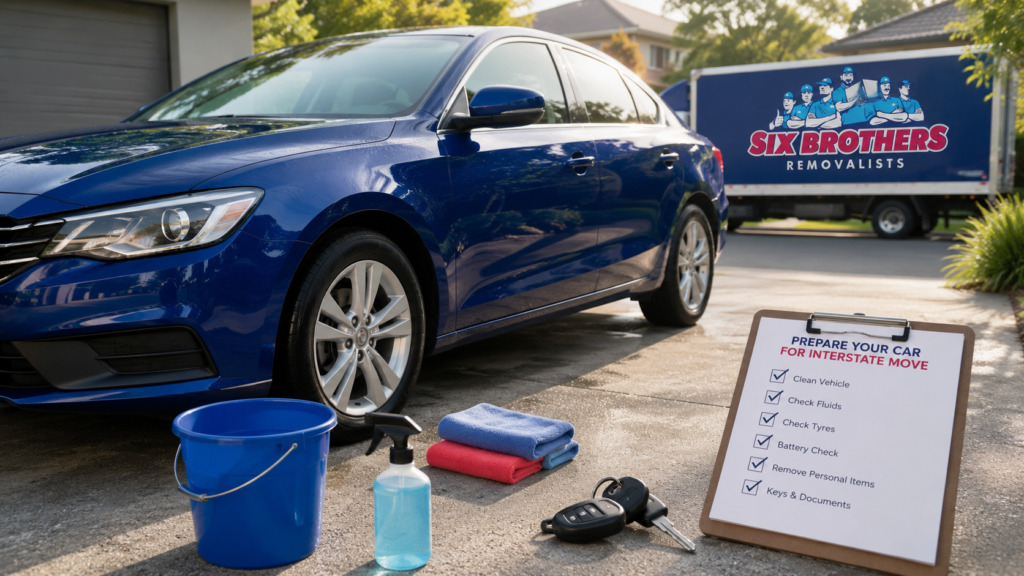
If your car is going on a carrier, prep is quick but important. These steps protect your car and keep the loading smooth.
Clean the Vehicle
Wash the car inside and out before pickup. A clean surface shows every mark clearly. It helps your condition photos come out sharp. Any scratch is easy to spot.
A clean car also clears border biosecurity checks faster. Mud and soil can be a problem. Give the boot and floor mats a vacuum too. Little bits of dirt add up.
Lower the Fuel Level
Leave about a quarter tank of fuel. That’s enough to load and unload the car. A full tank adds weight and a small fire risk. Low fuel is safer for transport.
Carriers always prefer a near-empty tank. It’s a simple step that helps them. If you’re driving instead, start with a full tank and plan your fuel stops.
Take Photos Before Transport
Photograph the car from every angle before pickup. Get close-ups of any existing marks. Timestamp them if you can. This is your proof if damage shows up at delivery.
Store the photos in the cloud with your booking. Then they’re safe and easy to find. A short video walk-around helps too. It captures the whole car in one go.
Empty the Car
Clear out all personal items. Carriers usually can’t legally transport goods inside a car. Loose stuff can shift and cause damage anyway. Check under seats and in the glovebox. Send your household goods with your furniture removalist instead.
Remove or Secure Loose Parts
Take off anything that can rattle loose. Aerials, spoilers, roof racks, and bike racks. Loose parts get damaged or lost in transit. Fold in the side mirrors too.
Secure anything you can’t remove. A little tape or bubble wrap goes a long way. Retract the aerial if it screws down. It’s an easy thing to snap off.
Turn Off Alarms and Remove Tags
Disable the car alarm so it doesn’t drain the battery. A blaring alarm helps no one. Remove toll tags to avoid stray charges on the trip. Take out parking permits too. Hand over a working key and note any quirks. It speeds up the load. A quiet, alarm-free car makes the whole handover calmer.
Did you know?
Most transport damage claims fail for one reason: no clear proof of the car’s condition before pickup. A two-minute photo run can save you thousands.
Do Cars Have to Be Empty When Shipped?
In most cases, yes. Your car should be empty for transport.
Carriers usually can’t legally carry personal goods inside a vehicle. It’s an insurance and weight issue. Loose items also shift on the road and can damage the interior. So clear the cabin and boot.
Some carriers allow a small, secured item in the boot. Always ask first, and get it in writing. The safest bet is an empty car. Send everything else with your removalist truck.
It also keeps your car’s interior safe from shifting boxes on the road.
Check Your Vehicle’s Condition Before Interstate Transport
A quick condition check avoids surprises on the day. It also protects you in any claim. Run through these before pickup.
Declare Existing Faults
Note any leaks, dents, or mechanical faults upfront. Honesty here protects everyone. A leaking car can affect others on the carrier. Flag it early.
Your condition report should match the car exactly. No surprises later. Point out any faults to the crew in person too. Words plus notes leave no doubt.
Confirm It Starts
Make sure the car starts and drives before pickup. A running car loads in minutes. If it won’t start, tell your carrier. A non-runner needs winch loading and extra gear.
Spring a dead car on the crew and you risk a failed pickup. A jump-start on the day rarely works out. Sort a flat battery before pickup.
Check Steering and Brakes
The car needs to steer and brake for safe loading. The crew rolls it onto the carrier. If either is faulty, say so when you book. It changes how they handle the car.
Safe loading protects your car and the crew. If the car is a non-runner, the crew plan for that with a winch.
Mention Low Clearance
Lowered cars can scrape on standard ramps. Flag any low clearance in advance. The crew can then use the right ramps or gear. It avoids scraped bumpers.
A quick heads-up saves your paintwork and their time. Measure the clearance if you’re unsure. A number helps the crew prepare.
Get Your Car Ready for Carrier Loading
Loading day goes fast when the car is ready. Tick these off first. Small steps make the handover smooth.
Provide a Spare Key
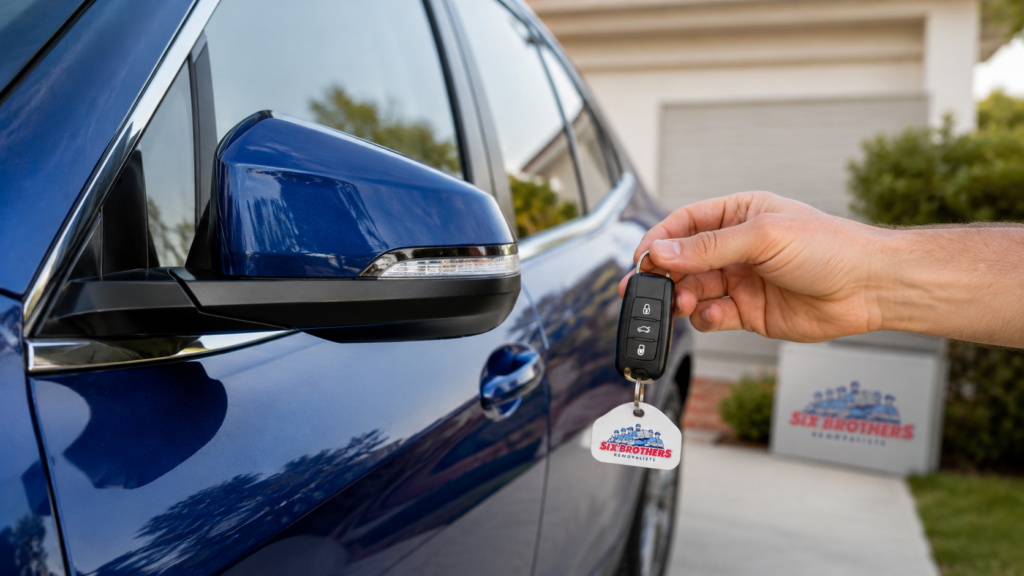
Hand over a working key for pickup and delivery. The carrier needs it to load and unload. A spare key is ideal, so you keep your main set. Label it clearly.
Never leave the only key inside the car. Keep a backup with you. If you only have one key, tell the carrier how you’ll hand it over.
Fold in Mirrors
Fold in the side mirrors to protect them. They stick out and catch on things. Folded mirrors are far less likely to snap. It’s a two-second job.
On tightly packed carriers, this small step really helps. Auto-fold mirrors can be set to stay in. Check your car’s settings.
Close Windows Fully
Wind up all windows and shut the sunroof. Open gaps let in dust and rain. A sealed car stays clean and dry in transit. Check the boot is latched too.
It’s an easy step that keeps the interior fresh. On open carriers, a sealed car matters even more. Weather can get in.
Check Handbrake Function
Make sure the handbrake works properly. The crew uses it to secure the car. A dodgy handbrake makes loading harder and riskier. Mention it if it’s weak. A working handbrake keeps the car steady on the carrier. For autos, the crew may also use park mode. Mention any gear issues.

Prepare for Sydney Pickup Access Before Car Transport
Sydney streets can be tight for big carriers. Plan the pickup spot early. A little local prep avoids a failed collection.
Check Street Parking Limits
Look for clearways and time limits on your street. A carrier can’t stop in a clearway. Check the signs before the day. Book pickup outside restricted hours. A legal, clear spot keeps the load smooth.
Confirm Truck Access
Big carriers need width, height, and turning room. Tight lanes and low branches block them. Send the carrier a photo of your street. They’ll tell you if their truck fits. It’s a two-minute check that saves a wasted trip.
Arrange Apartment Pickup
Unit basements are a no-go for carriers. The clearance is far too low. Arrange a street-level spot with room to load. Ask your building manager for help. A clear, flat area makes loading safe and quick.
Allow Space for Loading
A carrier needs a long, clear stretch to load safely. Parked cars get in the way. Clear the space or pick a quieter time. Mid-morning often works best.
Space and calm make the handover easy for everyone. Cones or a car in the spot beforehand can save room for the carrier.
Special Preparation for EVs, Hybrids, and Modified Cars
Some cars need extra prep before they travel. These are the main ones. A quick heads-up to your carrier covers most of it.
Set EV Charge Level
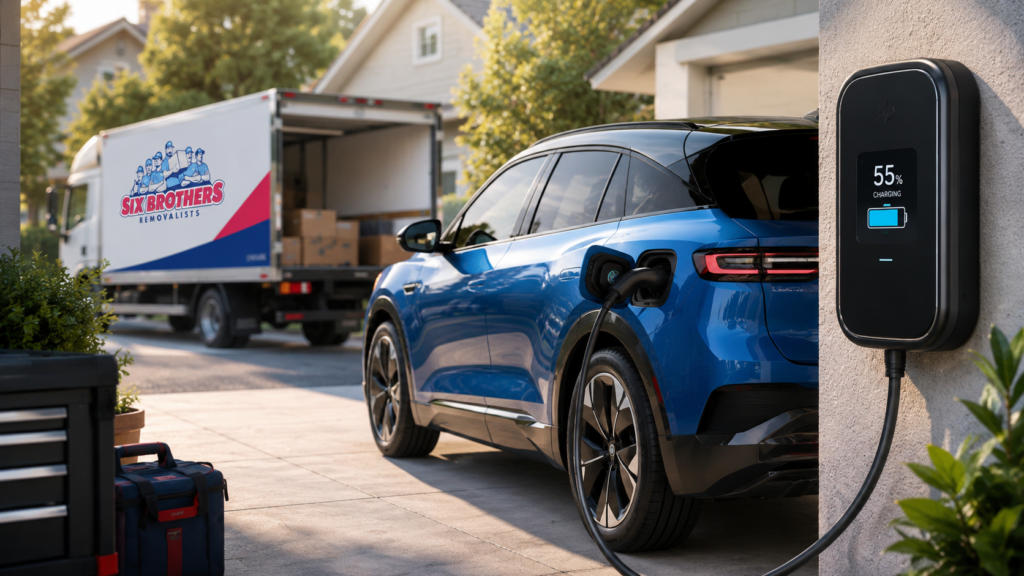
Charge an EV to a mid level, not full or flat. Around half is usually ideal. It keeps the battery healthy during the wait. Check your maker’s advice too. Tell the carrier it’s an EV so they plan the load. EVs are heavier than they look. The right carrier handles that fine.
Disable Valet Mode
Turn off sentry, valet, or guard modes on smart cars. They drain the battery fast. A flat battery on arrival is a real hassle. Disable these before pickup. Check your car’s app or manual for the right setting.
Note Battery Requirements
Some hybrids and EVs have specific handling needs. Note any in your booking. The carrier can then load the car the right way. Detail helps them plan. A short note now avoids confusion on the day.
Declare Vehicle Modifications
Lowered, lifted, or widened cars need careful loading. Declare all mods upfront. Standard ramps can scrape a modified car. The crew brings the right gear if warned. Photos of the mods help the crew prepare.
Note ground clearance in centimetres. Precise numbers beat guesses.
Preparing Your Car for the Interstate Drive From Sydney
Driving it yourself? Your car needs to be road-trip ready. A long haul is tough on a car. Prep it well before you leave.
Get a Mechanical Service
Book a service before a long drive. A mechanic can catch problems early. Fresh oil and a healthy engine handle the distance better. It’s cheap insurance.
The last thing you want is a breakdown halfway across the country. Ask the mechanic to check belts, hoses, and the battery too.
Check the Tyres
Check tyre pressure, tread, and the spare. Long drives punish worn tyres. Correct pressure also improves fuel use. It’s a quick win before you go.
Don’t forget to check the spare and the jack. A cheap tyre gauge lets you check pressures at any servo.
Top Up Essential Fluids
Top up oil, coolant, brake fluid, and washer fluid. These keep the car running safe. Low fluids on a hot highway spell trouble. Check them the day before. A five-minute check under the bonnet is worth it. Top up screen wash too. Bugs and dust build up fast on long drives.
Pack an Emergency Kit
Pack water, snacks, a first aid kit, and a phone charger. Add a torch and a blanket. Long routes cross remote stretches with no help nearby. Be ready for it. A basic kit turns a small drama into a minor hiccup. Add jumper leads and a basic tool kit. They cover most roadside fixes.
Plan Your Interstate Driving Route Before Leaving Sydney
A good route plan makes the drive safer and calmer. Sort it before you set off. These four steps cover the basics.
Map Fuel Stops
Plan where you’ll refuel along the way. Some outback stretches have few servos. Never let the tank run too low out there. Fill up when you can, not when you must.
A fuel plan keeps you moving without stress. Use an app to spot servos ahead. It saves running low in the middle of nowhere.
Plan Rest Breaks
Schedule a break every two hours or so. Tired driving is dangerous driving. Swap drivers if you can. Sharing the wheel cuts the fatigue risk. Rest stops keep you sharp for the whole trip. Stop the moment you feel drowsy. A short nap beats pushing on tired.
Check Route Conditions
Check for roadworks, closures, and weather before you leave. Conditions change fast. A quick look saves a long detour. Plan around any known trouble spots.
Fresh info means fewer surprises on the road. Save an offline map too. Signal drops out on remote stretches.
Book Overnight Stops
For long routes, book your motels ahead. Driving tired to find a bed is risky. Know where you’ll sleep each night. It keeps the trip on schedule. For a full plan, see our guide on what to do before moving interstate.
Car Documents, Insurance, and State Regulations
Paperwork isn’t glamorous. But it keeps your move legal and smooth. Sort these before and just after the move.
Organise Important Paperwork
Gather your rego papers, licence, and insurance details. Keep them in one folder. Have proof of ownership ready for the carrier. It smooths the whole process. A tidy folder saves a frantic search later. Keep digital copies on your phone as a backup.
Meet Biosecurity Requirements
State borders have biosecurity rules. Soil and plant matter on a car can be a problem. Give the car a good wash, focusing on the wheels and mud flaps. A clean car clears the border without fuss. A dirty car can be held or cleaned at the border. That means delays and fees.
Update Your Registration and Driver’s Licence
Moving to a new state? You’ll need to register your interstate vehicle within the set window. You’ll usually update your driver’s licence at the same time. Deadlines are tight.
Diarise the deadline the day you arrive. Fines apply if you miss it. You may need an inspection first. Check your new state’s rules early.
Update Your Insurance
Tell your insurer about the move. Your premium can change with your new address. Check what car insurance covers for transport and your new state. Confirm the cover in writing. Then you know exactly where you stand. Cover for transport can differ from your everyday policy. Ask about both.
Avoid Common Car Preparation Mistakes Before Moving Interstate
A few common slip-ups cause most of the drama. Dodge these and you’re set.
Missing Pickup Window
Miss the carrier’s pickup window and you may pay a fee. Be ready and on time. Confirm the window the day before. Set a reminder so it doesn’t slip. A little planning keeps the whole move on track.
Ignoring Access Issues
Forget your tight street and you risk a failed pickup. That can cost you. Check truck access early. Suggest a wider spot if needed. A quick photo to the carrier settles it.
Forgetting Spare Keys
No key means no loading. It sounds obvious, but people forget. Hand over a working key and keep a backup. Label it clearly. Never leave the only key locked inside the car.
Hiding Vehicle Faults
Hiding a fault helps no one. It can cause damage or a failed pickup. Declare leaks, low clearance, or a dodgy start upfront. Honesty protects everyone.
A clear condition report is your best defence. Faults found later are much harder to prove. Flag them now.
Final Car Checks on Pickup or Moving Day
The last checks matter most. Don’t rush them on the day. Run through these before you hand over the keys.
Confirm Contact Details
Swap phone numbers with the crew lead. A direct line saves time if plans shift. Confirm your delivery contact too. Someone needs to receive the car.
Clear contacts keep everyone in the loop. If you can’t be there, nominate someone you trust to check the car.
Review Handover Notes
Read the condition report carefully before signing. Check it matches the car. Don’t sign until you agree with every mark listed. Your signature is the record.
Take your time here. A careful check now beats a dispute later. Walk around the car twice before you sign. It’s easy to miss a mark.
Get Carrier Details
Note the carrier’s name and contact. You’ll want it for updates and any claim. Ask for a delivery window and a tracking method. Then you can plan your arrival.
Booking a Sydney to Brisbane removalist job? Sync the car and furniture legs.
Save Delivery Updates
Keep every message and update from the carrier. A tidy record helps if issues arise. For a Sydney to Melbourne removalist move, updates come quickly on this popular route. Use our moving home calculator to plan the whole move at once.
Moving your home and car from Sydney? Six Brothers can coordinate both interstate. Call 1300 764 372 or email info@sixbrothersremovalist.com.au for a free quote.
Get Your Car Move-Ready
Preparing your car before moving interstate isn’t hard. It just takes a short, careful checklist. Clean it, empty it, photograph it, and sort the paperwork. Then hand over the keys with confidence.
Whether it goes on a carrier or you drive, prep is what protects your car. And a interstate backloading option can keep costs down. If you’re moving your whole home too, Six Brothers Removalists can handle the lot from Sydney.
Get your free quote today. Call 1300 764 372 or email info@sixbrothersremovalist.com.au. No surprises, just a clear plan.
Frequently Asked Questions
How do I prepare my car for interstate transport?
Clean the car inside and out, then photograph it from every angle. Empty the cabin and boot, remove loose parts, and fold in the mirrors. Leave about a quarter tank of fuel and hand over a working key. Declare any faults or low clearance upfront.
Do cars have to be empty when shipped?
In most cases, yes. Carriers usually can’t legally transport personal goods inside a car. Loose items can also shift and damage the interior. Some carriers allow a small, secured item, so always ask first. The safest bet is an empty car.
How much fuel should I leave in my car for transport?
Leave about a quarter tank. That’s enough to load and unload the car. A full tank adds weight and a small fire risk. Low fuel is safer for transport, and carriers always prefer it. If you’re driving instead, start with a full tank.
Do I need to remove personal items from my car?
Yes, for transport you should empty the car fully. Check under seats, in the glovebox, and in the boot. Personal goods can breach transport rules and shift during the trip. Send your household items with your removalist truck instead.
How do I prepare an EV for interstate transport?
Charge an EV to a mid level, around half, not full or flat. Turn off sentry, valet, or guard modes, since they drain the battery. Tell the carrier it’s an EV so they plan the load. Check your maker’s advice for any specific handling needs.
Should I clean my car before moving interstate?
Yes. A clean car makes any scratch easy to spot and helps your condition photos. It also clears border biosecurity checks faster, since soil and mud can be a problem. Focus on the wheels and mud flaps for the wash.
How should I prepare for removalists?
Declutter first, then pack and label boxes clearly by room. Set aside an essentials box and confirm access at both ends. For your car, clean it, empty it, and photograph it. Share all access notes and any special items when you book.
Do removalists have insurance?
Most reputable removalists carry transit insurance, but cover varies. The same applies to any car carrier they arrange. Always ask what’s included and what’s excluded. Confirm the details before you book, so you’re protected if something goes wrong.