

Table of Contents
You’re moving interstate. And your car has to get there too.
So the big question hits. Do you drive it yourself, or pay someone to transport it? It sounds simple. But the wrong call can cost you money, days, and a lot of stress.
Driving vs transporting your car interstate isn’t just about price. It’s about time, wear, and safety too. This guide lays out both sides, plain and clear. It’s the kind of honest advice Six Brothers Removalists gives Sydney movers every day.
By the end, you’ll know which option fits your move. Let’s weigh it up. We’ll cover cost, wear, time, and safety. No jargon, just a clear side-by-side. Most Sydney movers land on transport for the long hauls. Here’s why that pattern holds.
Driving vs Transporting Your Car Interstate: Which Option Should You Choose?
There’s no one-size answer here. The right choice depends on your trip and your budget. Let’s start with the two clear camps. Neither is wrong. It’s about matching the option to your move and your budget.
Choose Driving
Driving suits short, easy trips. Think Sydney to Canberra, not Sydney to Perth. It gives you full control and a road-trip feel. And no waiting on a carrier’s schedule.
You can stop where you like and take the scenic way. Some people love that freedom. But it costs fuel, food, and time. And it piles kilometres onto your car. It can be a fun road trip if you have the days. For a rushed move, less so.
Choose Professional Car Transport
Transport suits long hauls and busy people. Your car rides on a carrier, not your nerves. It’s the go-to for anyone crossing the country or short on spare days.
You skip the drive, the fatigue, and the wear. You can fly and beat the car there. It suits anyone short on time or facing a very long haul.
On a run like Sydney to Perth, that saved time is huge. It costs one clear fee. For most interstate moves, that fee buys real peace of mind. Your car also dodges thousands of hard kilometres. That protects its value.
Driving vs Interstate Car Transport: Direct Comparison
Let’s put the two head to head. No spin, just the facts. Each row below shows where one option pulls ahead. Read it against your own trip.
Cost
Driving looks cheap until you add it all up. Fuel, meals, and motels stack fast. Then there’s wear and lost work time. The real total surprises most people.
Transport is one fee, quoted upfront. On a long route, it often beats driving. Count every driving cost before you decide. The cheap option isn’t always cheapest.
Vehicle Wear
Every kilometre driven ages your car. Tyres, brakes, and engine all take the hit. A cross-country run can add a service interval’s worth of wear in days. Transport adds no driving wear at all. Your car arrives as fresh as it left.
For a leased or near-new car, that saved wear really matters. Lease returns often have kilometre caps. Transport keeps you under them.
Time Commitment
A long drive eats days you may not have. That’s time off work and away from the move. Transport frees you up. You can fly, pack, or settle in while the car travels. Flying ahead can mean you’re unpacked before the car even arrives.
Flexibility
Driving lets you leave when you like and stop where you want. Transport runs to a pickup window. Less freedom, but far less effort. For most people, trading a little freedom for a lot less hassle is worth it.
Safety
Long solo drives bring real risk. Driver fatigue is a leading cause of crashes on Australian roads. Transport puts a trained driver behind the wheel. That’s a safer bet on a big haul. No night driving, no microsleeps, no risk to you or your family.

Did you know?
Being awake for about 17 hours affects your driving as much as a blood alcohol level of 0.05. On a long interstate drive, fatigue is a real and serious risk.
Real Cost of Driving Yourself vs Professional Car Transport
Money is the deal-breaker for most people. So let’s break it down honestly. The trick is counting every cost, not just the obvious ones.
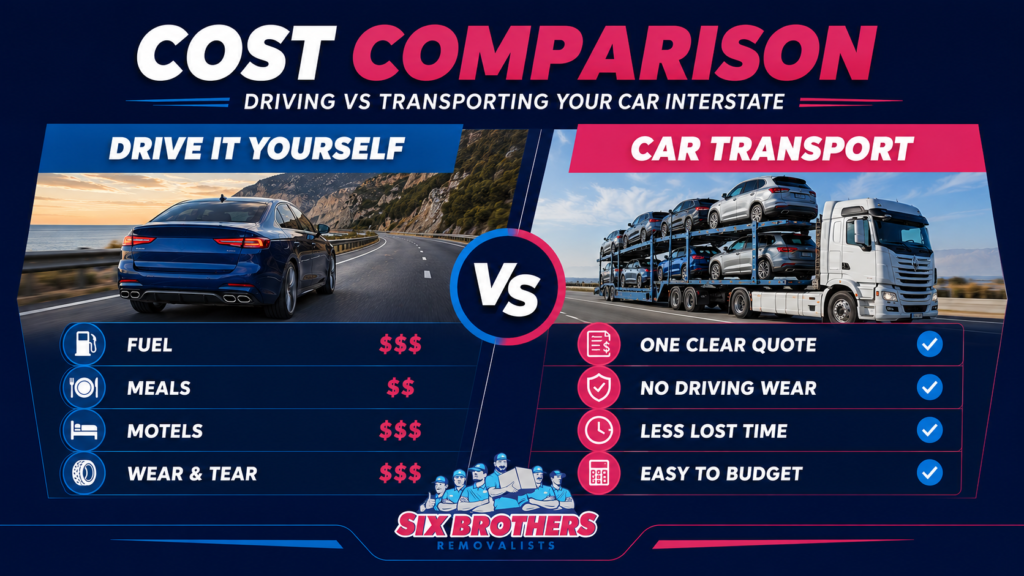
Driving Yourself (DIY)
Fuel is the obvious cost. But it’s far from the only one. Add meals, tolls, and a motel or two for long routes. Then add wear on the car. A long drive can also mean days off work. That lost pay counts too.
For a big trip, see our guide on the cross-country move cost from Sydney to plan the numbers.
Professional Car Transport
Transport gives you one quote for the whole trip. No hidden fuel or motel bills. You pay it once and you’re done. Easy to budget, easy to plan around.
The price depends on distance and car size. Long routes cost more, but you skip the drive. Compare the true totals, not just the sticker. Driving hides costs that transport doesn’t. Ask for the all-in figure. A clear quote is easy to weigh against driving.
Vehicle Wear and Tear When Driving Interstate vs Transporting
Your car isn’t free to run. Every long drive leaves a mark. Wear is the cost people forget. But it hits your wallet later, at resale.
Driving
A cross-country drive can add thousands of kilometres. That’s real wear on the clock. Tyres, brakes, and the engine all pay the price. So does your car’s resale value. Buyers check the odometer first. Fewer kilometres keep your car worth more.
Professional Car Transport
On a carrier, your car simply sits still. No engine hours, no tyre wear. It arrives with the same odometer reading it left with. That matters for newer cars. No highway grime baked into the paint either. Just a quick clean and it’s done.
Time, Effort, and Safety for Interstate Car Relocation
Time and safety are easy to forget in a cost battle. But they count for a lot. A cheaper option that eats three days and tires you out may not be cheaper at all.
Driving
Driving demands your full days and focus. Long stints are draining and risky. You steer, you navigate, you stay alert. For days on end, that adds up.
You’ll need rest stops, sleep, and patience. It’s a job, not just a trip. Add a co-driver if you can. Sharing the wheel cuts the fatigue risk.
Professional Car Transport
Transport hands the effort to someone else. You just book and hand over the keys. That’s one big task off your plate on an already busy move.
No fatigue, no night driving, no stress. Your car arrives while you focus on the move. On a big move, that saved energy is worth a lot. Moving is tiring enough.
How Long Does Interstate Vehicle Transport Take?
Transit time depends on the route and the carrier’s schedule. Some legs are quick, some slow. Here’s a rough guide for common runs out of Sydney.
These are guides, not promises. Ask your carrier for a delivery window before you book.
Depot schedules and weather can shift the dates. Build a buffer into your plans.
On very long routes, patience pays. The trade-off is you skip the whole drive.
Door-to-Door vs Depot Interstate Car Transport Options
How you hand over the car changes both price and effort. Both get your car there. The difference is convenience versus cost.
Door-to-Door Convenience
The carrier collects and delivers at your address. Least effort, top convenience. Ideal when you’re flat out with the rest of the move. You just hand over the keys at home. No extra trips across the city.
Depot-to-Depot Savings
You drop the car at a depot and collect it from one. More effort, less cost. Handy if a depot sits near your home or new place. The drive to a depot is short. The saving can be worth the small effort.
Pickup Window Flexibility
Door service runs to a set window. Plan your day around it. Depots often give more flexible drop-off times. Ask what suits your schedule. Confirm the window before the day. It keeps your move on track.
Delivery Location Limits
Big carriers can’t reach every street. Tight lanes and low branches block them. If your street is tricky, a depot may be your only choice. Send the carrier a photo of your street. They’ll tell you if their truck fits.
Open Carrier vs Enclosed Interstate Vehicle Transport
Not all carriers are the same. The type you pick shapes protection and price. It comes down to how much cover your car really needs.
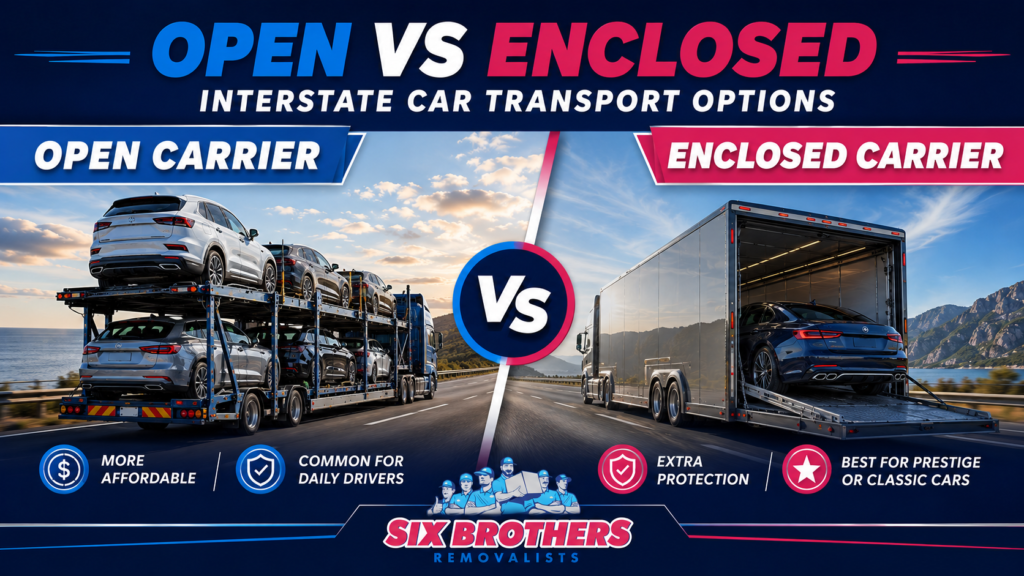
Open Carrier Transport
Open carriers haul several cars on a top and bottom deck. It’s the common, cheaper option. Most cars travel this way without a hitch.
Your car is exposed to weather and road dust. For most cars, that’s no big deal. It’s the same way new cars reach the dealer. Safe and proven for everyday vehicles.
Enclosed Car Transport
Enclosed carriers seal your car inside a covered trailer. Full protection from the elements. It costs more, but it shields the paint and body. Worth it for special cars.
No dust, no rain, no stray stones. Just your car arriving spotless. For a show car or a fresh respray, that protection is well worth the price.
Best Option for Luxury Cars
Prestige, classic, or low cars suit enclosed transport. The extra care pays off. These cars are hard to replace. The extra spend buys real peace of mind.
For a daily driver, open transport is usually fine. Match the carrier to the car. Ask yourself what the car is worth to you. That answer guides the choice.
Weather and Road Exposure
Open transport means sun, rain, and grit on the trip. A quick wash on arrival sorts it. Enclosed transport keeps the car spotless. That peace of mind has a price. If you’d stress over a stone chip, pay for enclosed. If not, open is fine.
Sydney Pickup, Parking, and Access Issues for Car Transport
Sydney’s streets aren’t built for big carriers. Plan the pickup well. A little planning here saves a failed pickup and a wasted fee.
Inner-Sydney Street Access
Narrow terraces and lanes are tight for a carrier. Some can’t fit at all. Suggest a wider nearby street. It saves a failed pickup and a wasted fee. Watch for low branches and speed humps too. Carriers dislike both.
Unit and Basement Limits
Apartment basements are a no-go for carriers. The clearance is far too low.
Arrange a street-level spot with room to load. Tell the carrier in advance.
Truck Loading Space
A carrier needs a long, clear stretch to load safely. Parked cars get in the way. Clear the space or pick a quieter time. It makes the load smooth. A calm, open spot means a safer load for everyone.
Sydney Depot Drop-Offs
If your street won’t work, a depot solves it. You drive the car in yourself. It’s often the simplest fix for tricky inner-city addresses.
Vehicle Types That Need Special Interstate Transport Planning
Some cars need extra thought before they travel. These are the main ones. Flag any of these when you book. It helps the carrier plan the right gear.
Electric Vehicles
EVs have specific charge and handling needs. Set the battery to a mid charge level. A mid charge is safest for the trip. Avoid a full or flat battery.
Tell your carrier it’s an EV. They’ll plan the load with that in mind. Turn off any sentry or valet mode too. It saves the battery on a long trip.
Utes and 4WDs
Tall or lifted vehicles may not fit every carrier deck. Height can be an issue. Give the carrier your car’s exact height. It avoids a surprise on pickup day. Roof racks and bull bars add height. Measure with them on.
Classic Cars
Classics deserve enclosed transport and gentle handling. They’re hard to replace. Flag any quirks, like a manual choke or low clearance. Detail helps the crew.
Modified Vehicles
Lowered or widened cars need careful loading. Standard ramps can scrape them. Declare all mods upfront. The carrier can then plan the right approach. Photos of the mods help too. The crew knows what to expect before they arrive.
Non-Running Cars
A car that won’t start needs winch loading. Not every carrier offers it. Say so when you book. It affects the gear and the price.
A surprise non-runner on the day can mean a failed pickup. Be upfront. Have the keys and any quirks noted for the crew. It speeds up loading.
Coordinating Car Transport With Your Interstate Household Move
Moving your home and your car? Line them up under one plan. One team across both legs keeps the whole move smooth.
Car and Furniture Timing
Aim to have the car and furniture arrive close together. It smooths your first days. A gap of a day or two is fine. A gap of weeks is a hassle.
Plan around whichever arrives last. Then you’re never caught short. Keep essentials in a bag you carry yourself. Then a delay never leaves you stuck.
Removalist Coordination
A good furniture removalist can arrange car transport alongside your household move. Booking a Sydney to Melbourne removalist job? Ask them to sync both legs for you.
Temporary Transport Needs
Think about how you’ll get around before the car lands. A short rental may bridge the gap. Plan it early. Nobody wants to be stranded in a new city. Public transport or a rideshare can also fill a short gap.
Moving Day Scheduling
Slot the car pickup around your move. A Sydney to Brisbane removalist run, for example, can be timed to match. Use our moving home calculator to map the whole move in one go.
Moving your home and car interstate together?
Six Brothers can coordinate both under one plan. Call 1300 764 372 or email info@sixbrothersremovalist.com.au for a free quote.
How to Prepare Your Car Before Driving or Transporting Interstate?
Prep matters either way. A ready car travels safer, whichever path you choose. Good prep protects your car and makes any claim easier if damage shows up. Clean it well so any mark is easy to spot. Then photograph it from every angle.
For transport, empty the car and leave a quarter tank of fuel. Remove loose parts and racks. For driving, service the car and check tyres and fluids. Know what car insurance covers before you set off.
Pack an emergency kit for the drive. Water, snacks, a charger, and a first aid kit. Either way, prep the day before, not the morning of. A calm start beats a rushed one.
Common Mistakes When Comparing Driving vs Interstate Car Transport
A few common slip-ups skew the choice. Dodge these and you’ll decide well. Most of these come down to forgetting a hidden cost or leaving things too late.
Ignoring Overnight Stops
Long drives often need a motel stay. People forget to count that cost. Add nights, meals, and fatigue into the driving side. It changes the maths. One or two motel nights can wipe out any driving saving fast.
Booking Too Late
Leave transport late and you pay more for less choice. Slots fill on busy routes. Book two to three weeks ahead. It saves money and stress. Peak periods like school holidays book out first. Get in early.
Missing Insurance Exclusions
Not all cover is equal. Some policies exclude certain damage in transit or on long drives. Read the fine print for both options. Know what you’re covered for. Ask about the excess and the claims process too. Surprises here get expensive.
Overloading the Car
Stuffing the car for a drive is risky. It strains the car and blocks your view. Send heavy goods with your removalist truck instead. Keep the car light. An overloaded car handles poorly and burns more fuel. It’s not worth the risk.
Choosing on Price Alone
The cheapest path isn’t always the smartest. Cut-price can mean cut corners. Weigh time, wear, and safety too. Value beats the lowest number every time. A trusted carrier costs a little more and saves a lot of grief.
So, Which Should You Choose?
It comes down to your trip. Short and easy? Driving can work. Long and busy? Transport wins.
Count the true cost of driving, not just the fuel. Then weigh it against a clear transport quote. Factor in your time, your car’s wear, and your safety. For most interstate moves, transport comes out ahead.
Whichever you pick, prep the car well and confirm your cover. Then you can relax. And if you’re moving your whole home too, Six Brothers Removalists can handle the lot, including interstate backloading to keep costs down.
Get your free quote today. Call 1300 764 372 or email info@sixbrothersremovalist.com.au. No surprises, just a clear plan.
Frequently Asked Questions
Is it cheaper to drive or transport a car interstate?
It depends on the distance. For short trips, driving can be cheaper. For long hauls, driving adds fuel, meals, motels, and wear that often beat a transport quote. Always compare the true total of driving against one clear transport price.
How long does interstate car transport take?
Transit time depends on the route. Sydney to Melbourne or Brisbane can take one to three days. Sydney to Perth may take one to two weeks. Weather and depot schedules can add time. Ask your carrier for a delivery window before you book.
Is driving my car interstate bad for it?
A long drive adds thousands of kilometres and real wear. Tyres, brakes, and the engine all take the hit. It can also lower resale value on a newer car. Transport avoids all of that, since the car simply sits on a carrier.
Open or enclosed car transport: which should I choose?
Open transport is cheaper and fine for most daily drivers. Enclosed transport seals the car from weather and grit, which suits prestige and classic cars. Match the carrier to the value of your car. Pay for enclosed only when the car warrants it.
Should I drive or ship a luxury car interstate?
For a luxury or classic car, enclosed transport is usually the smart choice. It avoids driving wear and shields the paint from the elements. Driving a prestige car across the country adds kilometres and risk you’d rather avoid.
Can I transport a non-running car interstate?
Yes, but it needs winch loading, and not every carrier offers it. Tell the carrier when you book, since it affects the gear and price. The same goes for lowered, lifted, or modified cars that need special loading.
How much do interstate removalists cost?
Interstate removalist costs depend on distance, volume, and dates. Adding car transport changes the total too. Bundling your car and furniture often lowers the price. A free quote gives you the exact figure for your full move.
Do removalists have insurance?
Most reputable removalists carry transit insurance, but cover varies. The same applies to any car carrier they arrange. Always ask what’s included and what’s excluded. Confirm the details before you book, so you’re protected if something goes wrong.