

You’re packing up your whole life into a truck. That truck drives 900 kilometres. And you’re trusting strangers with every plate, photo, and mattress you own. So one question keeps you up at night. Do interstate removalists offer insurance, and what happens if something breaks?
It’s a fair worry. A long move means more handling, more kilometres, and more chances for a knock. We’ve moved thousands of Sydney families across state lines. We’ve heard every horror story too.
Here’s the short version. Most interstate removalists offer some cover, but it’s not all the same. Some give you basic transit protection. Some sell full replacement cover. And some offer almost nothing while sounding like they do.
This guide breaks it down in plain words. No jargon. No fine-print games. By the end, you’ll know exactly what to ask before you book.
We’ll cover what cover exists, what it costs, and what it skips. We’ll show you the traps. And we’ll show you how to spot a mover who actually protects your gear.
Moving interstate is a big leap. You shouldn’t have to cross your fingers and hope. Let’s make sure you don’t have to.
One quick note before we dive in. We’re not selling fear here. Most moves end with a happy unpack. The goal is simple. Know your cover, so a rare bad day doesn’t wreck your budget.
Do Interstate Removalists Offer Insurance at All?
Yes, most reputable interstate removalists offer some form of cover. But here’s the catch. What they call “insurance” is often “transit protection” or “goods in transit cover.” The words matter.
Real insurance is sold by a licensed insurer. Transit cover is offered by the removalist as part of the move. Both can pay out. But they work in different ways. Think of it like a seatbelt versus an airbag. Both keep you safer. They just kick in at different moments. A good removalist explains which one you’re getting.
The takeaway: don’t assume. Ask the question out loud. “Is this insurance, or is this transit cover?”
Why does this trip people up so often? Because the brochure rarely spells it out. The word “insured” gets used loosely. And nobody reads the back page until something goes wrong. A licensed insurer is regulated. They must pay valid claims by law. A removalist offering in-house cover sets their own rules. That can still be fair. But you need to see those rules first.
Picture two movers quoting the same price. One includes proper transit cover. The other includes a tiny per-kilo payout. Same number on the page, wildly different protection. The cover is the real comparison.
What Types of Removalist Insurance Exist?
Cover comes in a few flavours. Knowing the names helps you compare quotes like a pro.
Transit Protection (Goods in Transit)
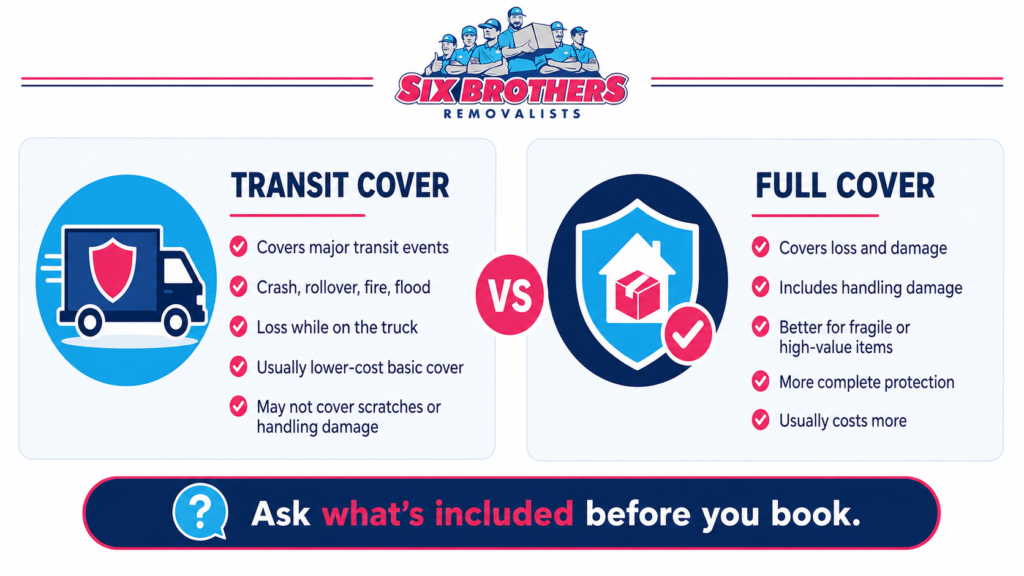
This covers your stuff while it’s on the truck. It usually pays out if the truck crashes, rolls, catches fire, or floods. It’s the most common type offered by furniture removalists. But it often won’t cover a single scratched table. It covers big events, not small bumps. Read the limits.
Think of transit cover like third-party car insurance. It saves you in a disaster. It won’t fix every little ding. For a long haul, that big-event protection still matters a lot.
Full Replacement or All-Risk Cover
This is the gold standard. It covers loss or damage to most items during the whole move. Drop a box? Covered. Cracked mirror? Covered. It costs more, but it buys real peace of mind.
This is the cover most families want for a full home. It treats the move as one risk, start to finish. You pay a bit more and stop second-guessing every item on the truck.
Limited Liability Cover
Some movers offer a tiny amount per item or per kilo. It sounds nice until you do the maths. A 40 kilo TV might only get you a few dollars. That’s not real protection.
Quick rule of thumb: the cheaper the cover, the smaller the payout. Match the cover to what your stuff is actually worth.
One more type is worth a mention. Some big interstate jobs use carrier’s liability cover. It’s set by the transport rules, not your needs. The payout can be low, so always check it.
Public Liability vs Goods Cover
Don’t mix these two up. Public liability protects people and property at the site. It covers a dropped box that dents your floor. It does not replace the broken item inside the box.
Goods cover protects your belongings. You often want both on a big move. Ask which ones your interstate removalists carry. A solid firm holds public liability as a basic standard.
Want clear answers before you commit? Get your free quote from Six Brothers Removalists. We tell you exactly what’s covered, in plain English, before you book. Call us on 1300 764 372.
Are Removalists Liable for Damage During the Move?
Here’s where people get burned. Many assume the mover pays for any damage by law. That’s not true everywhere. Liability depends on the contract you sign. If a mover is careless and breaks something, they may be liable. But if you packed the box yourself, the rules can shift. Self-packed boxes often have less cover. So who carries the risk? It comes down to three things:
• Who packed the items, you or the movers
• What the contract says about damage and claims
• Whether you bought extra cover on top
This is why honest paperwork beats a smooth sales pitch every time. Knowing how to protect your belongings during a move starts with reading what you sign. Here’s a real example. You pack a box of glasses yourself. One cracks in transit. With self-packed cover, the mover may say no. They never saw how you wrapped it.
Now flip it. The movers pack that same box. One cracks. Now the responsibility sits with them. That’s why mover-packing can be worth the extra cost on fragile loads. So is the mover always liable? No. Liability is shared, shaped by the contract and the packing. The clearer the paperwork, the fewer the arguments later.
What Does Interstate Moving Insurance Actually Cover?
Good cover should protect against the real risks of a long haul. Over hundreds of kilometres, a lot can happen. Here’s what solid cover usually includes.
• Accidents on the road: crashes, rollovers, and collisions
• Fire and water: truck fires, storms, and flooding
• Loss in transit: items that go missing between cities
• Handling damage: drops and knocks, on full cover plans
Notice the gap. Basic plans skip handling damage. Full plans include it. That single line decides whether your scratched dresser gets paid out. When you compare interstate removalist quotes, line up the cover, not just the price. Two quotes can look similar and protect you very differently.
Some plans also cover storage time. If your stuff sits in a depot between cities, ask if cover continues. Gaps in cover often hide in those waiting days. Watch the excess too. That’s the amount you pay before a claim kicks in. A high excess can swallow a small claim whole. Lower excess usually means a higher premium.
What’s Usually Not Covered?
Every policy has gaps. Knowing them now saves a fight later. These are the usual exclusions.
• Cash, jewellery, and important documents
• Items you packed yourself in your own boxes
• Normal wear, or pre-existing damage
• Plants, food, and perishable goods
There’s an old saying. Don’t put all your eggs in one basket. Carry your truly precious things in your own car. A wedding ring should never ride in the truck. Other common gaps catch people off guard. Many plans won’t cover items in a flat-pack you assembled. Some skip electronics with no proof of value. And most won’t pay for sentimental loss.
What about the truly priceless stuff? Photos, hard drives, and family keepsakes. No payout brings those back. Keep them with you and breathe easier. Make a quick list before the move. Mark what stays in your car. That five-minute job protects the things that matter most when relief hits at the new place.
How Much Does Interstate Removalist Insurance Cost?
Cost depends on the value of your goods and the cover type. Basic transit cover is often cheap or included. Full replacement cover usually costs a small percentage of your declared value. Say your goods are worth $30,000. Full cover might add a few hundred dollars. Is that worth it for a 1,000 kilometre move? For most people, yes.
Here’s a simple way to decide. Add up what it would cost to replace everything. If that number scares you, buy the better cover. Want to budget the whole move first? Our Moving Home Calculator gives you a fast estimate, so insurance fits neatly into your plan.
Does cheaper cover ever make sense? Sometimes. If you’re moving a near-empty studio, basic transit cover may be plenty. The fewer high-value items you own, the less you need full replacement. But here’s the trap. People undervalue their own stuff. Add up the furniture, the TV, the kitchen, the wardrobe. It climbs fast. Replacing it all at once would hurt.
Try a quick test at home. Walk each room and tally rough values. Most people are shocked by the total. That number is what your cover should protect. And don’t forget the small stuff. Books, clothes, and kitchen gear add up too. They’re not glamorous, but replacing them costs real money. Cover the whole picture, not just the big pieces.
Think of cover like a smoke alarm. It feels like a waste right up until the day it isn’t. A few hundred dollars is cheap next to a five-figure loss.
It helps to know your consumer rights too. The Australian Furniture Removers Association sets standards for member firms. Choosing an accredited removalist adds another layer of trust to your move.
How to Check if Your Interstate Removalists Offer Real Insurance
Talk is cheap. Proof is not. Before you hand over a deposit, do these checks. They take ten minutes and save real heartache.
1. Ask for the policy in writing. A verbal promise is worth nothing.
2. Check the payout limits. Find the per-item and total caps.
3. Read the exclusions. Know what won’t be paid before the move.
4. Confirm the claim steps. Ask how a claim is filed and how long it takes.
A trustworthy mover hands this over without a fuss. A dodgy one stalls or talks in circles. That hesitation tells you everything. Worried about hidden costs sneaking in too? It pays to know how to avoid extra charges when moving interstate, so the final bill matches the quote.
One more check beats the rest. Ask for a recent claim story. “When did you last pay a claim?” A real mover answers it. A dodgy one freezes. Also confirm the time limit to file a claim. Some windows are short, like seven days. Miss it, and a valid claim dies on a technicality.
Get the crew details too. Are they staff or random day-hire? Trained staff handle your gear with more care. A settled crew lowers the risk before cover even comes up. Finally, save every email. Quotes, cover notes, and promises. If a question comes up later, the paper trail settles it fast. A clear record is your quiet safeguard.
Why Insurance Matters More on a Sydney Interstate Move
A move across town is one thing. A move from Parramatta to Melbourne or Brisbane is another. More distance means more handling and more risk. The stakes go up with every kilometre.
We’re based in Parramatta and move families all over Australia. We’ve driven the Hume, the Pacific, and the long stretch to Adelaide. Long-haul roads are tough on furniture if it isn’t packed and secured right.
That’s why good interstate removalists treat cover as standard, not a bonus. It’s not a sales add-on. It’s the safety net that lets you sleep while your stuff is on the road. Sydney moves carry their own quirks too. Tight terrace stairs in the inner west. Long carries in apartment blocks. Lifts that need booking. Each adds a handling risk worth covering.
Then comes the drive. Sydney to Melbourne is a full day on the road. Sydney to Brisbane is longer. More hours mean more chances for a load to shift. Good cover rides along for all of it.
We’ve packed pianos, fridges, and fragile heirlooms for the haul. We secure every load like it’s our own. But things happen on the highway, and that’s exactly why cover exists.
How to Choose Interstate Removalists With Solid Cover
Not all movers are equal. Some are careful pros. Some are cowboys who quote low and vanish when things break. How do you tell them apart?
• They explain cover clearly, without dodging questions
• They put pricing and protection in writing
• They have real reviews from real Sydney customers
• They don’t pressure you to book on the spot
Reliable furniture removalists know that trust is the whole job. A low quote means nothing if your couch arrives in pieces and no one pays. Reviews are your shortcut here. Search the company name plus the word “damage.” See how they handled it. A firm that fixes problems fast is worth a little extra money.
Look for proof of experience on long hauls too. A mover who runs Sydney to Melbourne weekly knows the road. They pack for the distance, not just the trip across town. And ask about their trucks. Clean, well-kept vehicles hint at a careful crew. Tie-downs, blankets, and proper padding all lower the odds of a claim. Gear tells a story.
Cover for Pianos, Antiques, and High-Value Items
Some items need special attention. A piano. A glass cabinet. Grandma’s antique dresser. Standard cover may cap these low. So treat them as their own job. Ask the mover to list high-value items separately. Declare their real worth up front. That way, the payout matches the item, not a generic average. It’s a small step that saves big regret.
A piano is the classic example. It’s heavy, awkward, and pricey. The wrong handling cracks the frame. Make sure your interstate removalists have done it before and cover it properly. Same goes for art and electronics. Keep receipts and photos. Proof of value turns a slow dispute into a quick payout. No proof, no easy claim.
White goods need a word too. Fridges and washers must be drained and secured. A loose hose or open door invites damage. Ask the mover how they prep these for the long haul. For the whole game plan, our removalist tips walk you through prepping fragile and pricey gear before the truck arrives.
Does Insurance Change With Backloading or Shared Loads?
Backloading is a smart way to save on a long move. Your goods share a truck with other loads. It cuts the cost a lot. But it raises a fair question about cover. With more loading and unloading stops, handling goes up. So does the chance of a mix-up. Good interstate removalists still cover backloaded goods. You just need to confirm it in writing.
Ask two simple things. Is my load labelled clearly? And does the cover still apply on a shared truck? A solid mover answers both without blinking. Backloading saves money, not safety. The cover should travel with your gear, no matter who shares the ride. Don’t let a cheap rate cost you your protection.
What We’ve Learned From Thousands of Interstate Moves
After years on the road, a few truths stand out. Most moves go smoothly. The ones that don’t usually share a pattern. And cover almost always decides how the story ends. The happiest customers do three things. They declare value honestly. They let us pack the fragile stuff. And they read the cover before the truck rolls. Simple habits, big payoff.
The stressed-out ones often skip the paperwork. They grab the cheapest quote and hope. Then a knock happens, and there’s no clear cover. Hope is not a moving plan. Here’s the honest part. Even careful pros see the odd mishap on a 1,000 kilometre haul. Roads are rough. That’s not a flaw in the mover. It’s exactly why cover exists.
So our advice is plain. Pick a mover who’s upfront. Get the cover that fits your stuff. Then enjoy the fresh start without the knot in your stomach.
Transit Cover vs Full Insurance: A Quick Comparison
Still torn between the two? Here’s a simple side-by-side. It cuts through the sales talk and shows what each one really gives you.
Transit cover is best when:
• Your goods are low to mid value
• You worry mainly about big road events
• You want to keep the cost down
Full insurance is best when:
• You own valuable or fragile items
• You want handling damage covered too
• You want real peace of mind on a long haul
Most Sydney families moving a full home lean toward full cover. The mix of distance and household value tips the scales. A studio move may not need it. There’s no single right answer. The right call depends on your stuff and your nerves. Match the cover to both, and you’ll feel settled on moving day.
Red Flags That Mean No Real Cover
Some signs warn you before you ever sign. Spot these early. They separate the pros from the cowboys who quote low and vanish.
• They won’t put the cover in writing
• They get vague when you ask about claims
• The quote has no insurance line at all
• They push a cash-only deal with no paperwork
• They have no fixed address or business details
Trust your gut here. If the answers feel slippery, walk away. There are plenty of honest interstate removalists who’ll happily show their cover. A real business stands behind its work. It has a phone number that answers. It has an office you can find. Six Brothers sits at Macquarie Street in Parramatta, and we’re easy to reach.
What to Do if Something Gets Damaged
Even with the best movers, accidents can happen. Knowing the steps keeps a small problem from becoming a big fight. Stay calm and work the process.
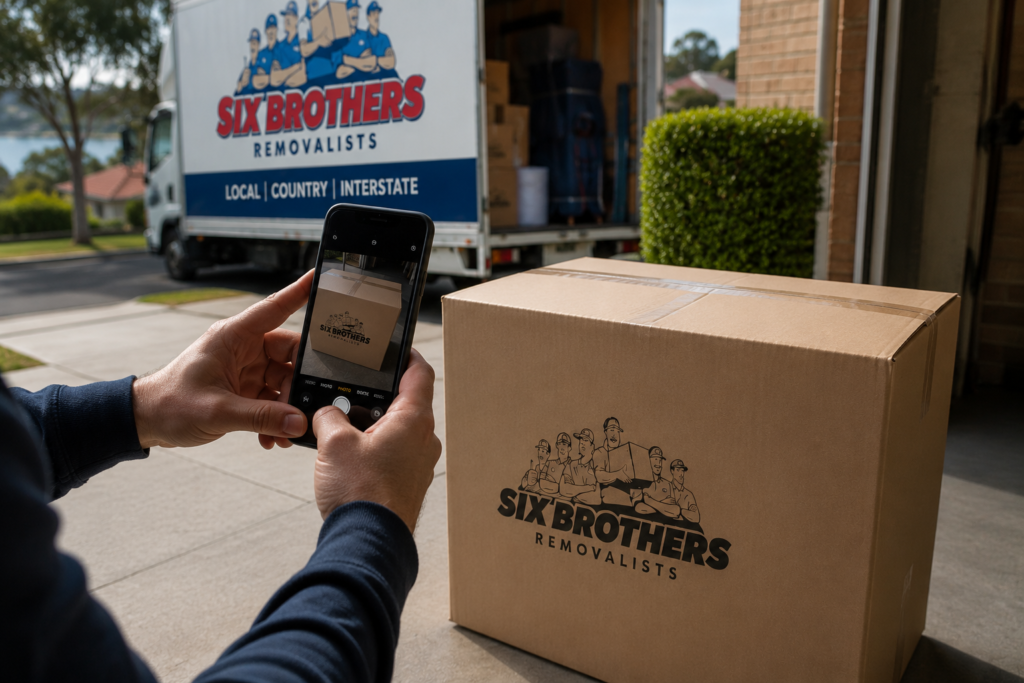
1. Take photos straight away. Snap the damage before you move it.
2. Note it on the paperwork. Flag the damage at delivery, in writing.
3. File the claim fast. Don’t wait. Watch the time limit.
4. Keep your receipts. Proof of value speeds up a payout.
Most fair claims settle fine when you have proof. The photos do the heavy lifting. That’s why a quick snap at delivery is your best friend. A good mover walks you through this without drama. They want it sorted as much as you do. Their reputation rides on it.
Frequently Asked Questions
Do Removalists Have Insurance?
Most professional removalists carry some cover, but the level varies a lot. Some offer basic transit protection only. Others sell full replacement cover for an extra fee. Always ask for the policy in writing and check the payout limits before you book your interstate move.
Keep in mind, Australian law doesn’t force movers to hold insurance. So the cover you get is the cover you ask for. Member firms of industry bodies usually carry more, which is one reason accreditation matters.
Are Removalists Liable for Damage?
It depends on the contract and who packed the items. If the movers pack and handle your goods and damage happens, they’re often liable. But self-packed boxes usually carry less cover. Read the terms, and buy extra cover if your belongings are valuable.
Your consumer rights still apply on top of any policy. The ACCC consumer guarantees mean a service must be done with care and skill. That’s a useful backstop if a mover acts carelessly.
The Bottom Line
So, do interstate removalists offer insurance? Most do, but the cover ranges from solid to almost useless. The word “insurance” on a quote means little. The details mean everything. Ask for it in writing. Check the limits. Read the exclusions. And carry your truly precious things in your own car. Do that, and a long move stops feeling like a gamble.
Remember the bigger picture too. Good cover is one part of a careful move. The mover’s skill, packing, and honesty matter just as much. Cover is the safety net, not the whole trapeze act.
Here at Six Brothers, we believe in plain talk. No buried clauses. No surprises when the truck arrives. Just clear cover and careful hands from Parramatta to wherever you’re headed.
Ready to move with a team that’s upfront about cover? Get your free quote from Six Brothers Removalists today. Call 1300 764 372 or email info@sixbrothersremovalist.com.au. We’ll tell you exactly what’s protected, no surprises on the day.