

Packing for a big move feels like staring at a mountain. You know you have to climb it. You just don’t know where to put your first foot.
Here’s the thing. Moving from Sydney to another state is not the same as shifting across the suburb. The truck travels further. Your boxes get jostled more. And one weak box can turn your favourite mugs into a sad pile of bits.
So let’s make this simple. This guide walks you through packing for an interstate move the smart way. No fluff. Just the steps that actually protect your stuff and keep your stress low.
We’ve helped families across New South Wales pack up and roll out for years. As interstate removalists who do this daily, we’ve seen what survives the trip and what doesn’t. Want to know our golden rule? Pack like the truck will hit every pothole between here and Perth.
Ready? Grab a coffee. Let’s get into it.
One more thing before we dive in. Interstate moves run on a clock. The truck has a route. Other people’s gear shares the load. So your packing speed matters more than on a local job.
That’s a good thing, by the way. A tight deadline forces good habits. You stop hoarding. You start sorting. And the whole house feels lighter by the end.

How to Declutter and Check Border Rules Before Packing for an Interstate Move
Before you tape a single box, stop. The best packing trick is packing less. Every item you bring costs space, money, and time. And there’s a catch most people forget. States have rules about what you can carry across borders. Skip this step and you could lose stuff at a checkpoint.
Purge Ruthlessly
Go room by room. Be honest with yourself. If you haven’t touched it in a year, why drag it 900 kilometres? Sort everything into four piles. Keep. Donate. Sell. Bin. Don’t overthink it. A quick gut call beats a long maybe.
Old furniture is a classic trap. Sometimes it costs more to move a worn couch than to buy a new one. Run the numbers first. Sell the good stuff on Marketplace. Donate the rest to a local charity. You’ll feel lighter before the truck even arrives.
Here’s a fun test. Pick up an item and ask one question. Would you pay to move this across the country? If the answer’s no, it goes. Kids’ stuff is the trickiest pile. They grow out of toys fast. Get them to choose a few favourites. The rest can find a new home.
Verify Biosecurity Laws
This one trips people up. Australia takes biosecurity seriously. Plants, soil, and some foods can’t cross certain state lines. Moving to Western Australia or Tasmania? The rules are strict. Your potted ferns might not be welcome.
Check the official rules before you pack any greenery. The Australian Government’s biosecurity guidelines lay out what’s allowed and what’s banned. A five-minute read saves a roadside headache.
Ditch Hazardous Goods
Removalists can’t load dangerous items. Full stop. It’s a safety thing.
That means no gas bottles, no petrol, no paint tins, no fireworks. Aerosols and pool chemicals are out too.
• Use it up: Finish off cleaning sprays and half cans of paint.
• Give it away: Pass full gas bottles to a neighbour or mate.
• Dispose safely: Drop chemicals at a council waste centre.
Sort this early. You don’t want a surprise on moving day. Same goes for your fridge and freezer food. Eat it down in the final week. There’s no point hauling a freezer full of frozen peas across the country.
Best Heavy-Duty Packing Supplies for an Interstate Move From Sydney
Cheap boxes break. That’s the brutal truth of a long haul. Your gear needs armour, not flimsy supermarket cartons. Think of your supplies like a seatbelt. You hope you won’t need them. But you’ll be glad they’re there.
Buying the right kit once beats replacing broken treasures later. Cheap now often means costly later. So let’s get the gear right.
Double-Walled Boxes
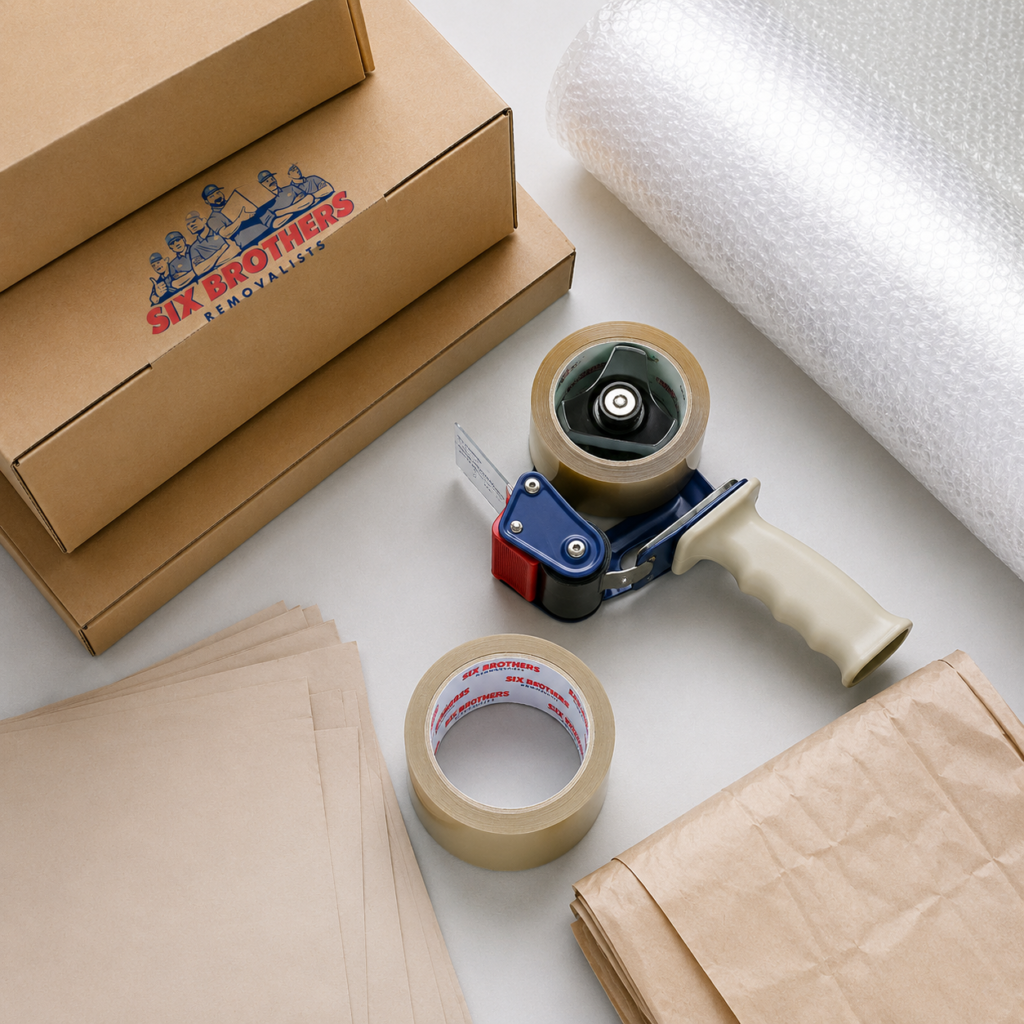
Single-wall boxes are fine for a quick local shift. For interstate, go double-walled. The extra layer handles stacking and rough roads. Need a solid supply fast? You can grab sturdy cheap moving boxes through us and skip the hunt around town. Strong boxes are the backbone of a safe move.
Old country wisdom says a chain is only as strong as its weakest link. Same goes for your box stack. One soft box and the whole tower wobbles. So spend a little on the boxes. It’s the cheapest insurance you’ll ever buy. A few dollars now beats a broken keepsake later.
Heavy Tape Reinforcement
Don’t trust one strip of tape. Long trips need more grip. Use proper packing tape, not sticky office stuff. Seal the bottom of each box with the H-method. Run tape down the middle seam. Then tape both edge seams. It locks the base tight.
Pro tip. Double-tape the bottom of heavy boxes. A blown-out base is the fastest way to smash your plates.
Cushioning Materials
Empty space is the enemy. Items that slide around get damaged. So fill every gap.
• Bubble wrap for fragile bits and screens.
• Packing paper for dishes and glasses.
• Old towels and blankets for awkward shapes.
Mix what you buy with what you own. Your linen doubles as padding. Why pay for foam when a beach towel does the job? Socks are sneaky good padding too. Stuff them inside glasses and mugs. They fill the hollow and stop the wobble.
Professional Packing Techniques for an Interstate Move
Anyone can shove things in a box. Packing so they arrive whole is the real skill. This is where the pros earn their stripes. These three rules change everything. Learn them and your boxes will thank you.
The Weight Rule
Heavy stuff goes in small boxes. Light stuff goes in big boxes. Simple, but people get it backwards all the time. A big box full of books becomes a back-breaker. Worse, it splits open mid-lift. Keep books in small cartons you can actually carry.
Aim for 16 to 20 kilos per box. If you can’t lift it with a grunt, it’s too heavy. Repack it. Spread heavy stuff across more boxes. Two half-full book boxes beat one that breaks your back. Your movers will move faster too.
Vertical Dish Packing
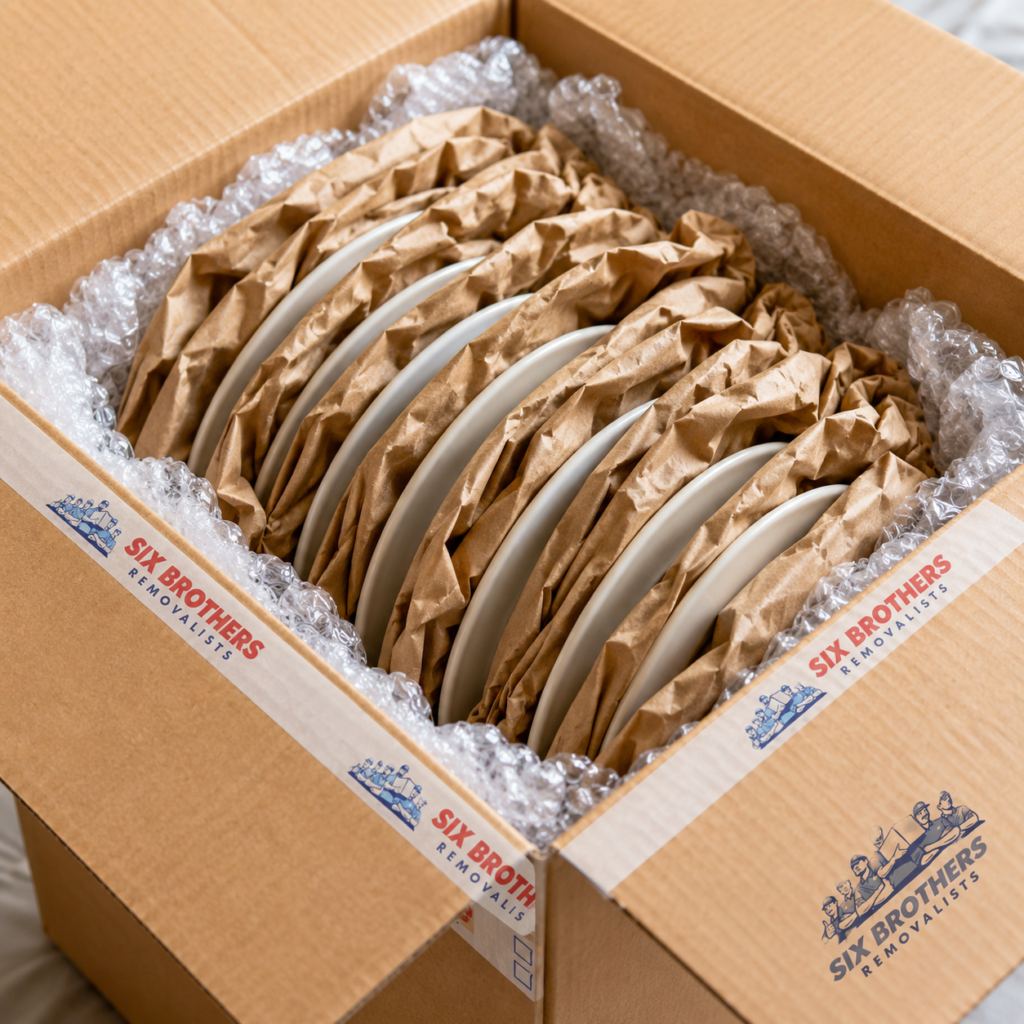
Stack plates flat and they crack. The trip’s pressure presses straight down. Pack them on their edge instead. Wrap each plate in paper. Then stand them up like records in a crate. They flex with the bumps rather than snapping.
This same edge-on trick works for many fragile items you worry about. It’s the move pro packers swear by for glassware too. Bowls can nest inside each other with paper between them. Cups go rim-down on a bed of padding. Build the box up in soft layers, not hard stacks.
Zero-Movement Space Filling
Give a packed box a gentle shake. Hear rattling? That’s bad. Movement means damage waiting to happen. Stuff every gap with paper or cloth. The goal is a box that feels solid, like one chunk. Nothing should shift inside.
Picture an egg in a fist of cotton wool. Snug, cushioned, safe. That’s the feeling you want in every carton.
How to Group and Label Boxes for an Interstate Move
A long move means your boxes sit in a truck for days. By the time they land, you’ll forget what’s what. Good labels are future-you’s best friend. This is also where a smart system saves hours of unpacking pain.
Chronological Packing
Pack the things you rarely use first. Holiday decor, spare linen, books. These can be boxed weeks ahead. Save daily items for last. Kitchen gear, toiletries, work tools. You’ll need them right up to the final day. Think of it like loading a dishwasher in reverse. First in, last out. The boxes you pack early get unpacked last at the new house.
Want a full timeline? Our 8-week interstate move checklist breaks down what to pack and when. It keeps the whole job from piling up.
Room-by-Room Inventory
Pack one room at a time. Don’t mix the bathroom with the kitchen. It creates chaos at both ends.
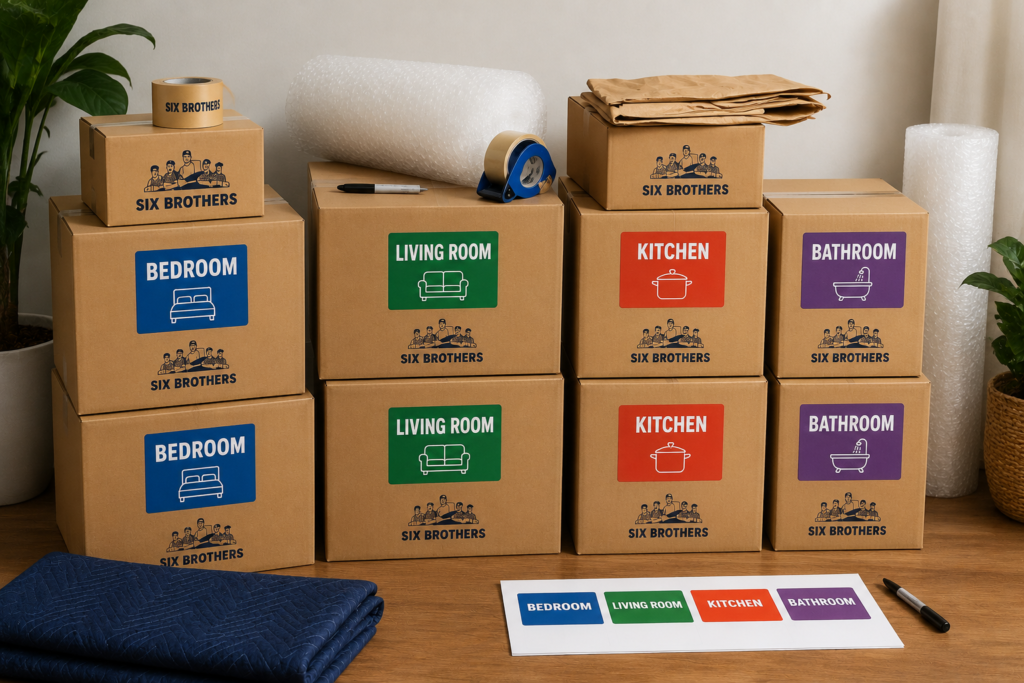
Write the room and contents on each box. “Kitchen, pots and pans.” Clear and quick. Mark fragile boxes with a big star. Write on the side, not the top. Boxes get stacked. You can’t read a top label buried under three more cartons.
Track Your Cargo
Number every box. Keep a simple list on your phone. Box 12 is bedroom books. Box 13 is bathroom towels. When the truck unloads, you’ll know if anything’s missing. On a long interstate trip, that peace of mind is gold.
Pack Valuables and First-Night Kits Separately for Interstate Moving
Some things should never ride in the truck. They go with you. In your car. Within arm’s reach. Because when you arrive tired at midnight, you won’t want to dig through fifty boxes for a toothbrush.
Carry Essential Documents
Passports. Birth certificates. Bank papers. House contracts. These cannot be replaced easily. Put them in one folder. Keep that folder in your car or bag. Never in the moving truck.
Add a small bag of valuables here too. Jewellery, cash, hard drives, and keys. Anything tiny and precious rides with you, not the truck. Moving interstate also means updating your address with loads of services. Our guide on who to notify before moving interstate makes sure nothing slips through the cracks.
Pack a Personal Travel Suitcase
Treat your move like a short holiday. Pack a suitcase for each person. A few days of clothes. Chargers. Meds. This way, your daily life doesn’t stop while boxes get sorted. You can live out of a bag for a day or two with ease.
The “First Night” Priority Box
Make one box you open first. Label it loud. This box is your survival kit for night one.
• Toilet paper, soap, and hand towels.
• Phone chargers and a power board.
• Snacks, the kettle, and a few mugs.
• Bedsheets so you can crash straight away.
Trust me, a fresh bed after a long drive feels like a hug. Don’t skip this box. Pop in a few tools as well. A box cutter, a screwdriver, and a marker. You’ll want them within minutes of arriving.
What to Start Packing First When Moving Interstate
Start with the rooms you barely use. The garage. The spare room. The top shelf of every cupboard. Then move to seasonal gear and decorations. Box up books, photos, and spare dishes next.
Leave the kitchen and bathroom for last. You use them every single day until you leave. Packing them early just makes life hard. A handy rule of thumb? Pack from the outside in. Garage and shed first. Living spaces next. The rooms you live in most come last of all.
How to Find the Best Cardboard Boxes
Free boxes from a shop sound great. But they’re often weak or the wrong size. For a long trip, that’s a gamble. Buy proper moving boxes built for the job. They stack better and protect more. The small cost saves you broken gear.
You can sort your full box order in one go through our packing and removals supplies. One stop, strong boxes, done. No driving around town begging for cartons.
How to Choose the Best Box Sizes for Moving House Interstate
Box size matters more than you’d think. The wrong size makes packing a pain and lifting a risk.
• Small boxes: For heavy items. Books, tools, tins, records.
• Medium boxes: For most things. Kitchen gear, toys, shoes.
• Large boxes: For light bulky stuff. Pillows, doonas, lampshades.
Stick to a few sizes. It makes stacking in the truck neat and tight. A tidy stack is a safe stack. Matching sizes stack like bricks. Random sizes leave gaps and wobble. On a long road, a wobbly load shifts and items break.
Specialty boxes exist for a reason. Wardrobe boxes hang your clothes straight. Picture boxes hold framed art flat. They’re worth it for the right items.
How to Pack Moving Boxes for an Interstate Move
Build a strong base first. Tape the bottom well. Lay heavy items down low. Add medium items in the middle. Put light and fragile bits on top. Fill every gap as you go.
Keep the weight balanced side to side. A lopsided box tips and spills. Even loading makes the whole stack steady. Don’t overfill past the rim. The lid must close flat so boxes stack square. A bulging box ruins the whole tower.
Tape the box closed the same way you sealed the base. The H-method holds the top firm. Now it can take weight on top without caving.
How to Wrap and Move Boxes Safely Interstate
Wrap furniture before it leaves the house. Use blankets and shrink wrap on tables, drawers, and chairs. Lift with your legs, not your back. Keep boxes close to your body. Move slow on stairs and ramps.
Honestly though, the heavy lifting is our job. Our team handles the muscle so you don’t tweak your back. See how our furniture removalist service takes the strain off your shoulders.
Clear a path before anyone lifts a thing. Move rugs, pot plants, and loose shoes out of the way. A trip hazard on moving day is no joke.
How to Move Interstate Without Boxes
Boxes aren’t your only option. Smart packing uses what you already own.
• Suitcases for clothes and heavy books.
• Laundry baskets for towels and linen.
• Drawers left full and shrink-wrapped shut.
Bins and storage tubs work great too. They’re tough and reusable. Just don’t overload them with weight. Wrap soft furniture in fitted sheets. Stuff cushions and pillows into bin bags. They turn into giant soft padding for the gaps in the truck.
Why Colour Coding Boxes Helps With Interstate Moving
Give each room a colour. Kitchen is red. Bedroom is blue. Bathroom is green. Slap a sticker on every box. At the new place, put matching stickers on each door. Now anyone can drop boxes in the right room without asking.
It sounds small. But on a hectic moving day, it’s a lifesaver. Your helpers will love you for it. Coloured tape works just as well as stickers. Wrap a strip around each box. You can spot the room from across the truck.
How to Avoid Overpacking for an Interstate Move
More boxes mean more cost on a long trip. Space in the truck is money. So pack tight, not bloated. Don’t fill a box with air. But don’t cram it till it splits either. Find the sweet spot.
The real trick is moving less in the first place. If a box doesn’t seal flat, something’s off. Want to cut your load and your bill? Try our tips on how to move interstate on a low budget.
How to Pack Furniture and Large Appliances for Interstate Moving
Big items need big care. They’re heavy, awkward, and easy to scratch. A little prep saves a lot of damage.
Measure Large Items
Measure your big furniture first. Then measure your new doorways. A couch that won’t fit is a moving-day nightmare. Take apart what you can. Beds, tables, and shelves often split down for travel. It saves space and stops snapping.
Keep the screws and bolts in labelled bags. Tape each bag to the furniture it came from. Reassembly at the other end becomes a breeze.
Protect Furniture Edges
Corners take the worst hits. Wrap them in foam or thick blankets. Tape the padding so it stays put on the road.
Cover soft furniture too. A fabric couch picks up dirt fast. Plastic wrap keeps it clean across the miles.
Defrost Whitegoods
Empty your fridge and freezer two days early. Defrost it fully. A wet fridge in transit grows mould and stinks. Wipe it dry. Tape the doors shut but leave a small gap for air. Nobody wants a smelly fridge at the other end.
Drain your washing machine the day before too. Pull the hose and let the last water run out. A wet drum leaks all over the truck floor.
Secure Appliance Parts
Washing machines have a drum that swings. It needs transit bolts to stay still. Check your manual for how.
Loose shelves and cords cause chaos. Tape them down or bag them up. Drain your washer fully before it moves, and our interstate backloading service can haul the big white goods for less.
Best Professional Packing Methods for Interstate Moving
Let’s lock in the methods that matter most. These are the habits pro packers never skip.
The Weight Rule
Heavy in small boxes. Light in big boxes. Keep each box under 20 kilos. Your back and your boxes both win.
Vertical Dish Packing
Stand plates on their edge, never flat. Wrap each one. They survive the bumps far better upright.
Zero-Movement Space Filling
Fill every gap until nothing rattles. A solid box can’t shift. A shifting item is a broken item.
How to Protect High-Value and Fragile Items During an Interstate Move
Some things hold real value. Money value or heart value. These deserve extra care and a clear plan.
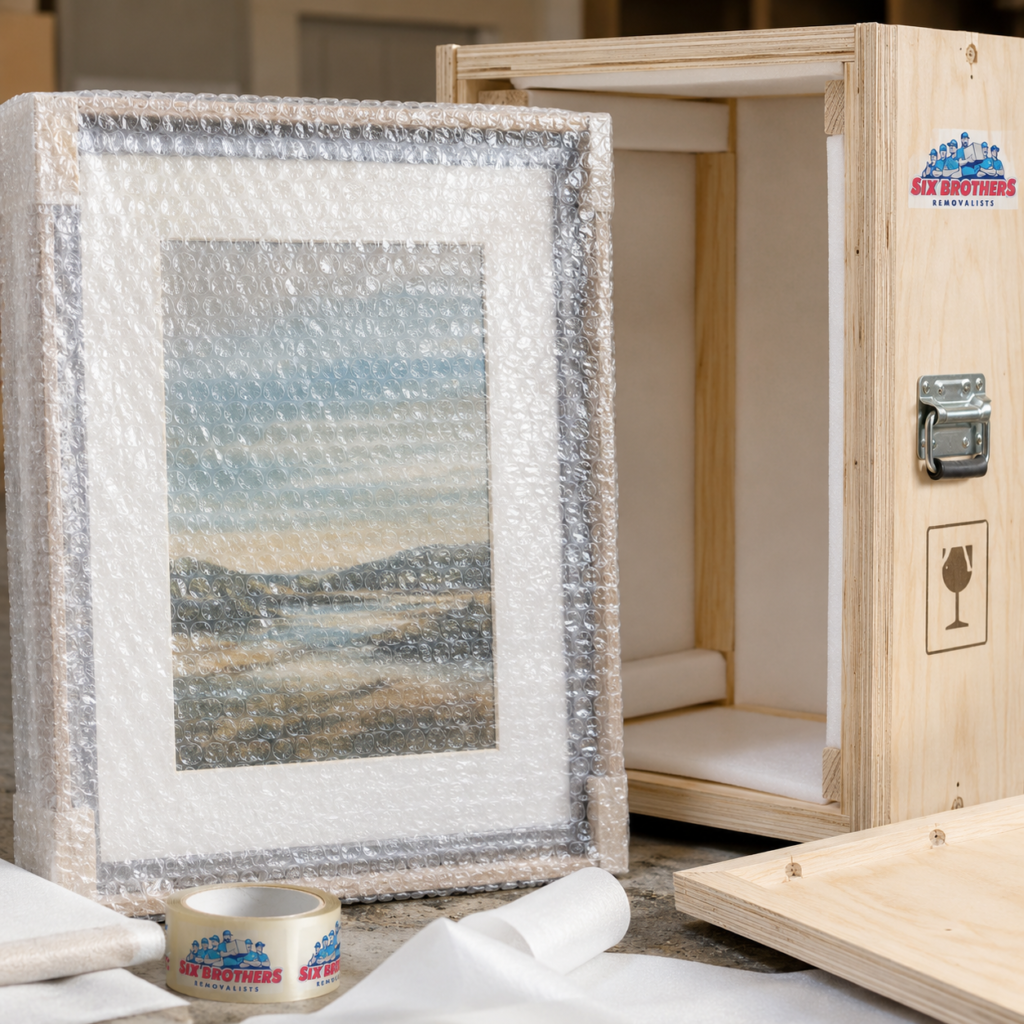
Photo Condition Records
Snap photos of your pricey items before they’re packed. Get the screen, the corners, the finish. Date them. If something gets damaged, you’ve got proof of its old state. It makes any claim clean and quick.
Store these photos in a cloud folder. Don’t keep them only on a phone that might get lost. A backup means your proof is always safe.
Transit Insurance Coverage
Accidents happen, even with the best care. Transit insurance covers your gear on the long road. It’s cheap peace of mind. Ask about cover before the truck rolls. Knowing your removal insurance options upfront means no nasty shocks if a box takes a hit.
Art and Antiques
Old and precious items can’t be replaced. Wrap art in bubble wrap and card. Use a proper box, never loose. Mark these boxes fragile and this way up. Tell your removalist they’re special. Good movers handle them with kid gloves.
For very rare pieces, ask about a custom crate. A timber box built to size beats any carton. It’s the safest ride for one-of-a-kind treasures.
Electronics and Cables
Box up TVs and computers in their original packaging if you kept it. If not, wrap them thick and stand them upright. Bag the cables and tape them to each device. Snap a photo of the back ports first. Setup at the new place gets way easier.
Pull out ink cartridges from printers before they travel. They leak in the heat. A messy printer can ruin a whole box. Wind cords neatly and zip-tie them. Tangled cables waste your time and snap easily. A tidy bundle plugs straight back in.
Frequently Asked Questions
How long before moving should you start packing?
Start six to eight weeks out for an interstate move. Begin with rarely used rooms like the garage and spare room. Pack a few boxes each week. This slow pace beats a last-minute panic. Daily-use items get packed in the final days only.
If you’re short on time, focus on one room a day. Steady wins this race. A rushed pack job is where things break.
How much do interstate removalists cost?
Interstate removalist costs depend on distance, home size, and how much you move. A small unit costs far less than a big family home.
Backloading is often the cheapest way to go. You share truck space and split the cost. For a real figure, grab a quick quote from our Sydney to Melbourne removalists or your chosen route.
Pack Smart, Move Easy
Packing for an interstate move is a big job. But broken into steps, it’s totally doable. Declutter. Check the rules. Use strong boxes. Pack tight. Label well. Do that, and your stuff arrives safe. You arrive sane. And your first night in the new place feels like a win, not a war.
Want a hand with the heavy part? Six Brothers Removalists has packed and moved families across Australia for years. We bring the boxes, the muscle, and the know-how. We’re based in Parramatta and cover over 600 spots around the country. Whether it’s a studio flat or a five-bedroom home, we’ve got a truck and a crew for it.
Call us on 1300 764 372 or email info@sixbrothersremovalist.com.au. Let’s get you moving the easy way.