

Moving your appliances across state lines feels like a big puzzle. You stare at the fridge. You stare at the truck. And you wonder how it all fits. Here is the good news. With the right steps, your appliances travel safe and sound. No dents. No leaks. No nasty surprises at the other end.
This guide walks you through every part. We cover packing, prepping, loading, and the rules movers follow. By the end, you will move appliances interstate like a pro.
Ready? Let’s get into it.
One quick promise before we start. This is not generic fluff. These are the same steps trusted Sydney removalists use on real interstate jobs. Follow them and your gear lands in one piece.
Should You Move Appliances Interstate or Replace Them?
Here is the first big question. Do you drag that old fridge 800km? Or do you sell it and buy fresh? It comes down to cost, condition, and value. Let’s break each one down.
Move or Replace
Old saying in Sydney removalist circles: don’t pay to move what you’d pay to bin. Smart, right? Cheap appliances often cost more to move than to replace. A $200 microwave is not worth a $150 transport fee plus the risk.
But a near-new washer or a premium fridge? Those make the trip worth it. Keep the good ones. Let the tired ones go. Here is a simple rule of thumb. If the move fee is more than half the cost of a new unit, think hard. Often a fresh buy makes more sense.
Also factor in age. Most fridges last around ten years. A washer about eight. If yours is near that mark, the move might be its last trip anyway.
Appliance Condition Check
Give each item a quick health check. Look for rust, leaks, and loud noises. Test the seals and the power cords. An appliance near the end of its life is a gamble. The move might be the final shock that kills it.
Strong and steady units travel best. Weak ones may break before they even reach the truck.
New Home Compatibility
Will it even fit the new place? Check power points, gas lines, and door widths first. Some kitchens have tight spots. A built-in dishwasher may not suit a freestanding gap. A wide fridge may not clear a narrow hall.
Measure twice. Move once. That simple habit saves a lot of grief.
Make a Full Appliance List Before Moving Interstate
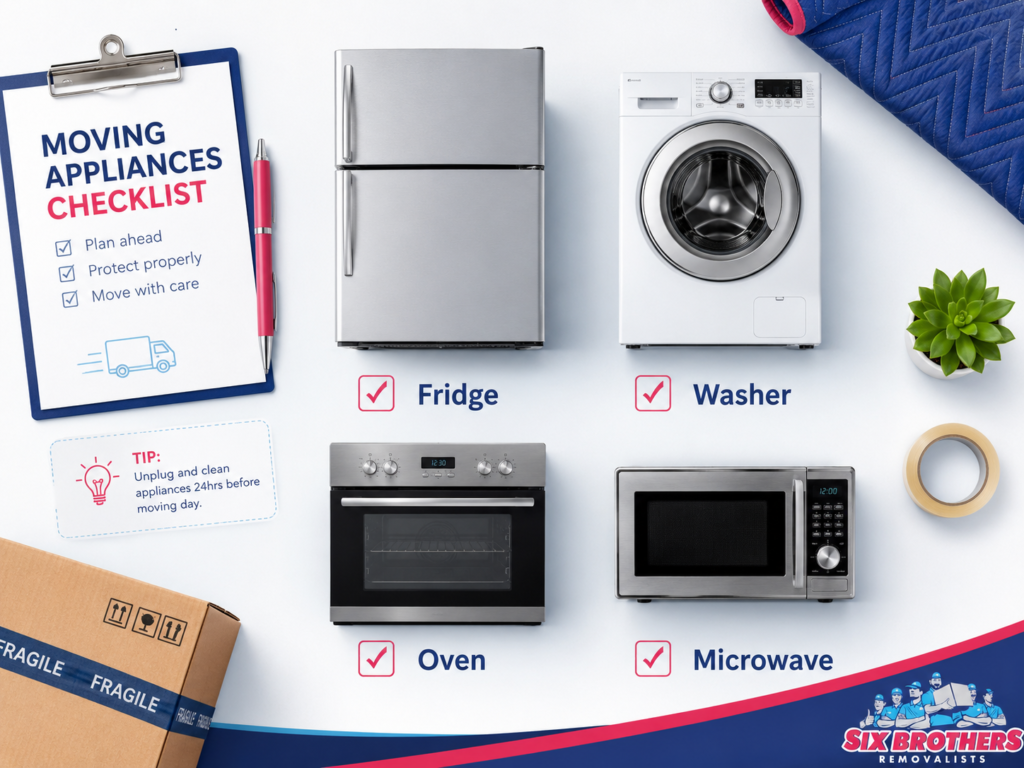
A list keeps you sane. Write down every appliance you plan to move. Big and small. This helps your removalist quote you right. It also stops you from forgetting that bar fridge in the garage. Walk room to room. Open every cupboard and check the laundry, kitchen, and outdoor area. Note the brand, size, and rough weight of each unit.
Why bother? A clear list means an accurate quote. Surprise items on the day can bump up the price and slow the load.
Fridge and Freezer
These are the big players. They need the most prep time. We cover the full steps soon. Note the size and weight. A double-door fridge needs two people and a sturdy dolly.
Washing Machine
Washers hold water and a heavy drum. Both need handling care. Skip a step and you risk a wrecked motor. Front-loaders need transit bolts. Top-loaders need a secured drum. More on that below.
Dryer
Dryers are lighter but still bulky. Clean the lint trap before the trip. A clogged dryer is a fire risk later. Check the vent and the cord. Tape the door shut so it stays closed in transit.
Dishwasher
Dishwashers hide leftover water inside. Drain them fully or you will get drips on the truck floor. Coil the hose and tape it down. Secure the racks so they don’t rattle loose.
Built-in models need a careful disconnect from the water line. Turn off the supply first. Then catch the drips with a towel.
Oven, Cooktop, and Microwave
Ovens and cooktops are heavy and awkward. Gas units need a licensed person to disconnect them. Microwaves are easy. Remove the glass plate. Wrap it on its own so it does not crack.
How to pack a microwave for moving? Take out the turntable and the roller ring. Wrap the plate in bubble wrap. Stuff a towel inside so nothing rattles. Then box it snug with padding on all sides.
Small Kitchen Appliances
Think kettle, toaster, blender, air fryer. Small but easy to lose. Box them together and label clearly. Wrap cords so they don’t tangle. Pad anything with glass or sharp blades.
Outdoor Appliances and BBQs
Don’t forget the back patio. BBQs, outdoor fridges, and patio heaters all count. Here is the key bit. The gas bottle cannot ride in the truck. We explain that rule later. Mark it now.
Appliance Packing Supplies You Need for an Interstate Move
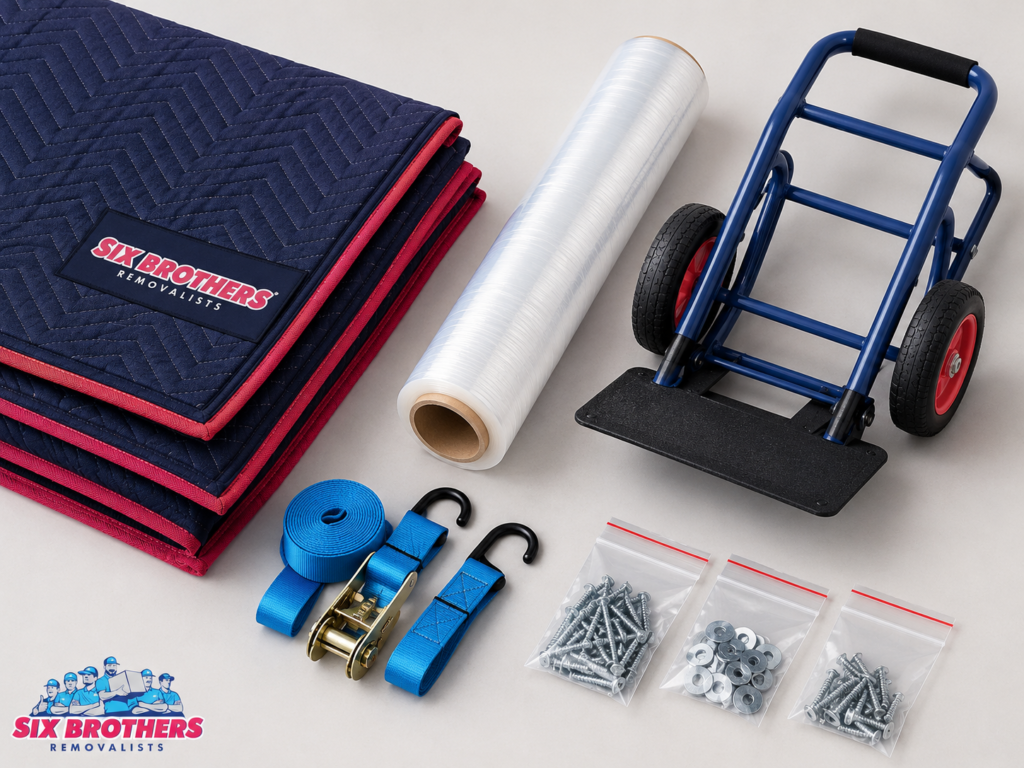
Good gear makes a smooth move. Think of supplies as armour for your appliances. Skimp on packing and you gamble with costly gear. A few cheap supplies save you from a cracked door or a dented panel.
You can grab most of these from your removalist or a hardware store. For more handy advice, see our removalist tips. Here is what matters most.
Moving Blankets
These thick blankets stop scratches and dents. Wrap each big appliance like a present. They soften every bump on the highway. Think of them as a duvet for your fridge.
Stretch Wrap
Stretch wrap holds blankets in place. It also keeps doors and cords from flapping open. Wrap it snug but not too tight. You still want a little airflow.
Cardboard Edge Protectors
Corners take the hardest hits. Edge protectors guard them well. They are cheap and worth every cent. Slot them on sharp edges before you wrap. Simple step, big payoff.
Furniture Dolly
A dolly saves your back and your floors. You roll heavy items instead of dragging them. An appliance dolly with straps is even better. It locks the unit tight while you move it.
Ratchet Straps
Straps tie appliances to the truck wall. This stops them sliding on long trips. A loose fridge in a moving truck is a wrecking ball. Strap it down and sleep easy.
Zip Bags for Screws and Small Parts
Take off a shelf or a bolt? Bag it. Label it. Tape it to the appliance. Lost screws turn reassembly into a nightmare. This tiny habit saves your sanity.
How to Prepare a Fridge and Freezer for an Interstate Move?
Fridges need the most love before a move. Rush this and you risk mould, leaks, or a dead motor. Follow these steps in order. Give yourself a day or two to do it right.
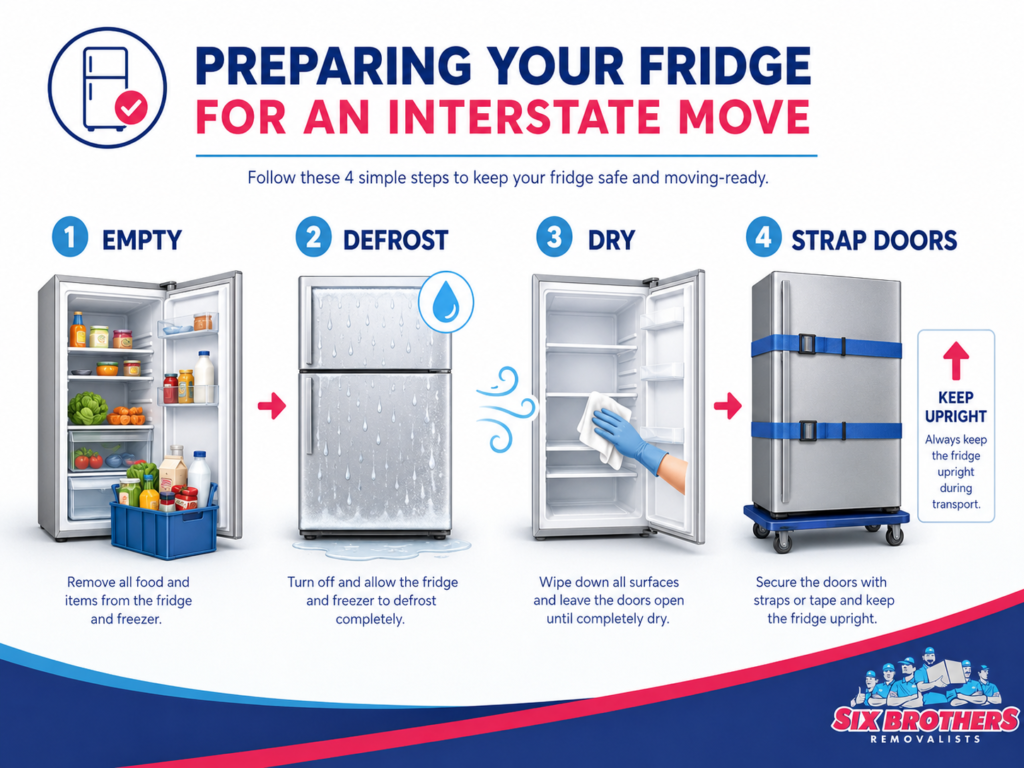
Empty and Defrost
Pull out all food first. Then turn it off. How long to turn off the fridge before moving? Aim for at least 24 hours. This lets the freezer fully defrost. Place towels around the base to catch melting ice.
Wondering how to prepare a fridge for moving the right way? It starts here. A frozen-up freezer drips all over your truck. That water can ruin boxes and warp timber furniture nearby. So give it time. Prop the doors open while it defrosts. Mop up the melt as it goes.
Clean and Dry
Wipe the inside with warm soapy water. Then dry every corner with a clean cloth.
Why dry it so well? Trapped moisture grows mould fast in a sealed fridge. Nobody wants that smell.
Remove Shelves
Take out the glass shelves and drawers. Wrap them in blankets or bubble wrap. Loose glass shifts and shatters on bumpy roads. Packed alone, it stays safe.
Pack Loose Parts
Bag the small bits like clips and trays. Tape that bag inside the fridge or to the door. You will thank yourself when you set it up again. No hunting for missing parts.
Secure Doors
Tape the doors shut so they stay closed. Use a strap if the fridge is large. A swinging door can snap a hinge. It can also hit a wall on the way out.
Proper Positioning During Transport
Keep the fridge upright if you can. Can you lay a fridge down when moving? Only if you must, and only for short bits. Laying it flat can push oil into the cooling lines. That harms the compressor.
How long to leave a fridge off after moving? Let it stand upright for at least four hours before you switch it on. If it travelled on its side, wait a full 24 hours, which matches the refrigerator transport guidance from Samsung.
Why Fridges Need Special Care During Moves?
A fridge is not just a box. It holds a sealed cooling system with oil and gas inside. Tip it the wrong way and oil drifts into the wrong pipes. The compressor is the heart of the fridge. Push oil into it the wrong way and that heart skips a beat.
That is why we rest it before powering up. The oil needs time to settle back home, a step explained well in this guide on why fridge freezers need time to settle. Treat your fridge gently and it rewards you with years of cold drinks. Rough it up and you may buy a new one fast.
The same care applies to a standalone freezer. How to move a freezer safely? Empty it, defrost it, dry it, and keep it upright. A chest freezer is heavy, so use two people and a dolly. Tilting it too far stresses the same compressor and oil system. Keep the tilt under 45 degrees if you can. Slow and upright wins every time.
How to Prepare a Washing Machine and Dryer for Interstate Transport?
Washers are tricky beasts. They hold water and a heavy spinning drum. Both need taming before the truck. Get this wrong and the drum can crack the casing. Let’s prep it the safe way.
Give yourself a few hours the day before. A washer with leftover water leaks all over the truck. A loose drum can wreck the bearings on a long haul.
Drain Hoses
How to drain a washing machine before moving? Run a short empty cycle first to clear the pump. Then unplug it. Turn off the taps. Disconnect the inlet and drain hoses. Tip them into a bucket to empty leftover water.
Reinstall Transit Bolts
Front-loaders came with transit bolts. They hold the drum still. Did you keep them? Good. Screw them back in. No bolts? Call the maker or your removalist. Moving without them risks real damage.
Use Shipping Bolts
Shipping bolts are the same thing by another name. They lock the inner drum to the frame. This stops the drum bouncing on rough roads. It is the single best thing you can do for a front-loader.
Secure the Drum on Top-Loaders
Top-loaders have no bolts. So how do you secure the washing machine drum for moving? Pad it with towels inside. Stuff the gap so the drum can’t swing. Then tape the lid shut. Easy fix, big protection.
Wrap and Protect the Machine
Cover the body in moving blankets. Wrap stretch film over the top. Keep the cord tucked and taped. A wrapped washer rolls onto the truck clean and safe. No scuffs, no scratches.
Clean the Dryer Lint
Empty the dryer lint trap fully. Built-up lint is a known fire hazard. Wipe the drum and tape the door. A clean dryer settles into the new laundry with no fuss.
How to Prepare an Oven and Stove for a Move?
Ovens are heavy and full of loose bits. A little prep keeps them whole and clean. Gas ovens need a licensed person to disconnect them. Never rush that part.
Why so strict? A gas leak is a serious danger. Only a licensed plumber or gas fitter should touch the line. Book one a week ahead so you are not stuck on moving day.
Clean Thoroughly
Scrub off old grease and crumbs. A clean oven won’t smear grime on your blankets. It also lands in the new home ready to use. No first-night scrub needed.
Remove Loose Items
Take out racks, trays, and the grill plate. Wrap them or box them apart. Loose racks bang around and dent the door glass. Pack them safe.
Secure the Door
Tape the oven door shut. The glass is heavy and can swing open fast. A taped door stays put on every corner and bump. Quick step, real peace of mind.
Which Appliance Parts Need Extra Protection During Transport?
Some parts break far easier than others. Know them and you protect them first. Glass doors top the list. Oven glass, microwave plates, and fridge shelves all crack with a hard knock.
Cords and hoses come next. They snag, kink, and tear if they hang loose. Tape them down every time. Control panels and dials are fragile too. A thick blanket over the front saves them well.
Last, the feet and hinges. They bear the weight when you tilt a unit. Pad the corners and lift with care. One more tip. Snap a photo of each appliance before you wrap it. If a claim comes up later, you have proof of the condition.
It also helps with reassembly. You can see exactly where each hose and cord sat. A quick photo saves a slow puzzle.
How to Move and Load Appliances Safely for a Move?
Loading is where most damage happens. A slip here can dent a fridge or hurt a back. Take it slow and steady. Here is the safe way to load each appliance. One golden rule guides it all. Heavy and low. Wrapped and strapped. Stick to that and most damage simply never happens.
Wrap the Outside
Wrap the full body before it moves an inch. Blankets first, stretch film second. This guards against scuffs in the doorway and the truck. Cover it head to toe.
Use an Appliance Dolly
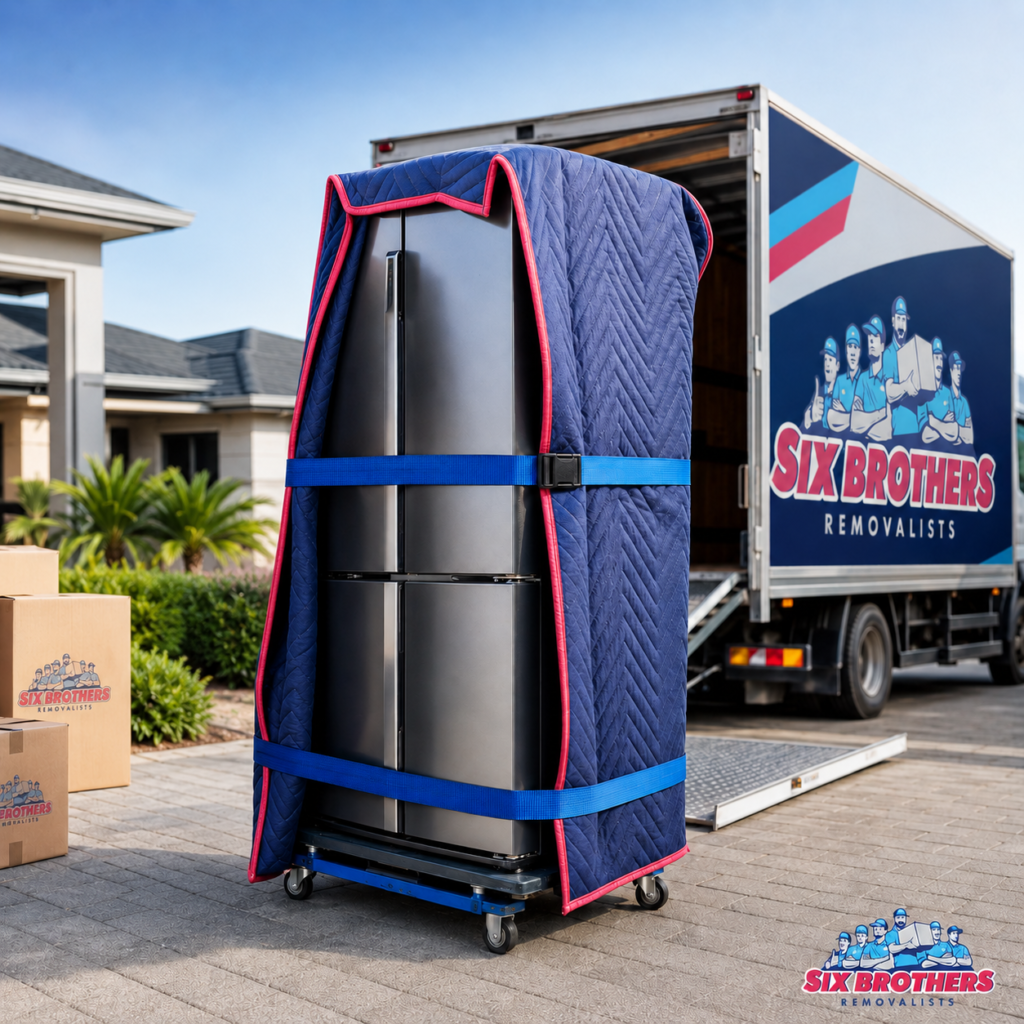
Never drag a fridge across the floor. Use an appliance dolly with a strap. Tilt the unit back gently. Roll it slow. Let the wheels do the heavy work.
Protect Floors
Lay down floor runners or old blankets. This guards timber and tiles from wheel marks. It matters more in rentals. You want that bond back, right?
Secure Appliances in the Truck
Stand appliances against the truck wall. Keep heavy items low and tight. Don’t stack boxes on top of a fridge. The weight can crush the lid and dent the top.
Tie Them Down
Strap each appliance to the truck rails. Use ratchet straps for the big ones. A tied unit can’t slide on a long interstate haul. This one step prevents most travel damage.
Interstate Transport Options for Moving Appliances
You have two main paths. Hire the pros, or drive it yourself. Each suits a different budget and comfort level. Let’s weigh both so you pick the right one.
Think about your budget, your time, and your back. A long interstate haul is no small thing. Pick the path that fits your life, not just your wallet.
Professional Movers
Pro movers handle the lifting, wrapping, and driving. They know how to load heavy items safe, the same care we cover in our guide on furniture transport for an interstate move. If you want a backload deal, our interstate backloading service shares truck space for a lower price. It suits smaller appliance loads going a long way.
Most folks pick the pros for big interstate runs. Less stress. Less risk. More time for the rest of your move.
Self-Drive Truck Rental
Renting a truck can cost less up front. You drive, you load, you control the timing. But the work is huge. You lift every fridge. You drive 800km. You take on all the risk.
Tired drivers make mistakes. Weigh the saving against the strain before you book.
What Interstate Removalists Can and Cannot Move?
Here is a part most people miss. Movers cannot carry everything. Some items are banned by law. Knowing this early saves a headache on moving day. Let’s clear it up.
Gas Bottles and Hazardous Items
BBQ gas bottles cannot ride in the truck. They are a fire and explosion risk. Empty and disconnect the bottle. Then take it yourself or swap it at the new town.
Appliances With Fuel, Oil, or Chemicals
Got a generator or a lawnmower? Drain the fuel and oil first. Movers can’t take live fuel. Same goes for paint, pool chemicals, and cleaning acids. These stay out of the truck.
Food, Liquids, and Perishable Items
Empty the fridge and pantry of fresh food. A long haul spoils it and leaves a smell. Open liquids can spill and ruin other items. Toss or gift what you can’t carry yourself.
Ask Your Removalist Before Packing
Every company has its own list. So ask first. A quick call clears up any grey areas. Our team is happy to confirm what we can and can’t move. Just ring us before you wrap a thing.
Sydney Access Challenges When Moving Appliances Interstate
Sydney homes bring their own quirks. Tight streets and tall units make appliance moves harder. Our Sydney removalist team knows these streets well. Plan for access early. A heads-up to your removalist saves time and cost on the day.
Here is a local truth. The hardest part of a Sydney move is often the first ten metres. Stairs, lifts, and tight kerbs trip up many moves.
Apartment Access Issues
Lifts in units are often small. A wide fridge may not fit inside. Book the building lift ahead of time. Some blocks need a set window for moves.
Parking and Loading
Many Parramatta streets have little parking. A truck needs space close to the door. Ask the council about a loading permit if needed. A far walk adds time and fees.
Terrace Home Access
Old terrace homes have narrow halls and steep stairs. Big appliances barely squeeze through. Measure your doors and stairwells first. Tell your mover so they bring the right gear.
How Much Does It Cost to Move Appliances Interstate?
The big question. What’s the damage to your wallet? It depends on a few clear things. Distance is the main driver. Sydney to Melbourne costs less than Sydney to Perth. Simple maths. Our breakdown of interstate moving prices in Australia shows how the numbers add up.
Volume matters too. More appliances mean more truck space and a higher price. Access plays a part. Stairs, tight parking, and small lifts all add labour time.
Want a cheaper option? Backloading shares the truck and cuts the cost for smaller loads.
The best move? Get a free quote. Tell us your appliance list and the two towns. We give you a fair, clear price with no shocks.
For a rough idea, a small appliance load on a backload route can start in the low hundreds. A full kitchen plus laundry going coast to coast climbs higher.
Want to trim the bill? Move fewer items. Sell the old fridge. Book off-peak. Share a truck through backloading. Every choice shaves the total.
One last thing. Ask about insurance before you book. Good cover gives you peace of mind on a long haul. It is a small cost for a big safety net. So there it is. The full road map to move appliances interstate without the drama. You now know what to keep, how to prep, and how to load like a pro. Moving appliances interstate is a big job. But with the right prep and the right team, it goes smooth. Plan early, pack smart, and let the pros do the heavy lifting.
Frequently Asked Questions
How long should I turn off my fridge before moving?
Turn it off at least 24 hours before the move. This gives the freezer time to defrost fully. It also lets the inside dry out so mould can’t grow.
How long do I wait before turning the fridge on after moving?
If it stayed upright, wait around four hours. If it travelled on its side, wait a full 24 hours. This lets the compressor oil flow back where it belongs.
Can I lay a fridge down when moving it?
Try not to. Upright is always best. If you must lay it flat, keep it brief and rest it upright for 24 hours before you switch it on.
How do I drain a washing machine before moving?
Run a short empty cycle to clear the pump. Turn off the taps. Unplug it. Then detach the hoses and tip them into a bucket to drain any leftover water.
Do removalists move BBQ gas bottles?
No. Gas bottles are a fire risk and cannot go in the truck. Disconnect and empty the bottle, then carry it yourself or swap it at your new town.
Should I keep transit bolts for my washing machine?
Yes, always. Transit bolts lock the drum so it can’t bounce on rough roads. Lost them? Ask the maker or your removalist before you move the machine.
Ready to move with less stress? Call Six Brothers Removalists on 1300 764 372 or email info@sixbrothersremovalist.com.au for a free, no-fuss quote today.