


Moving interstate feels like packing your whole life into a truck. Then you cross your fingers and hope. The price tag scares most people more than the goodbye does. So what is the cheapest way to move interstate? And how do you do it without losing your mind?
Here in Australia we say, “Many hands make light work.” Smart planning works the same way for your wallet. This guide breaks down the real costs and the cheapest options.
It also covers the sneaky fees nobody warns you about. You’ll learn which method fits your move size. You’ll see what drives the price up. And you’ll walk away knowing how to get a fair quote. Let’s get into it.
The Cheapest Way to Move Interstate
Want the short version? Backloading is usually the cheapest way to move interstate for most households.
It works by filling empty truck space on a trip that’s already happening. You pay for the space you use, not a whole truck. That alone can slash your bill by half. But the “cheapest” answer depends on three things. How far you’re going. How much stuff you own. How much hassle you can stomach.
For tiny moves, a shipping box service wins. For mid-size homes, backloading is king. For short hops, a DIY truck can be cheapest if you do the heavy lifting yourself. Think of it like flying. A small bag costs little. A full cargo hold costs more. The trick is matching the method to your load. Keep reading and we’ll show you exactly how to make that match. The savings hide in the details.
Factors That Affect Interstate Moving Costs
Before you chase quotes, you need to know what drives the price. Five things matter most. Miss one and your “cheap” move gets expensive fast. Think of these as the dials on a sound desk. Each one changes the final number. Learn them and you stay in control.
Distance between pickup and delivery locations
Distance is the biggest cost lever. Sydney to Canberra is a short run. Sydney to Perth is a marathon. More kilometres mean more fuel, more tolls, and more driver hours. Long routes also need overnight stops. Each extra day adds to the bill.
Popular routes between big cities often cost less per kilometre. Why? More trucks run them, so backloading space is easy to find. So a busy corridor can actually be your friend. The more trucks on a route, the cheaper the spare space.
Volume of belongings
Removalists charge by space, weight, or both. The more cubic metres you fill, the more you pay. A studio flat might fit in a few cubic metres. A four-bedroom house can need a full truck. Every extra box adds to the total.
This is why decluttering saves real money. Less stuff equals less space equals a smaller invoice. Simple maths. Picture your old couch. Is it worth the freight to ship it across the country? Sometimes the answer is no.
Time of year
Timing changes the price more than people expect. Summer is peak season. Weekends and month-ends are busy too. Demand pushes rates up when everyone moves at once. Move midweek or in winter and you can pay noticeably less.
School holidays and the end of the financial year also spike demand. Quiet weeks mean quieter prices. Want to dig deeper into timing? Our guide on the cheapest month to move shows you the calendar tricks that save hundreds.
Access issues at pickup or delivery
Hard access costs money. Think narrow streets, no parking, or units with no lift.
Movers may need a smaller shuttle truck or a long carry from the door. Stairs add time. Time adds cost. Tell your removalist about access upfront. A surprise on moving day can mean a surprise on the final bill.
Tight driveways and steep paths matter too. The smoother the path, the lower the labour charge. This is common in older Sydney suburbs with narrow streets and no off-street parking.
Insurance and extra services
Basic transit cover is often included. Full replacement insurance costs extra but protects big-ticket items. Packing, unpacking, and furniture assembly are add-ons too. Each one is handy. Each one adds to the price.
Decide what you truly need. Pay for peace of mind on valuables. Skip the extras you can handle yourself. A fragile piano or a fine art piece changes the sum. Special items often need special care and cover.
Cheapest Interstate Moving Options by Move Size
There’s no single cheapest method for everyone. The smart choice depends on how much you’re hauling. Let’s match the option to the load. Get this part right and the rest gets easy. Get it wrong and you overpay from day one.
Moving a few boxes or small items
Got just a few boxes? Don’t hire a truck. That’s like booking a bus for one passenger. Box courier services or backloading by the cubic metre are your friends here. You pay only for the small space you use.
This suits students, single renters, and minimalists. The lighter you travel, the less you spend. A speedy van move can also work well for light, urgent loads on shorter interstate runs.
Moving a one-bedroom apartment
A one-bedroom place is the sweet spot for backloading. You’ve got real furniture but not a mountain of it. Backloading lets you share the truck with other moves. The cost split keeps your price low.
A bed, a couch, a fridge, and some boxes fit neatly into shared space. You skip the full-truck fee entirely. If you want a fixed plan, a 1 bedroom unit removalist service gives you a clear quote with no guesswork.
Moving a full household
Big homes need real muscle and real truck space. A few boxes won’t cut it here. Backloading still works if your dates are flexible. A dedicated truck costs more but moves everything in one go.
The choice often comes down to timing. Tight deadline? Pay for a dedicated run. Flexible? Backload and save. For larger homes, look at a 3-4 bedroom removalist plan to keep the whole move tight and predictable.
Backloading (Cheapest for mid-to-large moves)
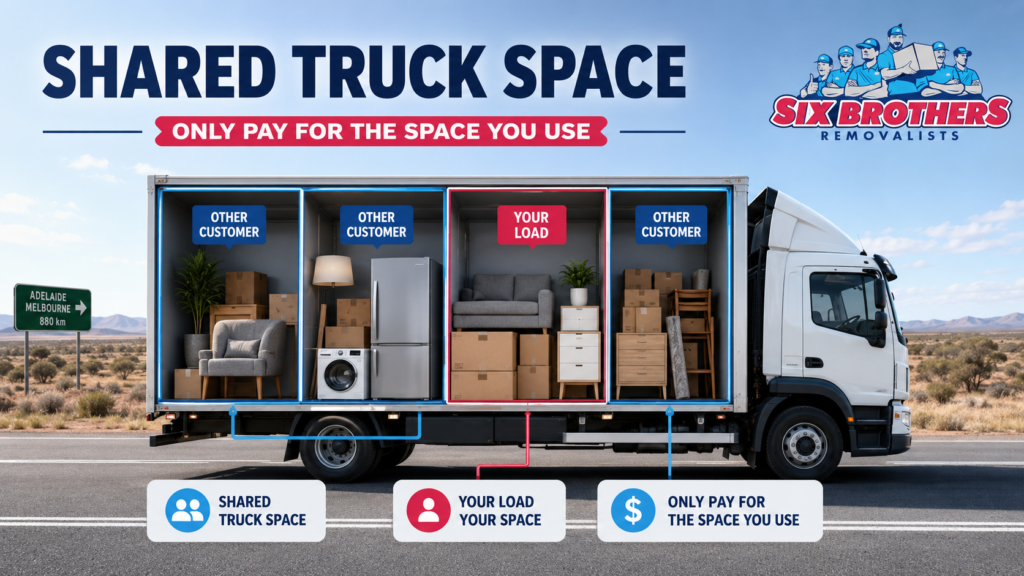
Backloading is the quiet hero of cheap interstate moves. It uses space that would otherwise travel empty. Here’s the idea. A truck drops off in one city and heads back with spare room. You fill that room for a fraction of the full price. It’s recycling, but for freight. The truck moves anyway. You just hitch a ride for your gear.
Why does this matter so much? Because empty truck space is wasted money for the company. They’d rather sell it cheap than run it empty. That’s the magic. Their problem becomes your discount. A win for both sides.
The Pros
- Big savings. You only pay for the space you use, not the whole truck.
- Pro handling. Trained movers load and secure your goods.
- Less work for you. No driving, no heavy lifting across state lines.
- Good for big loads. Furniture, white goods, and boxes all fit.
- Lower stress. The pros own the road, not you.
The Cons
- Less date control. You fit the truck’s schedule, not the other way round.
- Wider delivery windows. Exact arrival times can shift.
- Shared space rules. Pack well so nothing gets crushed in transit.
- Booking ahead. Popular routes fill fast in busy months.
Where to look
Start with established removalists that run regular interstate routes. Our interstate backloading service connects your move to trucks already on the road. Routes like Sydney to Melbourne removalist trips run often, so backload space is easy to grab and cheap to book.
Always ask how the truck is shared and how goods are kept apart. A clear answer means a careful company.
Self-Pack Shipping Containers (Best for bulk + flexibility)
Self-pack containers give you bulk space and time to load at your own pace. The company drops a container at your door. You pack it over days, not hours. Then they collect it and ship it interstate. You unpack at the other end.
It’s a middle path. Cheaper than full service, but you trade money for sweat.
The Pros
- Pack at your pace. No rushing on one stressful day.
- Big capacity. Great for full homes and bulky gear.
- Secure transit. Locked containers protect your goods on the road.
- Storage friendly. Many firms can store the container if dates clash.
The Cons
- You do the loading. No movers unless you pay extra.
- Space at home needed. The container must sit somewhere legal.
- Slower transit. Sea or rail shipping can take longer than a truck.
- Loading skill matters. Bad packing means broken stuff.
Where to look
Compare container shippers and moving firms that offer self-pack units. Curious about pricing? See our breakdown of the cheapest moving container price before you commit.
If you’ll keep the container long-term, our guide on the shipping container foundation covers what you need on the ground. Check transit time before you book. A slow route can leave you sleeping on the floor for a week.
DIY Rental Truck (Best for short distances)
Renting a truck and driving yourself can be the cheapest way for short interstate hops. You skip labour fees and pay mostly for the vehicle. But cheap on paper isn’t always cheap in real life. Fuel, fatigue, and risk add up.
This option rewards muscle and punishes the unprepared. Know what you’re signing up for.
The Pros
- Lowest base cost. No labour charges for loading or driving.
- Full control. You set the route and the schedule.
- Good for short runs. Sydney to Canberra or Wollongong, for example.
- No waiting. You leave when you’re ready.
The Cons
- Hard work. You lift, load, and drive everything yourself.
- Injury and damage risk. One dropped fridge can wipe out your savings.
- One-way fees. Returning a truck in another state can cost a lot.
- Fuel adds up. Big trucks drink fuel fast over long routes.
- No safety net. Damage is on you.
Where to look
National hire firms offer one-way rentals between states. Always compare the one-way fee against a backload quote first. For shorter trips like Sydney to Canberra removalist moves, weigh DIY against a fixed pro quote before you decide.
Don’t forget your time. A lost weekend has a cost too, even if no invoice shows it.
Backloading vs Self-Pack Containers vs DIY Truck Hire
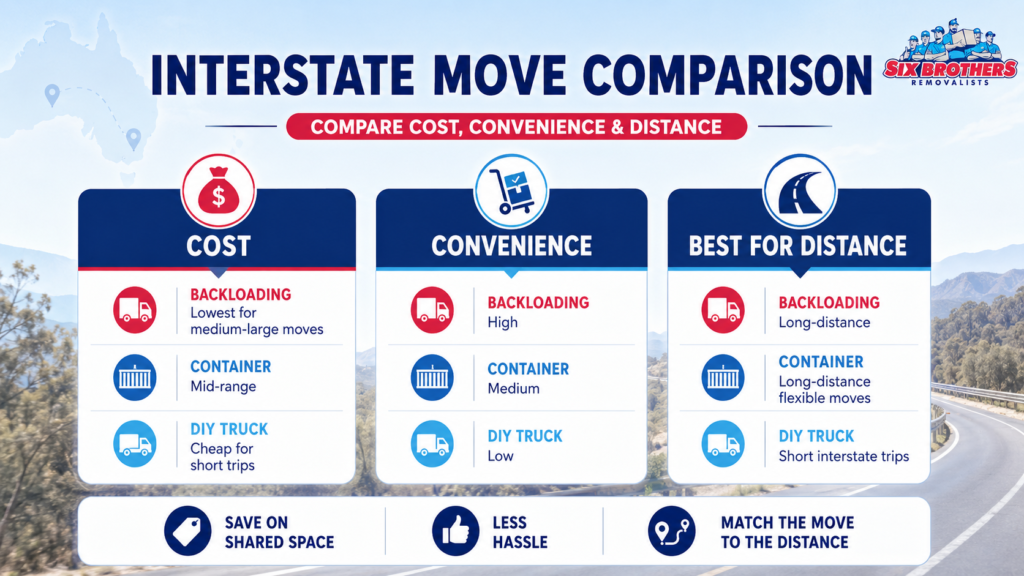
Three options, three trade-offs. Let’s compare them head to head so you can pick with confidence. There’s no perfect choice. There’s only the right choice for your move. Here’s how they stack up.
Which option is cheapest?
Backloading usually wins for mid-to-large moves. You skip the full-truck fee and the labour stays included. DIY truck hire can beat it on very short trips with light loads. Self-pack containers sit in the middle for bulky loads with flexible dates.
Run the full numbers each time. The cheapest sticker price is not always the cheapest move.
Which option is most convenient?
Backloading is the easiest. Pros load, drive, and unload while you focus on settling in. Containers are mid-tier. You pack but skip the driving. DIY is the least convenient by far.
Ask yourself one thing. How much is your time and back really worth?
Which option is best for long-distance moves?
For long hauls, backloading or containers beat DIY almost every time. Driving a truck across the country burns fuel and energy. The longer the trip, the more a pro service makes sense. Would you really want to drive Sydney to Perth in a loaded truck?
Long routes also mean motels and meals for DIY drivers. Those costs quietly stack up mile after mile.
Hidden Costs to Watch Out For

The quote is never the whole story. Hidden costs can turn a cheap move into a pricey one. Here’s where they hide. These are the gotchas. Spot them early and they lose their bite.
Most budget blowouts don’t come from the headline price. They come from the small print and the surprises. Knowing them upfront is half the battle.
Fuel and tolls
With DIY moves, fuel is on you. Big trucks guzzle it, and long routes add tolls on top. Always add a fuel estimate before you call DIY the cheap option. The pump never lies.
Packing materials
Boxes, tape, and bubble wrap cost more than you think. A full home needs dozens of boxes. Source free boxes early or buy in bulk. Our packaging and removals options can bundle this in so you don’t overspend.
Storage fees
Dates rarely line up perfectly. If your new place isn’t ready, you may need short-term storage. Ask about storage rates before you book. A gap of a few days can add real money.
Moving insurance
Basic cover may not pay full replacement value. For valuables, that gap matters. Check what’s included and what’s not. Paying a little for proper cover beats losing a lot.
Extra pickup or delivery charges
Stairs, long carries, and remote addresses can trigger surcharges. So can a second stop. Spell out every detail when you get a quote. Honest info upfront stops nasty surprises later.
Want the full picture? Our deep dive on the hidden costs of moving lists every trap to avoid.
Pro-Tips to Slash Costs
Want to cut your bill even more? These three moves do the heavy lifting on savings. None of them are hard. All of them work. Stack them and watch the total drop.
Declutter ruthlessly
Every item you move costs space and money. So why pay to ship junk? Sell, donate, or bin what you don’t love. A lighter load is a cheaper load. It’s the easiest win there is. Start weeks early. A slow declutter beats a panic purge the night before.
Avoid peak times
Move midweek and outside summer when you can. Off-peak slots cost less and book easier. Flexible dates are a backloader’s best friend. The more you flex, the more you save.
Even shifting your move by one week can change the price. Ask about off-peak windows.
Source your own boxes
Buying brand-new boxes for everything adds up fast. Free boxes do the same job.
Ask local shops, friends, or community groups. Save the spend for items that need real protection. For more savings ideas, see our list of 10 ways to reduce your moving costs.
How to Get the Best Interstate Moving Quote
A good quote saves money and stress. A vague quote does the opposite. Here’s how to get a sharp one. The clearer you are, the better your number. Garbage in, garbage out.
Create an accurate inventory
List every room and every big item. The clearer your list, the tighter your quote.
Vague lists lead to vague prices and last-minute jumps. Detail protects your budget. Our moving home calculator helps you size your load fast and get a sharper number.
Compare multiple quotes
Never grab the first number you see. Get at least three quotes for the same job. Compare like for like. The cheapest quote isn’t always the best value.
A quote way below the rest is a red flag. Cheap and careless often travel together.
Ask what is included in the price
Does the quote cover fuel, insurance, and stairs? Or are those extra? A low base price with many add-ons can cost more than a fair all-in quote. Check our clear removalist rates so you know what a fair number looks like.
Get the inclusions in writing. A verbal promise is hard to bank.
Check reviews and insurance options
Read recent reviews before you book. Patterns tell you more than a single rating. Confirm insurance cover in writing. Trust is cheap when it’s proven and pricey when it’s missing.
Look at how a company handles complaints, not just praise. That tells the real story.
Is It Cheaper to Move Yourself or Hire Interstate Removalists?
This is the question everyone asks. The honest answer is: it depends. Let’s weigh it properly. Don’t trust the gut alone here. The maths often surprises people.
Cost comparison
DIY looks cheaper on the surface. But add fuel, tolls, one-way fees, and time off work. Backloading often beats DIY once those hidden costs stack up. Run the full sum, not just the truck rate.
The bigger the load, the more the scales tip toward a pro. Heavy stuff is expensive to move badly.
Time and effort involved
DIY eats your weekend and your energy. Loading, driving, and unloading is exhausting work. Pros do it daily. They’re faster and far less likely to break things.
Time is money too. A day off work has a price, even if it hides on no invoice.
Risk of damage or injury
A pulled back or a smashed TV can cost more than the whole move. That’s a real risk with DIY. Pros bring training, gear, and insurance. Want to compare both paths fully? See our take on hiring a removalist vs DIY.
One bad lift can outlast the move by months. Your back is not worth a small saving.
Popular Interstate Routes and What to Expect
Some routes are cheaper than others. Busy corridors mean more trucks and more backload space. That keeps prices friendly.
Here’s a quick look at the routes movers ask about most.
Sydney to Melbourne
This is one of the busiest moving routes in the country. Trucks run it almost daily. That means backload space is easy to find and cheap to book. Flexible dates push the price down even more.
Sydney to Brisbane
Another high-traffic corridor with steady demand. Backloading shines here for the same reason. A Sydney to Brisbane removalist run often has return space waiting. That spare room is your saving.
Sydney to Adelaide
A longer haul, but still well served. Plan ahead and the price stays fair. For this route, an Sydney to Adelaide removalist with regular trips is your best bet for low cost.
Short interstate hops
Sydney to Canberra or Wollongong are short trips. DIY truck hire can compete here on price. But always weigh the one-way fee and fuel first. Short does not always mean cheapest by default.
What Is the Cheapest Way to Move Interstate?
So, what’s the real answer? It comes down to your move size. Match the method and you’ll save the most. Let’s wrap it up clean and simple.
Best option for small moves
For a few boxes or a studio, use a box courier or backload by the cubic metre. You pay tiny and skip the truck cost. Light loads love shared space. Don’t pay for a truck you won’t fill.
Best option for medium moves
For a one or two-bedroom home, backloading wins. It blends low cost with pro handling and zero driving. This is the sweet spot most movers fall into. Flex your dates and the price drops further.
Best option for full household moves
For a full house, backloading still leads when dates are flexible. A self-pack container is the backup for bulky, flexible moves.
Tight deadline and a big home? A dedicated truck costs more but moves it all at once. Here’s the bottom line. The cheapest interstate move is the one planned early, packed light, and matched to the right method.
Don’t chase the lowest sticker price alone. Chase the lowest true cost once everything is counted. That’s where the real savings live. Plan ahead. Declutter hard. Flex your dates. Do those three things and the price almost always drops.
Ready to lock in a fair price? Six Brothers Removalists runs regular interstate routes with honest quotes. Call 1300 764 372 or email info@sixbrothersremovalist.com.au. Find us at Suite 1 Level 5/58-60 Macquarie St, Parramatta NSW 2150.
Your savings start with one smart call. Why pay more than you have to?
FAQs
What is the cheapest way to move interstate in Australia?
For most homes, backloading is the cheapest way to move interstate. You only pay for the space you use on a truck that’s already travelling. For tiny loads, a box courier wins. For very short trips, DIY truck hire can compete.
How much can backloading save me?
Backloading can cut your bill by a large margin versus a dedicated truck. You skip the full-truck fee and split the trip. The exact saving depends on distance, volume, and how flexible your dates are.
Is it cheaper to move myself interstate?
DIY looks cheaper on paper. But fuel, tolls, one-way fees, and your own time often close the gap. For mid-to-large loads, backloading usually wins once you add the hidden costs.
When is the cheapest time to move interstate?
Midweek and off-peak months are cheapest. Avoid summer, weekends, and month-ends if you can. Flexible dates give you the best shot at a low backload price.
How far ahead should I book an interstate move?
Book early, especially in busy months. Popular routes fill fast. Early booking also gives you more date options, which keeps the price down.
Does Six Brothers Removalists do interstate moves?
Yes. Six Brothers Removalists runs regular interstate routes from Sydney and Parramatta. Call 1300 764 372 for an honest quote on backloading or a dedicated truck.