


You’re standing in your kitchen. Boxes half packed. Your phone buzzing with agent calls. And one giant question hanging in the air.
Do you sell first, or move first? It sounds simple. It’s not. In Sydney, this one choice can save you fifty grand or cost you a weekend of sleep. Maybe both. Let’s talk about it like real adults who actually have to make this call in 2026.

Why This Decision Feels Harder in Sydney
Sydney isn’t a normal property market. It’s a beast with its own mood swings. Prices shift fast. Suburbs flip from hot to cold in one quarter. Auctions sell before the first open home.
Meanwhile, the bank wants pre-approval letters, the kids need a school zone, and your partner keeps asking about the backyard. So every move here carries real money on the line. As the old Aussie saying goes, “she’ll be right” only works when you’ve done the homework first.
The main pressure points look like this:
- Cash flow risk. Two mortgages hurt. Zero homes hurt more.
- Timing gaps. Settlement dates rarely line up neatly.
- Emotional fatigue. Selling and buying at once is like juggling knives in the rain.
Is it messy? Yes. Can you win it? Also yes.
2026 Sydney Market Context
The Sydney property market 2026 looks different from last year. Really different. If you’re timing a move right now, you need to know where your suburb sits on the curve.
Rising Market
The north shore, eastern suburbs, and inner west are climbing again. Buyer demand is strong. Stock is tight. Auction clearance rates sit high most weekends.In a rising market, buying first makes sense for many families. Why? Because prices move faster than you can list and sell. Wait six months and your dream home costs another hundred grand.
Cooling Pockets
Parts of western Sydney, some outer ring suburbs, and a few apartment pockets are softer. Listings sit longer. Prices are flat or slipping. In cooling zones, selling first makes sense. You don’t want to be stuck holding a home nobody wants while your new mortgage ticks along.
Which side is your suburb on? That’s question one. Ask your agent. Ask two more agents. Then ask the removalist who just moved three people out of your street last month. They know things the data doesn’t.
Critical Market and Tax Context for Sydney in 2026
Here’s where folks lose money without noticing. Tax and timing.
Tax Tip
If the home you’re selling is your main residence, you usually keep the main residence CGT exemption. But if you buy the next one and move in before selling the old one, you get a six-month overlap window under ATO rules. Go past it and you could owe capital gains tax.
Translation: don’t drag your feet. Talk to your accountant before you sign anything. Not after. Before.
Sydney Market Split
Sydney isn’t one market. It’s twenty. A three-bedder in Hornsby behaves nothing like a two-bedder in Surry Hills. And a knock-down in Blacktown plays by rules the north shore will never understand.
So when people ask about the best time to sell a house in Sydney or the best time to buy property in Sydney, the honest answer is: it depends on your postcode. Spring still leads for family homes. Autumn still suits investors. But 2026 data shows February and August quietly outperforming in many suburbs.
visit to know Areas we Covers…….
Sydney Rules That Change Your Sell-First or Buy-First Strategy

NSW has its own quirks. Miss them and you’ll pay for it.
Cooling-Off Periods
The cooling off period NSW is five business days for most private treaty purchases. You get it when you sign a contract, not before. It doesn’t apply at auction.
So what is the cooling off period in NSW? Five business days, with a 0.25% penalty if you pull out. That’s roughly $2,500 on a million-dollar home. Not nothing.
Auction Deposit Risk
Win an auction, you sign on the spot. No cooling off. No “let me think about it.” You hand over ten percent and you’re locked in.
If you haven’t sold your old place yet, that deposit can vanish fast. This is where people get burned.
Stamp Duty Timing
When do you pay stamp duty in NSW? Within three months of exchange for most buyers. First home buyers may get concessions or deferrals depending on price caps.
So if you buy first, stamp duty lands before your old home sells. That’s a big cheque.
Conveyancer Review
Get a good conveyancer. Not the cheapest one. A solid one will flag dodgy clauses, mismatched settlement dates, and hidden inclusions. This is the one bill worth paying without flinching.
Selling Before Buying
This is the classic safe move. Sell the old home first. Cash in hand. Then go shopping.
Best for
- First-time sellers
- People with tight cash flow
- Anyone nervous about carrying two mortgages
- Downsizers after 60
- Folks in a cooling suburb
Pros
- You know your budget. Exactly. To the dollar.
- No bridging finance stress. No extra interest piling up.
- Stronger buying position. Cash buyers get discounts and flexible terms.
- Calm nights. You sleep better without two homes on your name.
Cons
- You might need temporary housing. Short-term rental, family, or a furnished sublet.
- Two moves. One out. One in. Double the packing. Double the removalist bills.
- Market risk. If prices jump while you’re renting, your buying power shrinks.
- Storage costs. Your stuff has to live somewhere in between.
Ever tried to rent short-term in Sydney with a dog, two kids, and a piano? It’s a sport.
Buying Before Selling
The bold play. You lock in the next home first. Then you sell.
Best for
- Upgraders with strong equity
- Families chasing a school zone
- Buyers in a rising market
- People with bridging finance pre-approval
Pros
- One move. Straight from old to new.
- You pick the perfect home. No rush. No settling.
- Ride the rising market. Buy before prices climb again.
- Stable for the kids. No temp rental chaos.
Cons
- Bridging finance costs. Interest on two loans hurts.
- Pressure to sell fast. You might accept a lower offer just to close.
- Deposit strain. Finding a deposit before selling takes serious savings or equity.
- Six-month CGT window. Miss it and the tax office shows up.
Selling After You Move House
Some folks move into the new place first. Then list the old one empty. Is that smart? Sometimes. It depends.
Pros
- Easier styling. Empty or staged homes photograph better.
- No open home stress. You don’t need to vanish every Saturday with the kids.
- Flexible timing. You can wait for the right buyer.
- Renovate before sale. Fresh paint. New carpet. Better price.
Cons
- Two sets of bills. Rates, insurance, utilities, loan repayments.
- Double removalist jobs if you need to stage furniture later.
- Market drift. Wait too long and momentum fades.
- Empty home risk. Insurance premiums sometimes rise on vacant properties.
When Buying First Is the Better Move in Sydney
Let’s be straight. Buying first isn’t for everyone. But sometimes it’s clearly right. You should lean toward buying first when:
- You’re in a rising market and prices are climbing monthly.
- You have strong equity in your current home, at least forty percent.
- You’ve locked in bridging finance Australia pre-approval with clear exit terms.
- You’ve found the property. Not a nice one. The one.
- You’re chasing a school zone with a hard enrolment deadline.
- Your current home will sell fast because stock is tight in your suburb.
If three or more of these tick, buying first is on the table. If only one ticks, pump the brakes.
Sell First or Buy First by Sydney Scenario
Different lives, different playbooks. Here’s how real Sydney families handle it.
Upgrading Locally
You’ve outgrown the two-bedder. You want the four-bedder two streets over. Same school. Same coffee shop.
Best move: Sell first or run them in parallel with a long settlement. Local upgraders usually have equity but not unlimited cash. A 90-day settlement on the sale gives you time to find and exchange on the new one.
Downsizing After 60
The kids have moved out. The garden is too big. Stairs are annoying.
Best move: Sell first. Always. Why carry bridging debt into retirement? Cash up, rent for a few months, then buy the right downsizer without pressure. Plus you unlock super-contribution options that help long-term.
School Zone Moves
Enrolment opens in August. Your kid starts in February. You need the address locked before term one.
Best move: Buy first if equity allows. The school deadline is non-negotiable. Use bridging finance if you must. The cost of missing the zone is higher than the interest bill.
Interstate Relocation
New job in Melbourne. Or Brisbane. Or the Gold Coast.
Best move: Sell first and rent on arrival. Interstate markets move differently. You need time to learn the new city before committing to a purchase. Book interstate backloading removalists early to save on truck space.
Key Strategies to Reduce Risk When Selling or Buying in Sydney
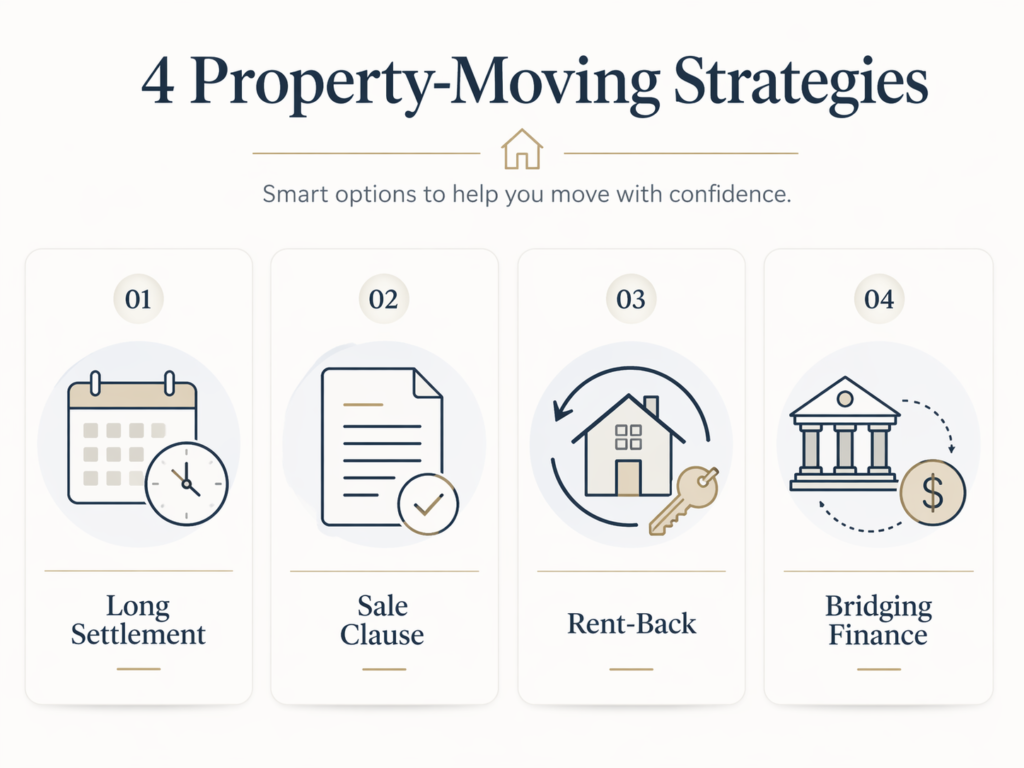
You don’t have to gamble. Use these levers.
Negotiate Long Settlement
Standard settlement is six weeks. You can ask for ten, twelve, even fourteen. Sellers often say yes if the price is right. This buys you breathing room to find or sell the matching property.
Sale Clause
A “subject to sale” clause makes your purchase conditional on selling your current home. Sellers don’t love it. But in softer markets, it works. Your conveyancer can draft a clean version that protects you.
Rent-Back Arrangement
How does a rent back work? You sell the home, then rent it back from the new owner for a set period, usually four to twelve weeks. You pay market rent. They get income. You get time to find the next place without moving twice.
It’s underused in Sydney. It shouldn’t be.
Use Bridging Finance
Bridging finance Australia lets you borrow against your existing home’s equity to buy the next one. Interest is usually capitalised, meaning it rolls into the loan until you sell.
Costs are higher than standard loans. But they’re lower than losing your dream home. Get pre-approval before you bid.
How Long It Takes to Buy a Property in Sydney
Honest timeline for 2026:
- Pre-approval: 1 to 3 weeks.
- House hunting: 4 to 12 weeks for most buyers.
- Exchange to settlement: 6 to 12 weeks.
- Moving day to settled in: 1 to 2 weeks.
Total? Three to six months from “let’s do this” to keys in hand. Sometimes longer if you’re picky. Sometimes faster if you pounce at auction.
When booking the moving house checklist Sydney items, start 8 weeks out. Utilities, mail redirect, school notice, removalist quotes. The best removalists in Sydney book out four weeks ahead in peak season.
Speaking of which, if you’re hunting furniture removalists Sydney or office removalists Sydney, get three quotes minimum. Ask about insurance. Ask about hourly vs flat rate. And yes, we’ve seen people search cheap removalists near me and end up paying more after hidden fees. Cheap isn’t always cheap.
Situations to Avoid When Selling or Buying Before a Sydney Move
Some traps are common. Here’s what to dodge.
- Winning at auction without pre-approval. You lose the deposit if finance falls over.
- Signing with a mismatched settlement. You end up homeless or double-mortgaged.
- Skipping the building inspection to “save time.” Hidden termite damage costs more than the inspection.
- Listing at the wrong time. Selling in mid-December is like fishing in a dry creek.
- Choosing the cheapest conveyancer. They miss clauses. You pay later.
- Booking movers last minute. Peak weekends get booked out. Prices spike.
- Not checking strata reports. Apartment buyers, please. Read the minutes.
- Trusting only one agent’s valuation. Get three. Average them. Trust the middle.
- Ignoring the CGT six-month rule. The ATO doesn’t forget.
- Forgetting school zone deadlines. Enrolment closes months before term starts.
Have you thought about which of these applies to you? Most people hit two or three without realising.
The Real Answer
So, should you sell before or after moving house in Sydney?
Sell first if: your suburb is flat or cooling, your cash buffer is thin, you’re downsizing, or you hate financial stress. It’s the safer path. Less sleep lost.
Buy first if: prices are climbing, your equity is strong, a school zone is calling, or you’ve found the one. It’s bolder. It costs more in interest. But it can earn more in capital growth and peace of mind.
Move then sell if: you want the old home to present empty, you have cash reserves, and you trust the market to hold up for a few more months.
There’s no universal right answer. There’s only the right answer for your suburb, your bank balance, and your family’s timeline. Walk through the numbers. Talk to your accountant. Book your removalist early. Then breathe.
Sydney rewards the prepared. Not the lucky.
Need help with the move itself? Six Brothers Removalists has been moving Sydney families through sells, buys, and in-between rentals for years. Call 1300 764 372 or email info@sixbrothersremovalist.com.au. Our office is at Suite 1 Level 5/58/60 Macquarie St, Parramatta NSW 2150.