

What will movers not pack? If you’re planning a move in Sydney, this is one of the most important questions to understand before moving day. Many removalists have strict rules about what they can and cannot transport, and knowing this early can save you time, money, and stress. You’ve booked the truck. Boxes are stacked in the hallway. Moving day is close enough to taste.
Then the movers show up and point at half your stuff like, “Yeah, we can’t touch that.”
Feels like a gut punch, right?
Here’s the thing. Every moving company follows rules about what they can and can’t transport. Some items are too dangerous. Others spoil. A few are just plain illegal to move in a truck across Sydney or for long distance trips.
Knowing what not to pack saves you time, money, and a whole lot of stress. This guide walks you through every single item your removalists will refuse. Plus what to do instead.
Think of this as your first-time moving house checklist for the stuff nobody warns you about.
Most of us focus on bubble wrap and tape. We forget the harder question. What should you leave behind?
Whether you’re moving a 1-bedroom unit or a 4-bedroom house, the list of restricted items stays surprisingly similar. And most people only find out when they’re already stressed, surrounded by half-packed boxes, and running out of time.
Not today. Today you get the full picture.
What Sydney Removalists Will Not Pack or Move?
Most people assume movers pack everything in sight. Not true.
Sydney removalists will not pack or move items that put their crew, your belongings, or the truck at risk. This includes hazardous materials, perishable food, certain valuable items, and illegal goods.
The list is longer than you’d expect. And it changes a bit depending on the company you hire.
But the common items stay the same across almost every service in Australia. Let’s break them down so you can plan ahead and avoid surprises.
As the old saying goes, “forewarned is forearmed.” Know what stays behind before the truck rolls up.
Why Do Removalists Refuse Certain Household Items?
Good question. Why would a mover refuse to help you move your own stuff?
Three big reasons.
Safety first. Hazardous materials can leak, explode, or catch fire inside a sealed truck. One cracked bottle of bleach can ruin a whole load of furniture. That’s not a risk any mover wants to take.
Legal rules. Australian transport regulations ban certain dangerous goods from road transportation. Moving companies must follow these laws or face heavy fines. That includes everything from firearms to certain chemicals.
Insurance limits. Most moving companies carry insurance. But that insurance won’t cover damage from items that shouldn’t have been on the truck in the first place. If a liquid leaks onto your couch because you packed paint thinner in a box, that’s on you.
So when a removalist says no, they’re protecting you too. Not just being difficult.
It’s like a pilot refusing to fly in a storm. You might want to get there faster. But the pilot knows what’s safe and what’s not. Same idea with your movers.
Understanding these reasons helps you prepare. And preparation is really the whole game when you’re moving.
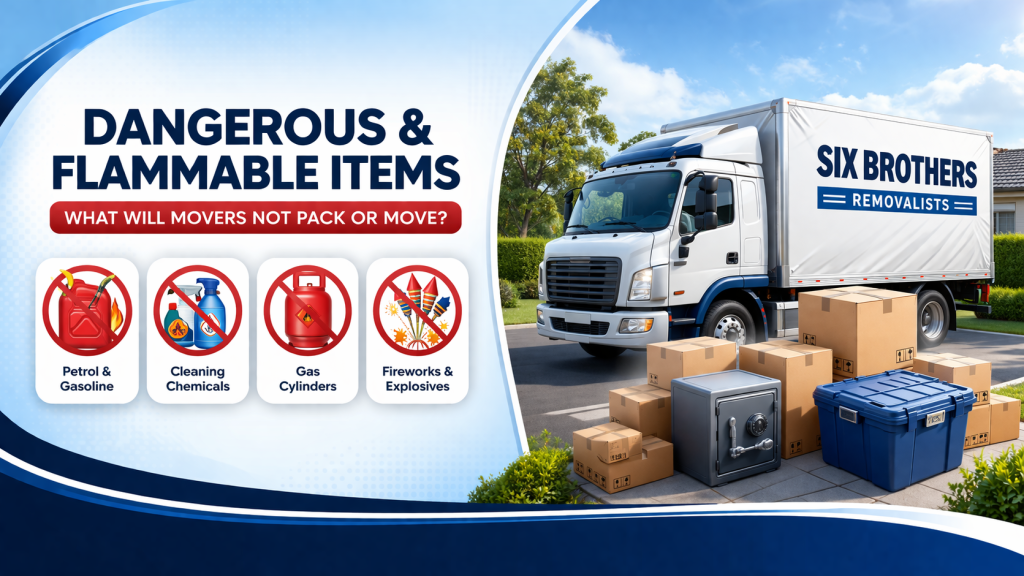
Hazardous and Flammable Items Movers Will Not Pack: An Essential Breakdown
This is the biggest category. Hazardous materials make up most of what movers refuse. And for good reason. These items are dangerous inside a hot, bouncing truck.
Fuels & Gases
Petrol, diesel, kerosene, propane tanks, and gas cylinders are all off limits. Even a small amount of fuel in a lawn machine can be a fire risk.
If you have a gas barbecue, disconnect it well before the movers arrive. Drain any fuel from generators or equipment. Your mover will check.
Chemicals
Paint, paint thinner, turpentine, pesticides, and pool chemicals fall into this group. These liquid products can leak and produce toxic fumes inside a closed truck.
Most households have more chemicals than they realise. Check under the kitchen sink, in the garage, and in the garden shed.
Corrosives
Drain cleaners, battery acid, and strong cleaning supplies eat through packaging. They can damage other items fast. Removalists avoid these for the safety of everything else on the truck.
Explosives
Fireworks, ammunition, and flares are obvious ones. No mover in Sydney or anywhere in Australia will transport explosives. Full stop.
Aerosols
Here’s one people miss. Aerosol cans. Deodorant, hairspray, spray paint, insect repellent. These are pressurised containers. Heat makes them expand. And a hot truck in a Sydney summer is basically an oven.
Leave aerosols out of your boxes. Transport them in your own car with the windows cracked.
A single exploded can of hairspray can coat an entire truckload. It’s not worth the risk for a $6 can.
Batteries
Car batteries, large lithium batteries, and some rechargeable battery packs are restricted. They can leak acid or short-circuit. Small household batteries are usually fine, but check with your company first.
If you have power tools with large battery packs, remove the batteries. Carry them separately. This small step can save everyone a lot of trouble.
Perishable and Live Items Sydney Movers Usually Refuse
If it can spoil, wilt, or run away, your mover probably won’t pack it.
Food
Perishable food items are a big no. Frozen meat, dairy, fresh fruit, open sauces, and anything that needs a refrigerator.
Why? A move can take hours. Sometimes a full day for long distance jobs. Food goes bad fast without cooling. And spoiled food attracts pest problems nobody wants.
What to do: Use up perishable food in the weeks before you move. Donate sealed dry goods to a local food bank. Toss anything open or expired.
Canned food and sealed pantry items might be okay, but they add weight to your boxes. Ask your removalist if they’ll take them.
Pro tip: Start a “use it up” meal plan two weeks before moving day. It’s a great way to clear the freezer and save money on groceries.
Living Plants
Your garden plants and indoor plants are living things. And most movers treat them like perishable goods.
Plants can break during transport. Soil spills. Pots crack. If you’re moving Sydney to Brisbane, some states have pest and quarantine rules about moving plants across borders. If you’re moving interstate, you need to check the biosecurity guidelines for your destination.
For short local moves, some Sydney movers may agree to transport a few small plants. But don’t count on it.
Tip: Move your favourite plants yourself in your car. Wrap pots in towels. Water them the day before.
Large garden plants are trickier. You might need to take cuttings and start fresh at your new place. It’s hard to leave a plant you’ve grown for years. But sometimes that’s the only option.
Pets & Animals
This should be obvious, but it needs saying. No pet goes in the moving truck. Not your dog, cat, fish, bird, or hamster.
The back of a truck gets hot. It’s dark. There’s no ventilation. It’s dangerous and honestly cruel.
Use a pet transport service or drive your pet yourself. Many pet transport companies in Sydney offer door-to-door service. Your furry friend deserves a safe ride too.
If you have fish tanks, drain them. Transport fish in sealed bags with enough air. Set up the tank first at your new place. Fish are more delicate than people think.
Valuable and Important Items Movers Should Not Pack
Movers can technically pack these. But should they? Probably not.
Documentation
Passports, birth certificates, wills, property deeds, tax records, medical files. Keep these with you at all times during the move.
If a box goes missing or gets damaged, replacing legal documents is a nightmare. Carry them in a personal bag. Treat them like they’re irreplaceable. Because some of them are.
High-Value Items
Jewellery, large amounts of cash, money in any form, rare collectibles, expensive electronics, and fragile items like crystal.
Moving companies usually limit their liability for valuable items. So even if something breaks, you might not get full value back.
Pack high-value stuff yourself. Transport it in your own vehicle. Consider special handling through a courier if needed.
Sentimental Items
Family photos, heirlooms, kids’ artwork, that ugly vase your grandmother loved. These things have no price tag, but they’re priceless to you.
Don’t risk them in a box that might get dropped. Keep sentimental items close.
Restricted and Illegal Items Removalists Will Not Move in Sydney
Some things aren’t just refused. They’re straight up against the law to transport.
Firearms
All firearms must be transported according to strict Australian legal requirements. Your mover won’t move them. You need a licensed firearms dealer or courier with proper permits.
Even deactivated firearms can be a legal grey area during transportation. Don’t take the chance.
Illegal Goods
This goes without saying. But removalists will not move prohibited substances, stolen goods, or anything else that breaks the law.
If a mover finds something illegal in your boxes, they can refuse the entire job. And they may have to report it.
Specialty Items
Some items need specialty equipment to move. Large appliances like industrial freezers, heavy machinery, safes, pianos, and hot tubs are examples.
Standard movers might not have the right equipment for these. You may need a specialist transport company.
If you have delicate or oversized items, ask your moving company upfront. Many, including Six Brothers Removalists, can arrange special handling for large appliances and fragile items.
What Sydney Movers May Pack With Conditions?
Not everything is a hard no. Some items fall into a grey zone.
Alcohol. Sealed bottles are usually fine. Open ones? Probably not. Wrap them well.
Cleaning supplies. Sealed, non-toxic cleaners might be okay. Always ask your mover. Some chemicals still need you to transport them yourself.
Garden tools. Rakes, shovels, and hand tools are generally accepted. But drain any fuel from powered equipment. Disconnect blades from machines.
Small electronics. Laptops and tablets are fine in your personal bag. Larger items like TVs need proper packing. Your mover may pack them with the right materials.
Medicines. Prescription medications should travel with you. But sealed over-the-counter medicines in a box are usually accepted.
The rule of thumb: if you’re not sure, call ahead. One quick check saves a headache on moving day.
Every moving company has slightly different policies. What one service refuses, another might accept with conditions. Communication is your best friend here. A five-minute phone call can prevent a two-hour delay.
How to Prepare Before Removalists Arrive
A little preparation goes a long way. Here’s how to get ready.
Sort early. How early should you start packing for a move? At least four to six weeks out. Start with rooms you use least. The garage. The spare bedroom. The storage cupboard.
Make a “do not pack” pile. Separate everything your movers won’t take. Hazardous materials, perishable food, valuables, plants, and pets. Put them in one spot.
Label clearly. Mark boxes with contents. It helps movers know what’s inside and speeds up the whole experience.
Disconnect appliances. Unplug your refrigerator at least 24 hours before the move. Disconnect the washing machine. Drain hoses. This is easy to forget and hard to fix on the spot.
Empty drawers of fragile items. Movers may transport furniture with drawers, but loose items inside can shift and break.
Prepare an essentials box. Toiletries, phone chargers, snacks, a change of clothes. Keep this box with you, not on the truck.
Plan ahead and you’ll be the client every mover loves.
Talk to your removalist. Call them a week before and ask what they will and won’t take. Get it in writing if you can. This is especially important for long distance moves where rules may be stricter.
Secure loose items. Tape shut any drawers on furniture. Wrap mirrors and glass. Use blankets to protect delicate surfaces. Your movers will appreciate the effort.
Clear pathways. Make sure hallways, stairs, and doorways are clear. This helps the crew move fast and safely. It also reduces the chance of damage to your walls or your belongings.
How to Safely Handle Chemicals and Cleaning Supplies Before Moving
Chemicals deserve their own section because so many households have them tucked away in forgotten corners.
Step one: Take stock. Walk through every room. Open every cupboard. You’ll probably find old paint cans, half-empty cleaning bottles, garden sprays, and pool chemicals. Make a list.
Step two: Use what you can. In the weeks before your move, use up cleaning supplies. Finish that bottle of surface spray. Use the last of the pest control spray in the garden.
Step three: Dispose of the rest safely. Don’t pour chemicals down the drain. Take them to your local council’s hazardous waste collection point. Many Sydney councils run free drop-off days.
Check your council’s website for the next collection date. Sites like the NSW EPA offer details on how to dispose of household chemicals safely in your area.
Step four: Pack what’s allowed. Sealed, non-toxic cleaners can sometimes travel. Put them upright in a sturdy box. Tape the lids. Use plastic bags as a second layer of protection around each liquid.
When in doubt, leave it behind. Replacing a $5 bottle of cleaner is way cheaper than cleaning up a spill inside a moving truck.
Handling chemicals well is one of those small things that shows you’re a prepared mover. The crew will notice. And they’ll take even better care of your stuff because of it.
Smart Sydney Alternatives for Items Movers Refuse
So what do you do with all the stuff movers won’t take? You’ve got options, including interstate backloading for budget-friendly long distance moves.
Donate or Use Up
Perishable food? Cook it or donate sealed items. Plants you can’t move? Give them to neighbours. Cleaning supplies? Use them for a final deep clean of your old place.
Facebook Marketplace and local community groups are gold for giving away items fast. You’d be surprised what people need.
Recycle Hazardous Waste Safely
Sydney has multiple hazardous waste drop-off points. Old paint, batteries, chemicals, aerosols. They all have a place.
The City of Sydney runs a Community Recycling Centre. Many other councils have similar programs. Don’t dump this stuff in your regular bin. It’s not safe and it’s not legal.
Use Specialist Transport Services
Got a piano? A pool table? A 200kg safe? Call a specialist.
These companies have the right equipment and insurance for oversized or delicate items. They ensure everything arrives in one piece.
For interstate moves, specialist transport is even more important. You can’t just strap a grand piano to the roof rack and hope for the best, can you?
Carry Valuables Yourself
This is the simplest tip and the most important one.
Passports. Jewellery. Cash. Hard drives. Laptops. Medication. Keep them in your car or your personal bag.
No box on a truck is as safe as your own hands. Travel with what matters most and save yourself the worry.
If you’re moving with family, assign each person a bag of essentials. Kids can carry their own favourite toys and comfort items. It keeps them involved and ensures nothing precious gets lost.
Think of your valuables like carry-on luggage on a flight. You wouldn’t put your wallet in checked baggage. Same logic applies when you’re moving house.
Quick Recap: Items Movers Will Not Pack
Here’s everything at a glance:
- Hazardous materials: Fuels, chemicals, corrosives, explosives, aerosols, batteries
- Perishable goods: Fresh food, frozen items, anything that can spoil
- Living things: Plants, pets, animals of any kind
- Valuables: Jewellery, cash, money, important documents, fragile items
- Illegal items: Firearms (without permits), prohibited substances, stolen goods
- Specialty items: Large appliances, heavy equipment, pianos, hot tubs
If anything on this list is in your home, handle it before the movers arrive.
Final Thoughts
Moving doesn’t have to be chaos.
The biggest problems happen when people don’t know the rules. Now you do. You know what movers will not pack. You know why. And you know exactly what to do about it.
Whether you’re moving across Sydney or heading interstate, a little planning goes a long way. Start packing early. Sort your restricted items. Arrange alternatives.
And if you need help from a team that actually tells you what to expect? Six Brothers Removalists offers trusted house removals for Sydney families and businesses.
We handle everything from small studio apartments to large 4-5 bedroom homes. Local moves across Sydney. Interstate runs to Melbourne, Brisbane, Adelaide, and beyond. We even offer business removals for companies on the move.
Our crew will walk you through what we can and can’t pack before we start. No grey areas. No guesswork.
Call us at 1300 764 372 or email info@sixbrothersremovalist.com.au to get a free quote. Visit us at Suite 1 Level 5, 58/60 Macquarie St, Parramatta NSW 2150.
We’ll make sure you’re ready. No surprises. Just a smooth move.
Frequently Asked Questions
Can movers pack cleaning supplies?
It depends on the product. Sealed, non-toxic cleaners are sometimes accepted. But anything with strong chemicals, bleach, or corrosive ingredients should be transported by you or disposed of safely before the move.
Will movers transport my fridge?
Yes, most movers will transport a refrigerator. But you need to disconnect it, empty it, and defrost it at least 24 hours before the move. Any perishable food inside is your responsibility.
What happens if I accidentally pack something restricted?
If the movers find a restricted item in your boxes, they may refuse to load that box. In some cases, they can refuse the entire job. It’s always better to sort things out before they arrive.
Do I need to pack everything myself?
Not at all. Many moving companies offer full packing services. But even with a packing service, the restricted items on this list still apply. You’ll still need to handle hazardous materials, valuables, and perishable items yourself.
Can I move plants interstate?
Sometimes. But you need to check quarantine rules for your destination state. Some plants, soils, and garden materials are restricted to prevent the spread of pests and diseases. Check with your local biosecurity office before you move.